
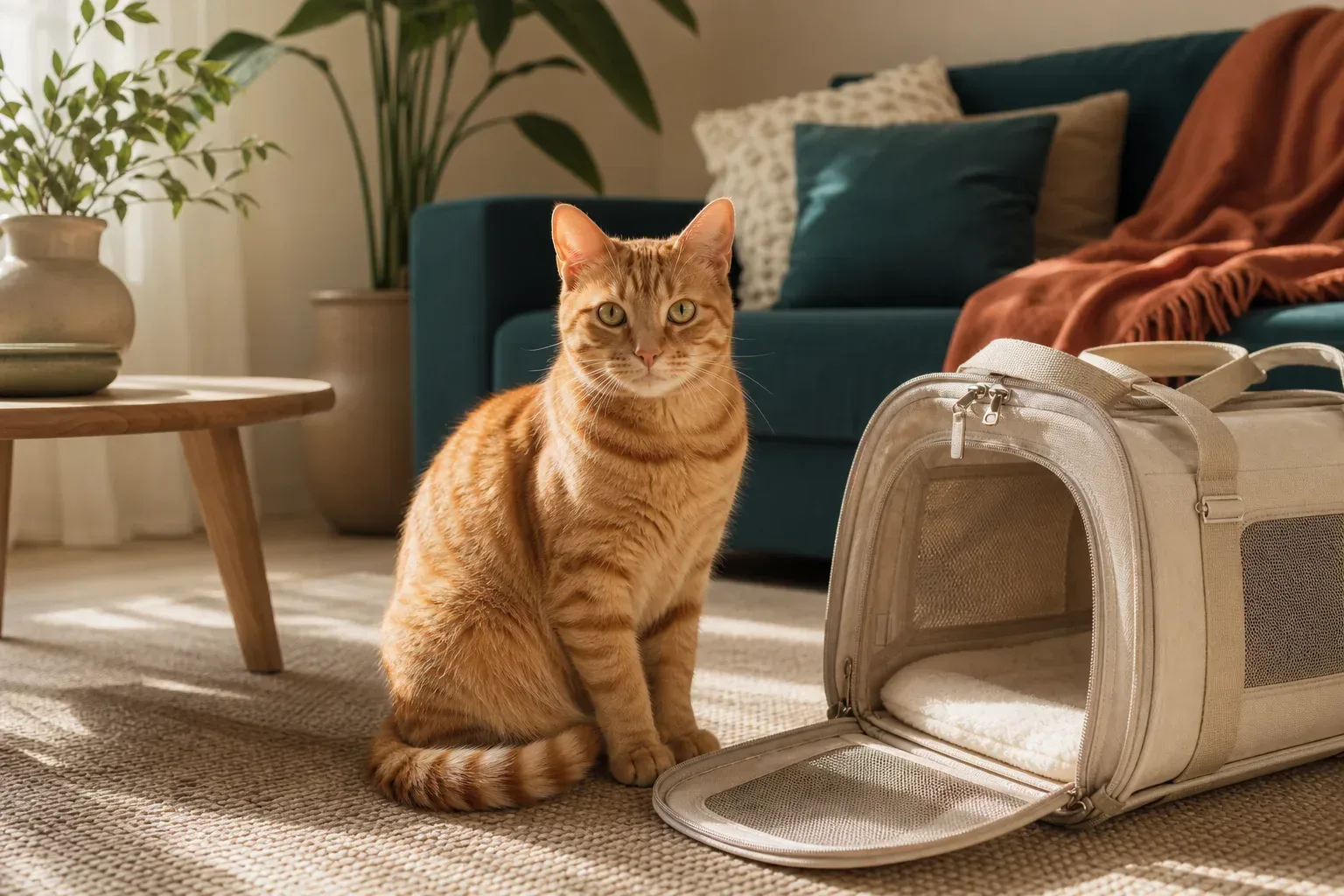
Before opening the carrier, prepare one quiet room. A smaller, predictable space lets your cat discover the essentials without facing the whole house at once.
Set up the essentials
Offer a bed, a hiding place, a scratching surface, food, water, and a litter tray. Keep the tray away from food and water. A plain cardboard box can provide a retreat; remove tape, staples, and loose packaging first.
Let the first meeting be quiet
Place the carrier on the floor and open it. Let your cat decide when to leave. Sit nearby without reaching inside or pulling them out. Postpone introductions to visitors and other pets.
Follow your cat’s pace
Some cats explore quickly; others need longer. Avoid treating a particular day as a deadline. Watch for eating, drinking, toileting, and growing confidence. Contact your veterinarian if you are concerned about their health or they stop eating.
These setup principles follow Cats Protection’s bringing-a-cat-home guide.
A room-ready checklist
- Choose the room and decide how household members will keep the door secure.
- Write down the food and litter the cat already uses, plus the shelter or previous carer’s contact details.
- Check where the carrier will sit so its door can open without blocking a walkway.
- Put a notebook somewhere convenient to record questions and the routine.
For an illustrative example, imagine arriving with a carrier while the litter is still in a shopping bag and the spare room is full of boxes. Preparing those items first leaves you free to sit quietly when your cat arrives.
Agree on the household routine
Decide who checks supplies, who handles cleaning and whom to call with a concern. Keep instructions in one place so different people do not make conflicting changes. Before shopping, use the litter station checklist. If your cat chooses to retreat, read about making space for hiding.