
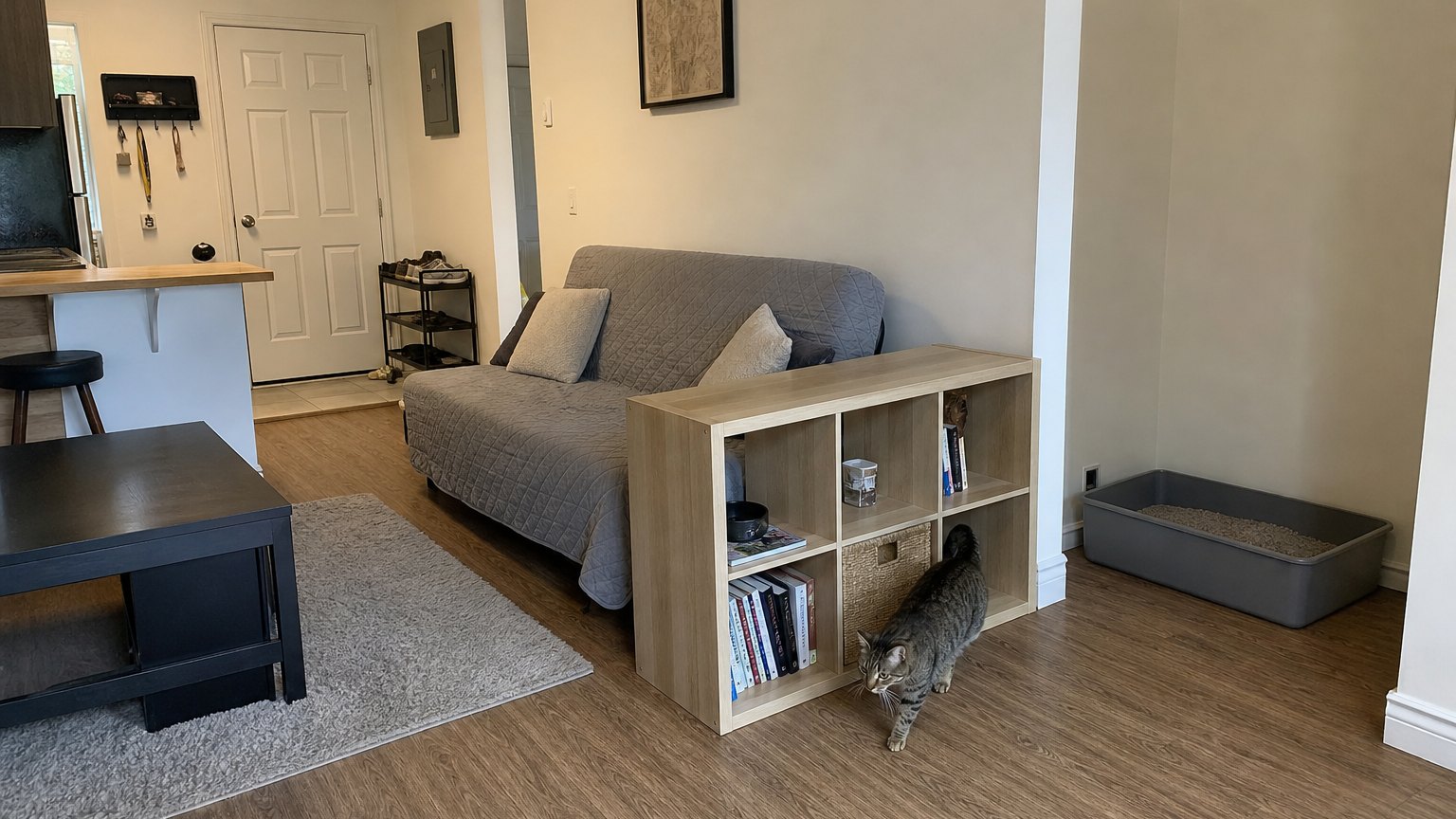
Somewhere in a lot of small apartments, a litter box is sitting next to the fridge because it was the only empty patch of floor. Nobody chose that spot, and the cat probably didn’t vote for it either. Where to put a litter box in a small apartment comes down to four things: a quiet spot, easy to reach at any hour, away from food and loud machines, where your cat can see who’s coming and leave two ways.
The ASPCA says the same: keep boxes away from busy, loud or intimidating places, and pick a spot that’s quiet but not cornered. Below are seven layouts, sorted by the kind of apartment you have. If you’re rethinking the whole space, these cat room ideas for small homes pair well with this list.
Litter Box Layouts at a Glance
| Layout | Best for | Watch out for |
|---|---|---|
| 1. Bathroom corner, door wedged open | Studios with a roomy bathroom | Bathrooms that double as the laundry |
| 2. Far end of the main room | Studios with no spare bathroom floor | A box on show; a divider with no gaps |
| 3. Bedroom closet floor, door off | One-bedrooms | Scratching sounds at night |
| 4. Linen or hall closet | Hallway apartments | Hallways that lead to the front door |
| 5. Quiet end of the living room | Open-plan spaces | TV, door and walkway traffic |
| 6. Home office nook | Remote workers | A box under the desk |
| 7. Two boxes, opposite sides | Every apartment, including one-cat homes | Putting both boxes side by side |
1. Studio: The Bathroom Corner, Door Wedged Open
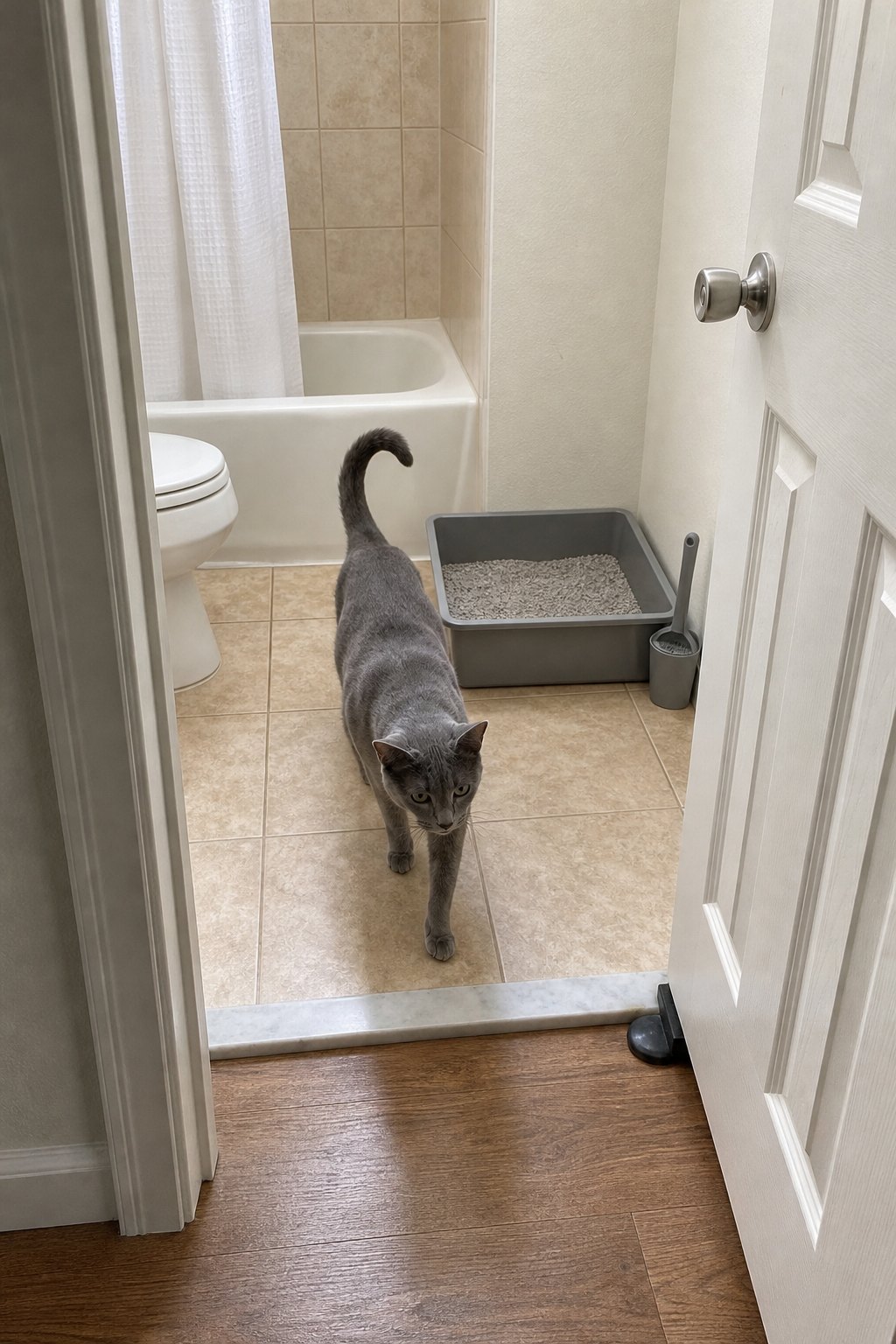
A bathroom works when the box sits in the corner farthest from the toilet and the door can’t swing shut. Tile is also easy to wipe down after a litter-scattering exit.
Wedge the door open with a doorstop so your cat never ends up locked out (or in). Skip this layout if your bathroom is also the laundry, since the ASPCA lists the washer and dryer as a spot to avoid.
2. Studio With No Spare Bathroom Floor: The Far End of the Main Room
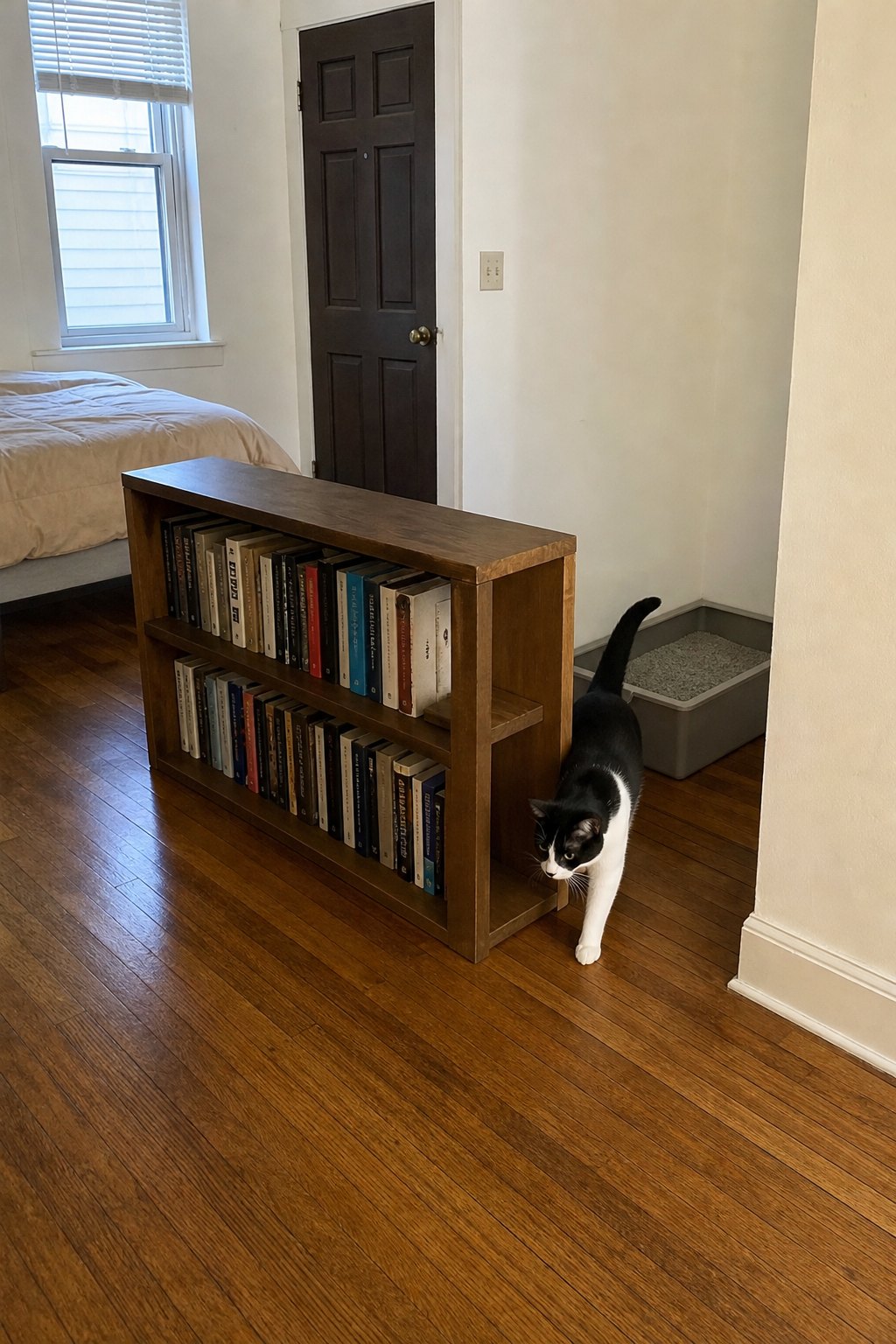
When the bathroom has no room, use the end of the main room that’s farthest from the kitchen and the front door. That puts distance between the box, your food and the busiest foot traffic.
Choose an open-top box, then add a low divider if you want some privacy. Leave gaps at both ends so your cat has two ways out. For ways to make the box less of a focal point, see these litter box hiding ideas.
3. One-Bedroom: The Bedroom Closet Floor, Door Off
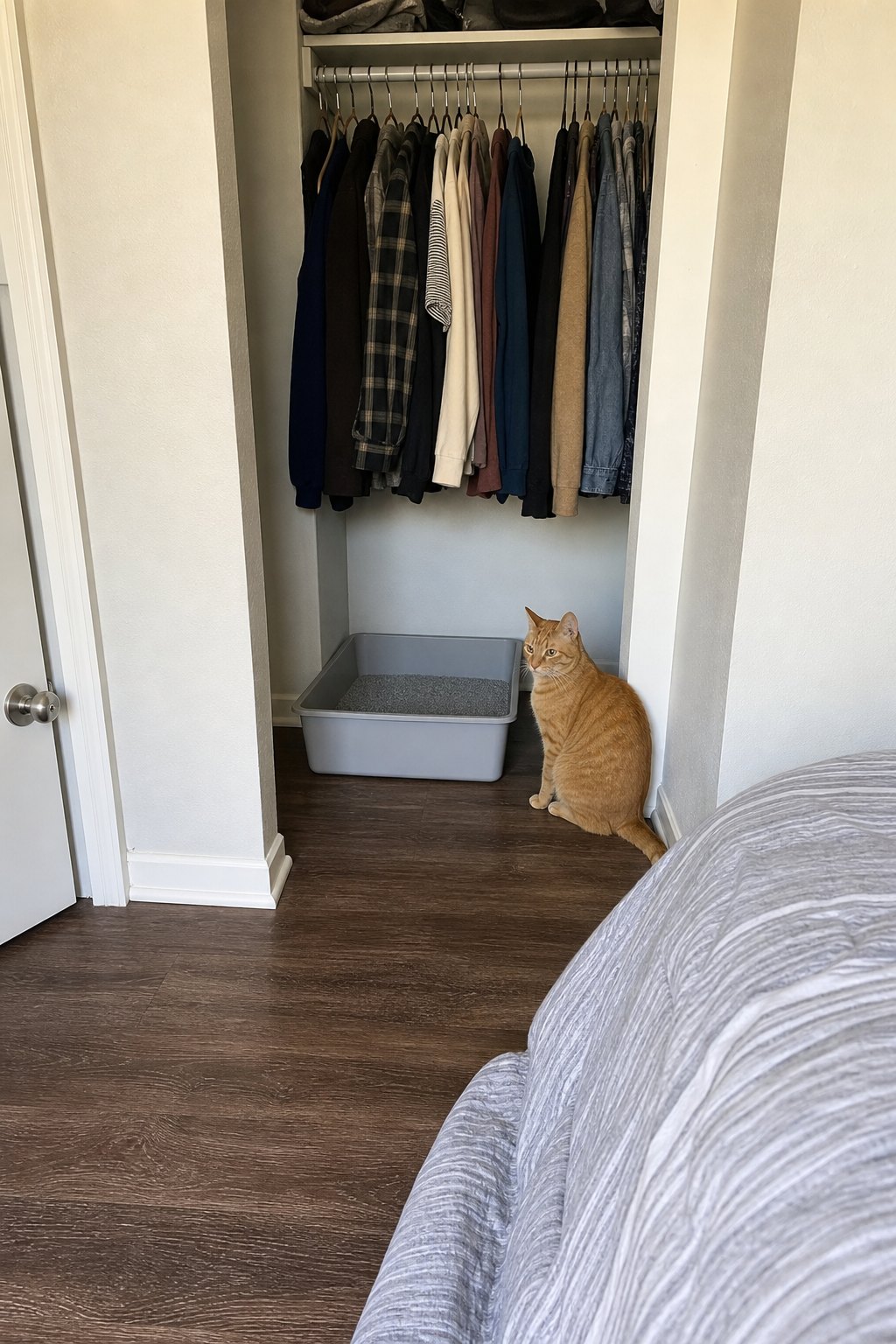
A bedroom closet is quiet for most of the day. Set the box toward the front of the closet so your cat can see out, and take the door off or tie it open.
Think about your sleep before you commit. A cat who digs at 3 a.m. is a lot louder when the box is eight feet from your pillow.
4. Hallway Apartment: The Linen or Hall Closet
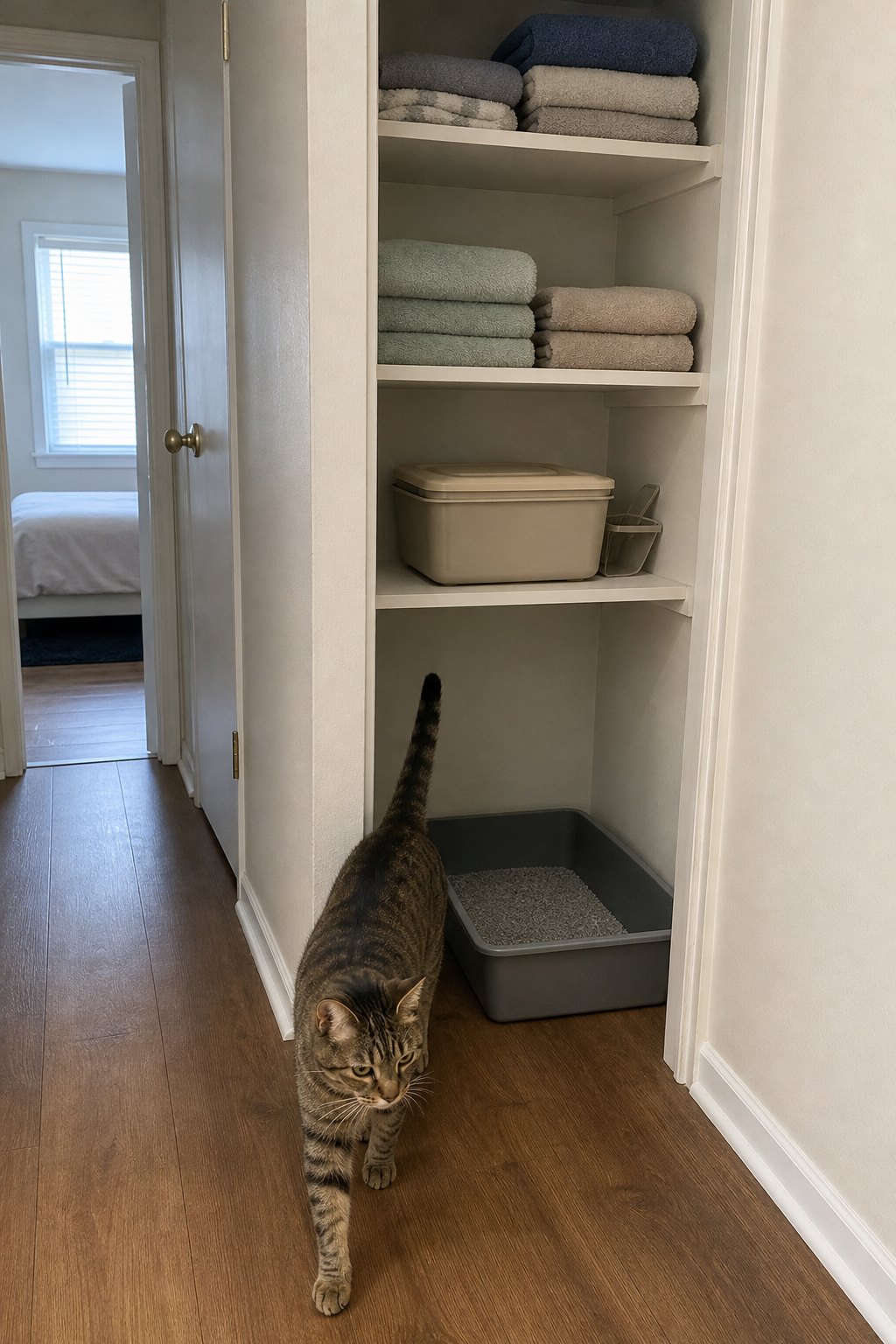
A hall closet can work well if the hallway isn’t the main route to your front door. You want a quiet corner, not a runway.
Remove the door or hang a curtain, so the way in and out is always open. Store scoops and spare litter on the shelf above, which keeps supplies handy for your daily scoop.
5. Open-Plan Living Room: The Quiet End, Away From the TV and Door
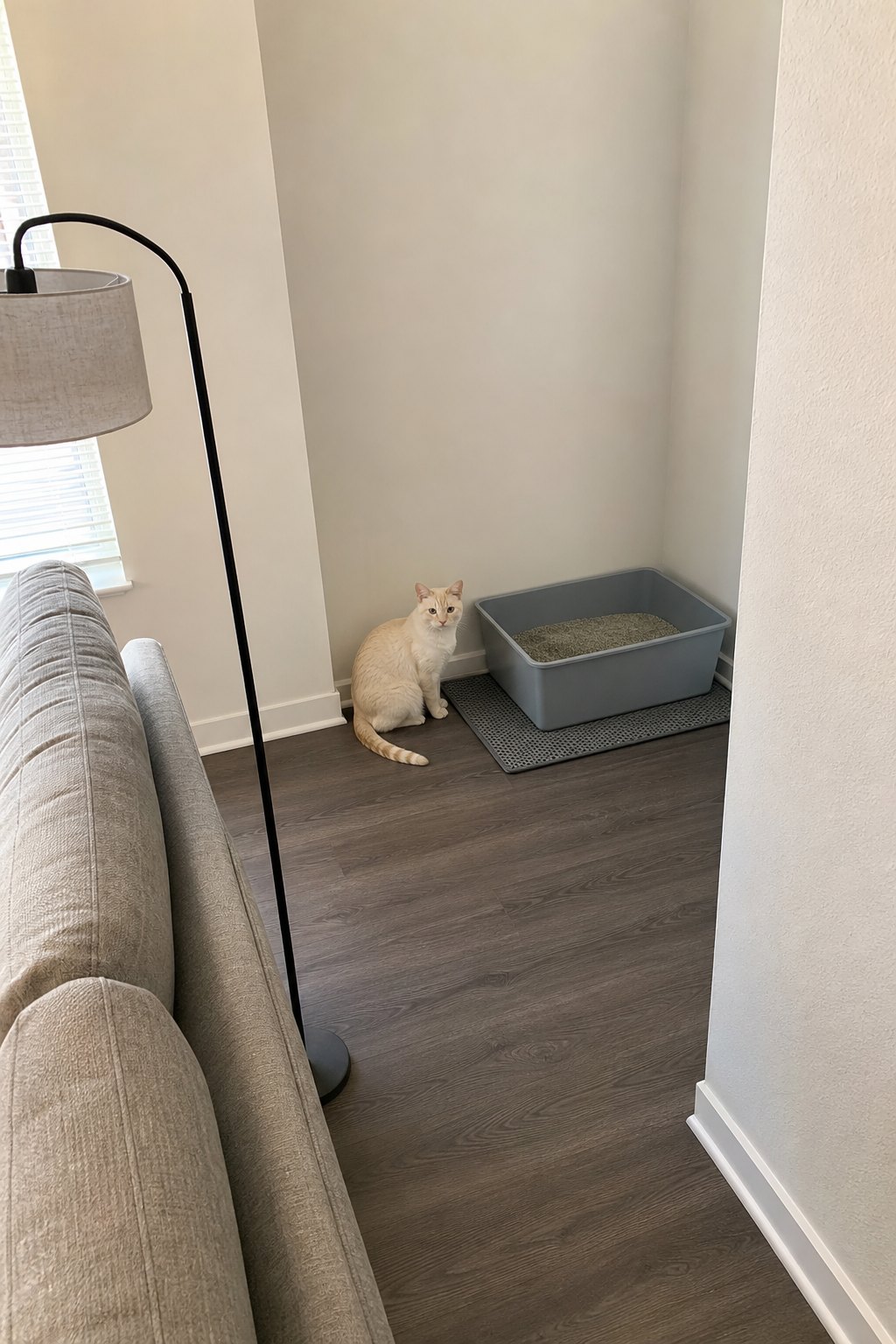
In an open-plan space, pick the corner people walk past least. That’s usually not the one beside the TV, and never the one beside the door.
Leave room on at least two sides of the box so your cat can approach and leave without feeling trapped. The Texas A&M College of Veterinary Medicine recommends quiet areas away from foot traffic and machinery.
6. Home Office Nook: Under a Window, Not Under Your Desk
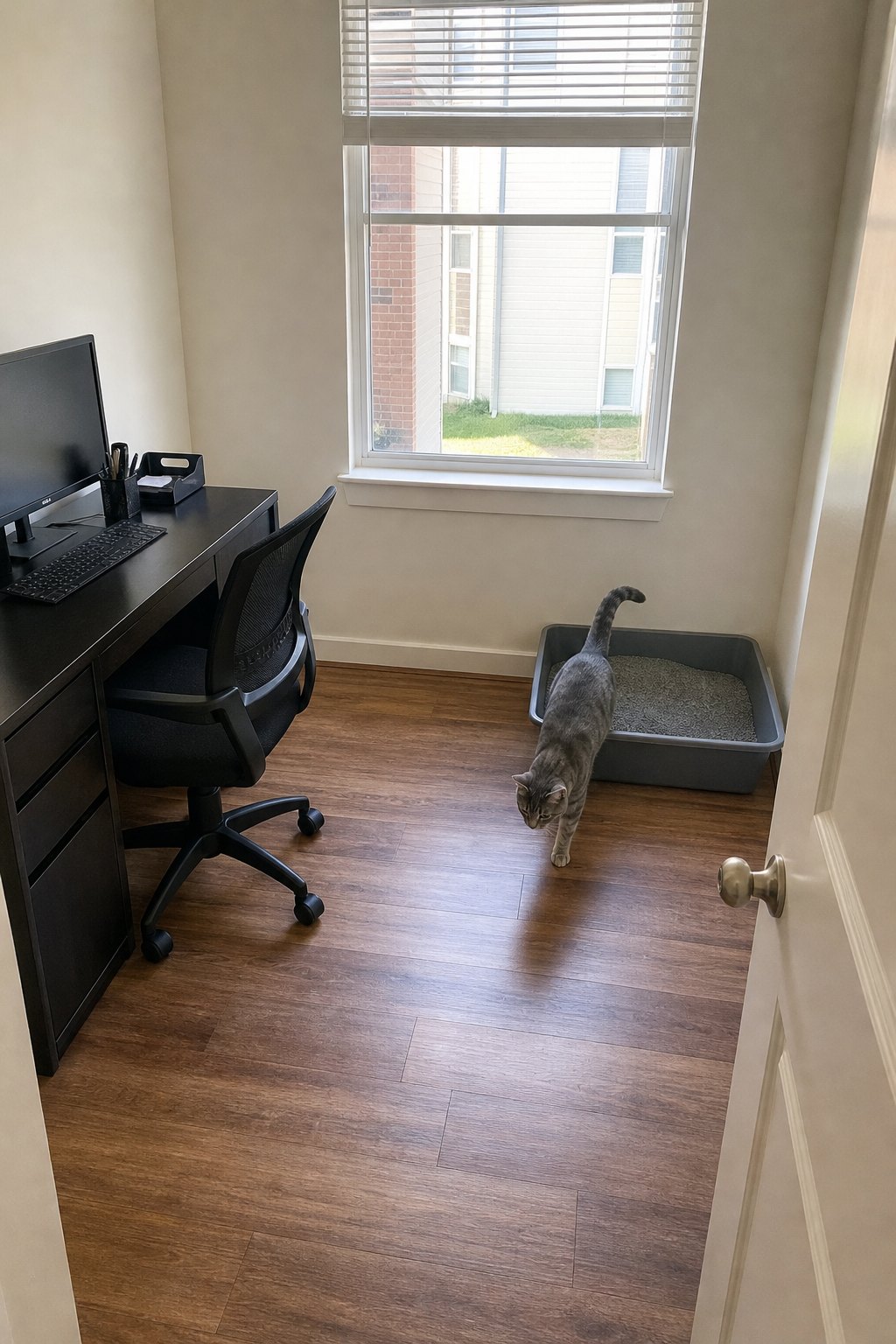
A home office is often empty while you’re out, which makes it calm for a cat. Give the box its own floor space beside the desk, ideally under a window, rather than tucked beneath it.
You won’t kick it with your chair, and your cat won’t be boxed in against your legs. Tuck a rolling chair out of the way so the approach stays clear.
7. Two Boxes on Opposite Sides of the Apartment
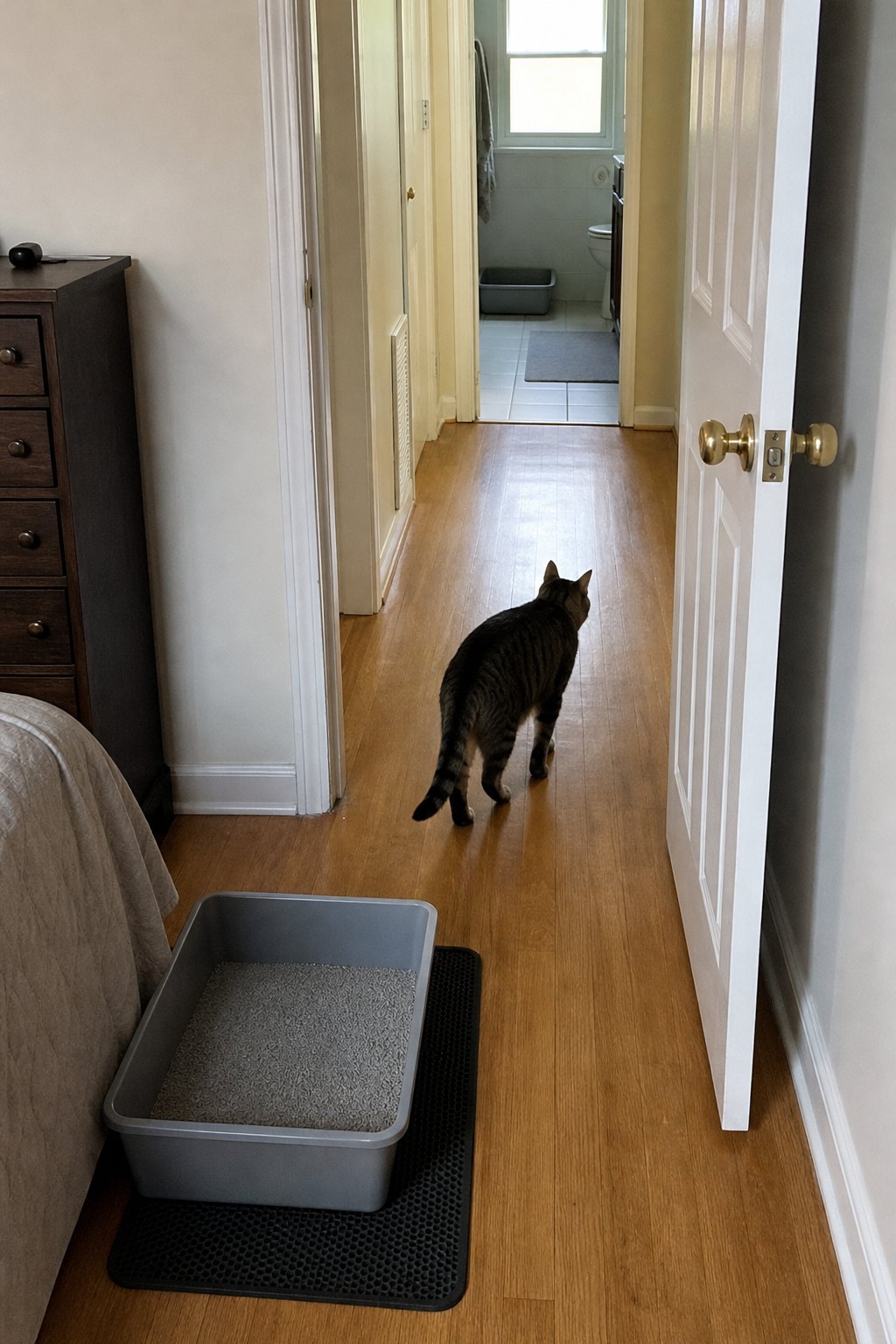
The usual guideline is one box per cat plus one extra, which means two boxes even if you have one cat. Both the ASPCA and Texas A&M say so, and Texas A&M adds that the boxes should sit in different parts of the home.
Pair a bathroom spot with a bedroom or hallway spot. That way one box is always reachable, even if a door closes or a guest takes over the bathroom. Spread them out: the ASPCA advises putting boxes in different areas of the home as opposed to side by side.
Spots to Skip in a Small Apartment
Some places look convenient and cause trouble. Cross these off first:
- Next to the washer and dryer, or inside an in-unit laundry closet. Both ASPCA and Texas A&M point to machines as a problem.
- Right beside the food bowls. The ASPCA advises against putting food next to the box.
- Behind any door that can close. If it shuts, the box is gone.
- The main path to the front door. Texas A&M recommends quiet areas away from foot traffic.
- A dead-end corner. The ASPCA notes that cats like multiple escape routes, so avoid a spot where your cat can be cornered.
Should You Use a Covered Box to Save Space?
Probably not, though it depends on your cat. The ASPCA says most cats don’t like lids on their boxes, and Texas A&M says some cats dislike them because they can’t survey their surroundings.
The research is more mixed. A 2013 study in the Journal of Feline Medicine and Surgery found no overall difference between covered and uncovered boxes, although some individual cats preferred one or the other. It also noted that covered boxes tend to trap odors.
If you want to try a covered box, keep an open one available too. Then watch which one your cat chooses.
Make the New Spot Stick
Whatever layout you pick, the box itself matters as much as the location. Use a large box your cat can enter easily, since many boxes are too small (Texas A&M, ASPCA). The ASPCA recommends unscented litter, and both sources say to scoop at least once a day.
Here’s a practical tip of my own: leave the old box where it is until your cat uses the new one. Then move or remove it.
If your cat suddenly stops using the box, check with your vet.
Want more setups like these? Browse more home and litter guides.
1 thought on “Where to Put a Litter Box in a Small Apartment: 7 Layouts That Work”