
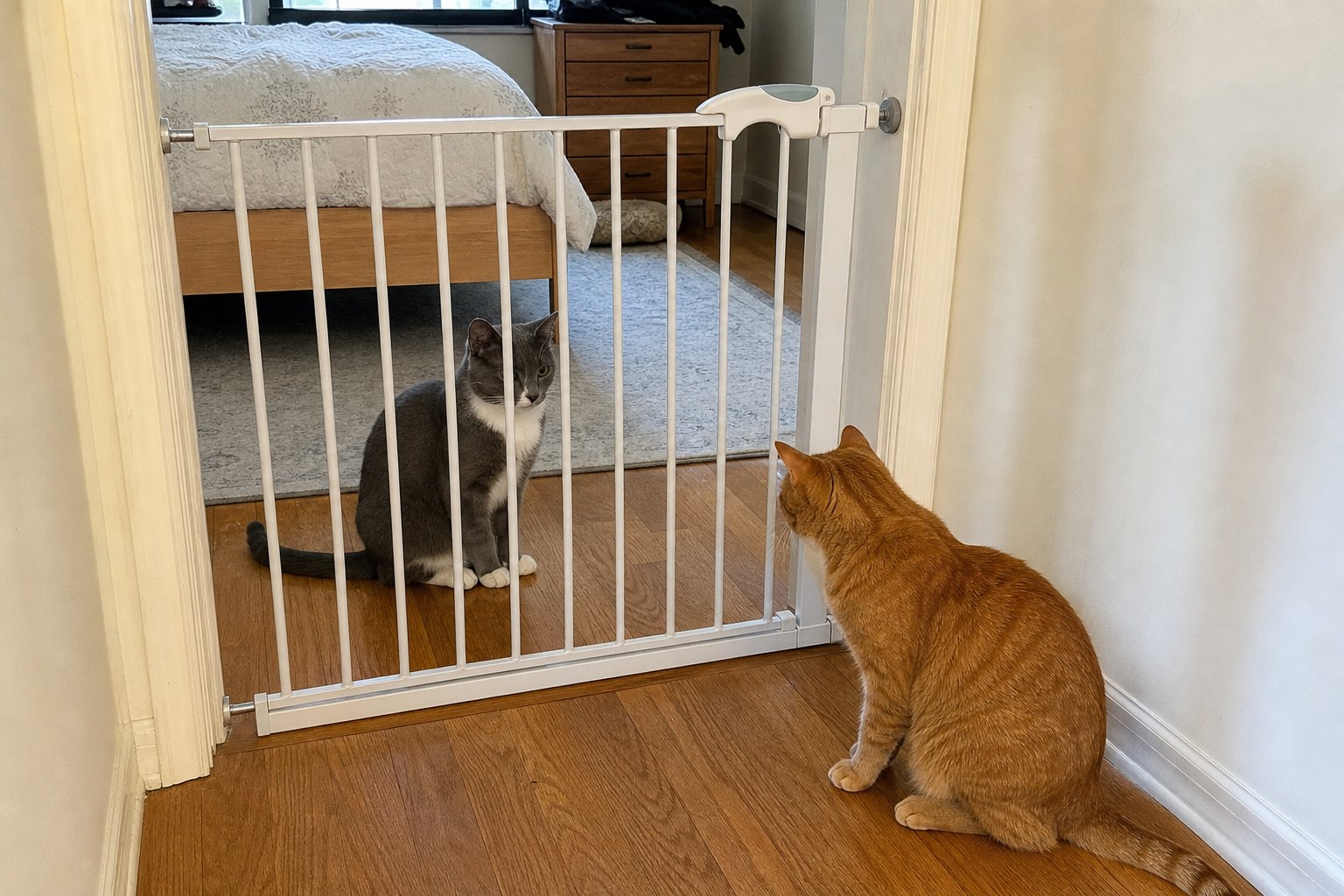
When you’re working out how to introduce cats, the safest plan is a staged one: a separate room for the new cat, a scent swap, meals on either side of a door, a look through a gate, and then short supervised visits. Some pairs settle in within days, while others take weeks or even months, according to the SF SPCA.
Set the pace by the calmer cat’s body language, not by the calendar. If this is your first time sharing a home with cats, the Start Here guide covers the basics.
Below you will find the room setup, six steps with a clear “move on” cue for each, and a table of signs that mean it’s time to slow down.
Before Day One: Set Up the New Cat’s Room
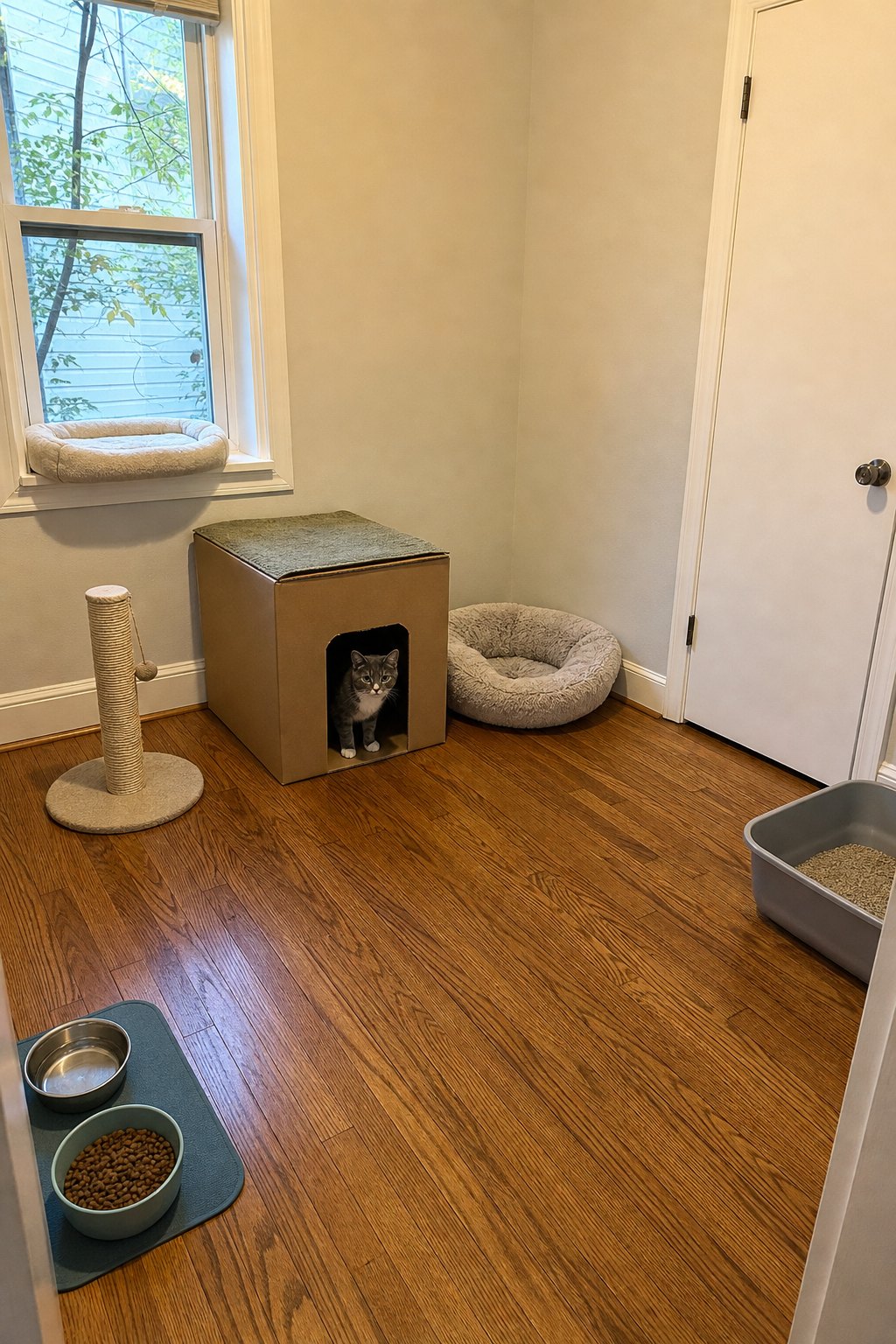
The new cat should go straight into their own quiet room, not into the whole house. The ASPCA says to bring the newcomer directly into that room, stocked with everything they need.
A bedroom or office works well, as Texas A&M’s vet school notes. The SF SPCA adds one useful rule: choose a room that doesn’t disrupt your resident cat’s routine. Don’t take over their favorite sunny spot for the newcomer.
Here is what goes in the room:
- Food and a water bowl
- A litter box
- A scratching post
- Toys
- A cozy bed
- Places to hide, plus some height if you can manage it
Short on space? These small-space cat room ideas show how to fit all of it into a small room.
The ASPCA also suggests considering pheromone therapy, such as a Feliway Multi-Cat diffuser. It’s optional, and I’d treat it as an extra, not a fix.
Step 1: Give the New Cat a Quiet Few Days in Their Room
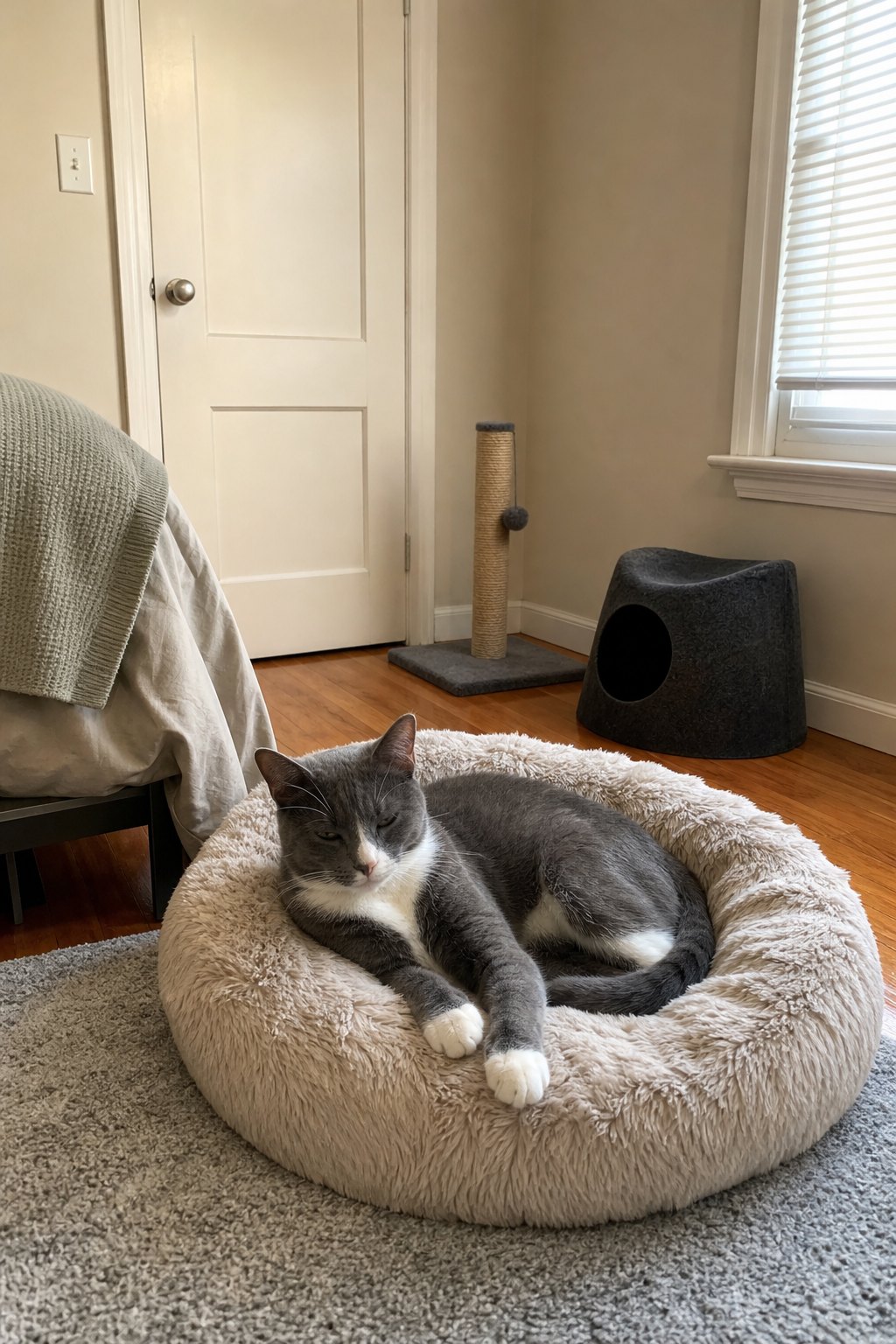
Let the newcomer settle alone first. The SF SPCA suggests three to four days of adjustment before any face-to-face meeting, and says you may need to extend the separation by a week or more.
Sniffing under the door is normal, so don’t panic if your resident cat parks outside the room. Spend time with both cats, separately, so neither feels pushed aside.
Move on when: the new cat eats, uses the litter box and explores the room with some confidence.
Step 2: Swap Scents With Bedding and a Treat
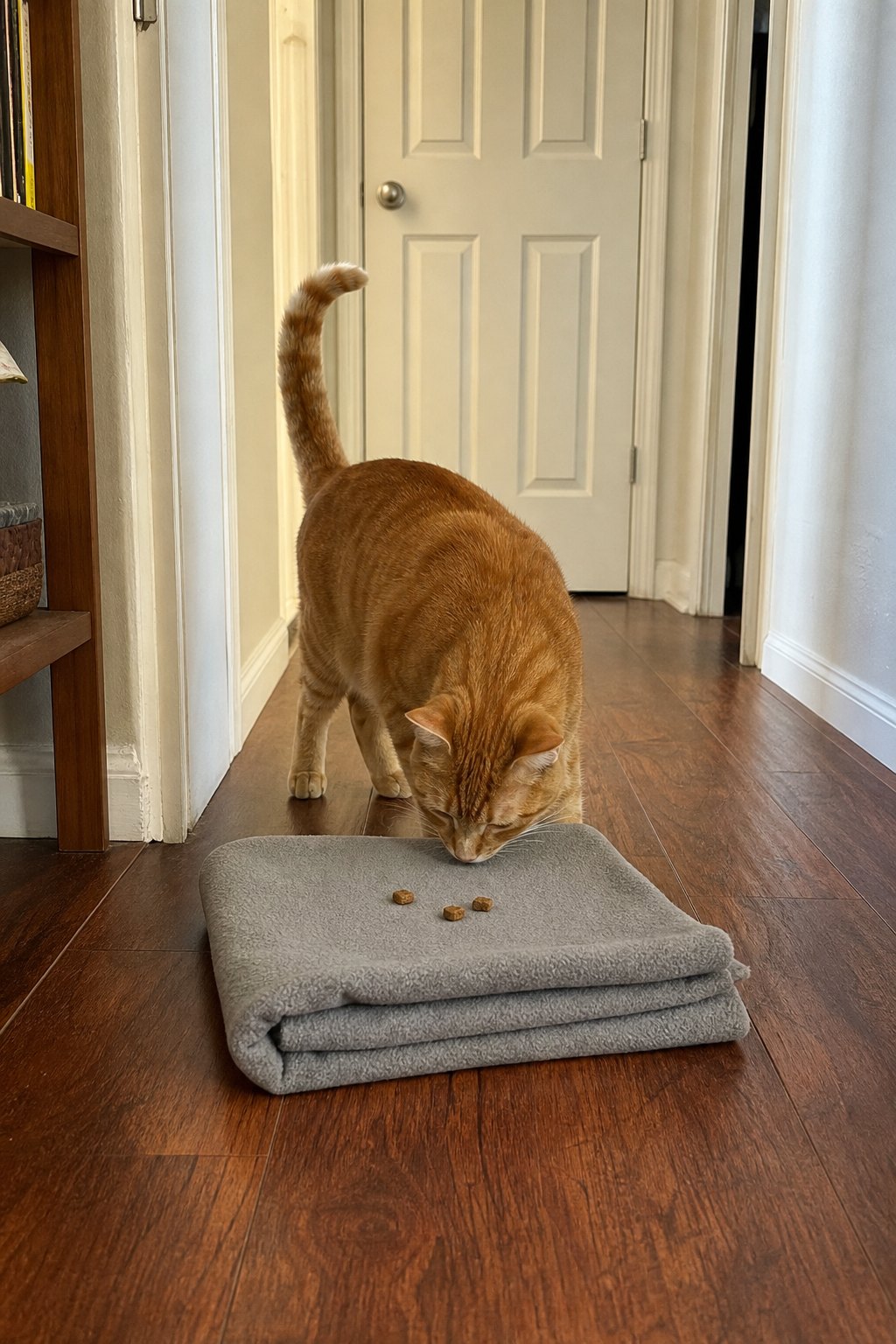
Cats learn a lot through smell, so let each one meet the other’s scent before they meet face to face. The ASPCA says to offer each cat something that smells like the other, such as bedding or a towel, with a treat on it. That builds a positive link with the other cat’s smell.
The SF SPCA suggests swapping bedding or toys, and Texas A&M also recommends letting each cat smell items that belong to the other.
Keep it low-key. Place the item near where the cat eats or rests, and let them approach it on their own.
Move on when: both cats sniff the swapped items calmly and take the treat.
Step 3: Feed and Play on Either Side of the Door
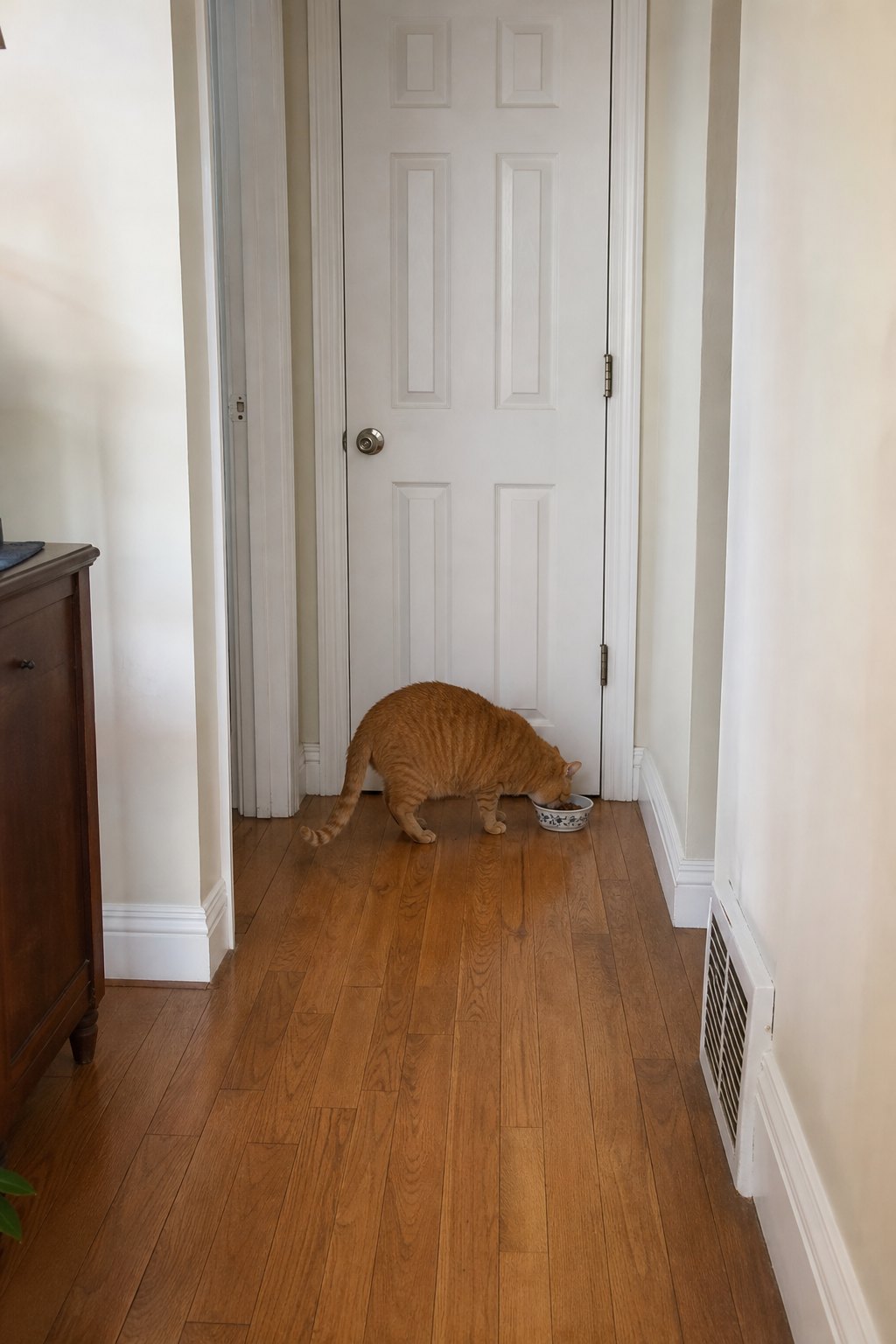
Now put the door to work. The ASPCA says to feed treats near the door that separates the cats. Over the next few days, continue meals, treats and play near that barrier.
Start with the bowls a comfortable distance from the door and move them closer as both cats stay relaxed. Play is a good tool here. A wand toy under the door gives both cats something fun to focus on. Some indoor enrichment ideas can help you rotate toys so play stays fresh.
Move on when: both cats eat and play near the door without hissing or growling.
Step 4: Swap Rooms So Each Cat Can Explore
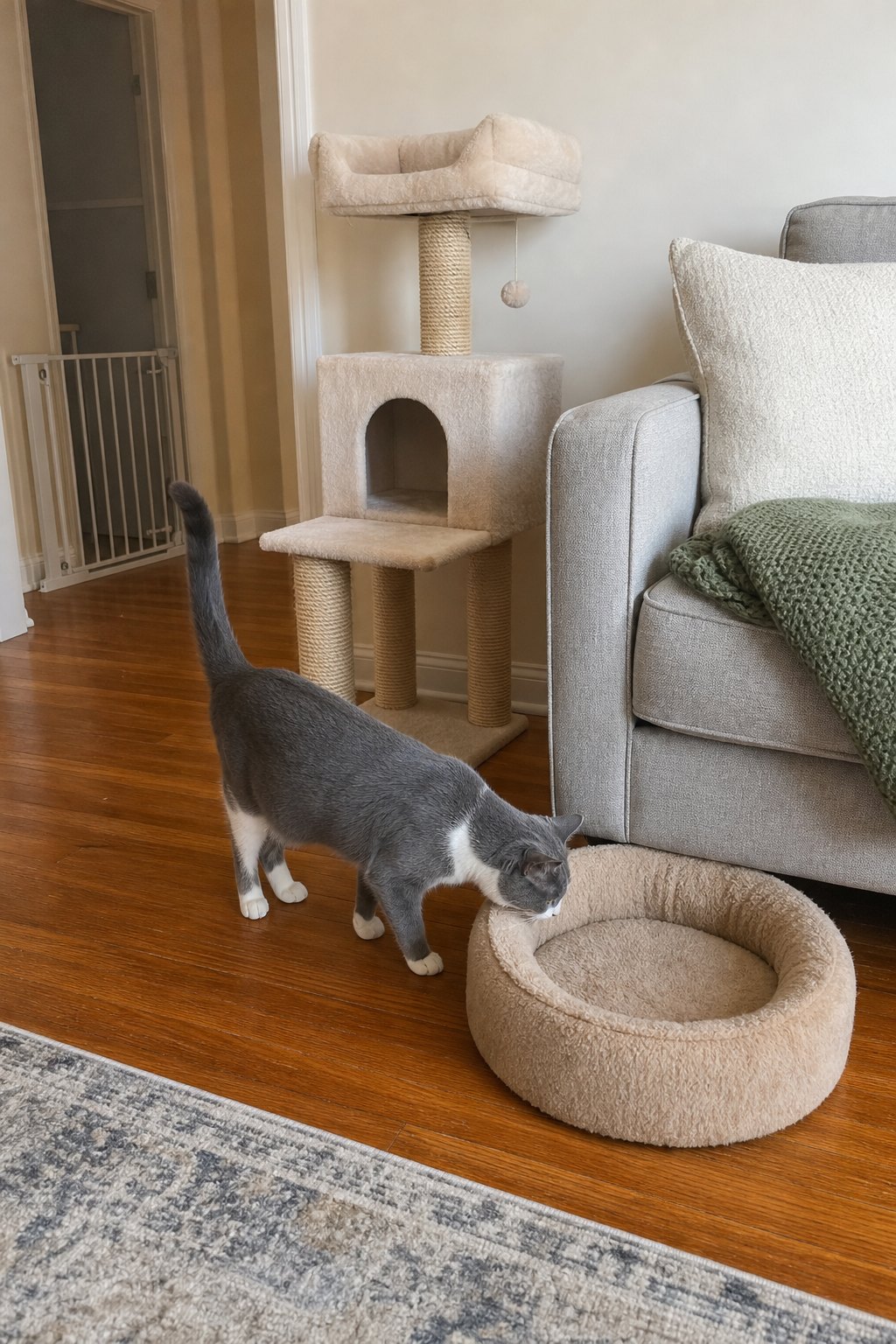
A room swap lets each cat investigate the other’s smell in a space the other has claimed. The ASPCA says to do this only if the resident cat is calm and the new cat explores confidently.
The SF SPCA says to let the cats enter each other’s territory for about a half hour. Move the resident into the newcomer’s room, and let the newcomer explore the rest of the house.
If either cat seems tense, skip this step for now and keep working on Step 3.
Move on when: both cats explore the other’s space without stress.
Step 5: Let Them See Each Other Through a Gate
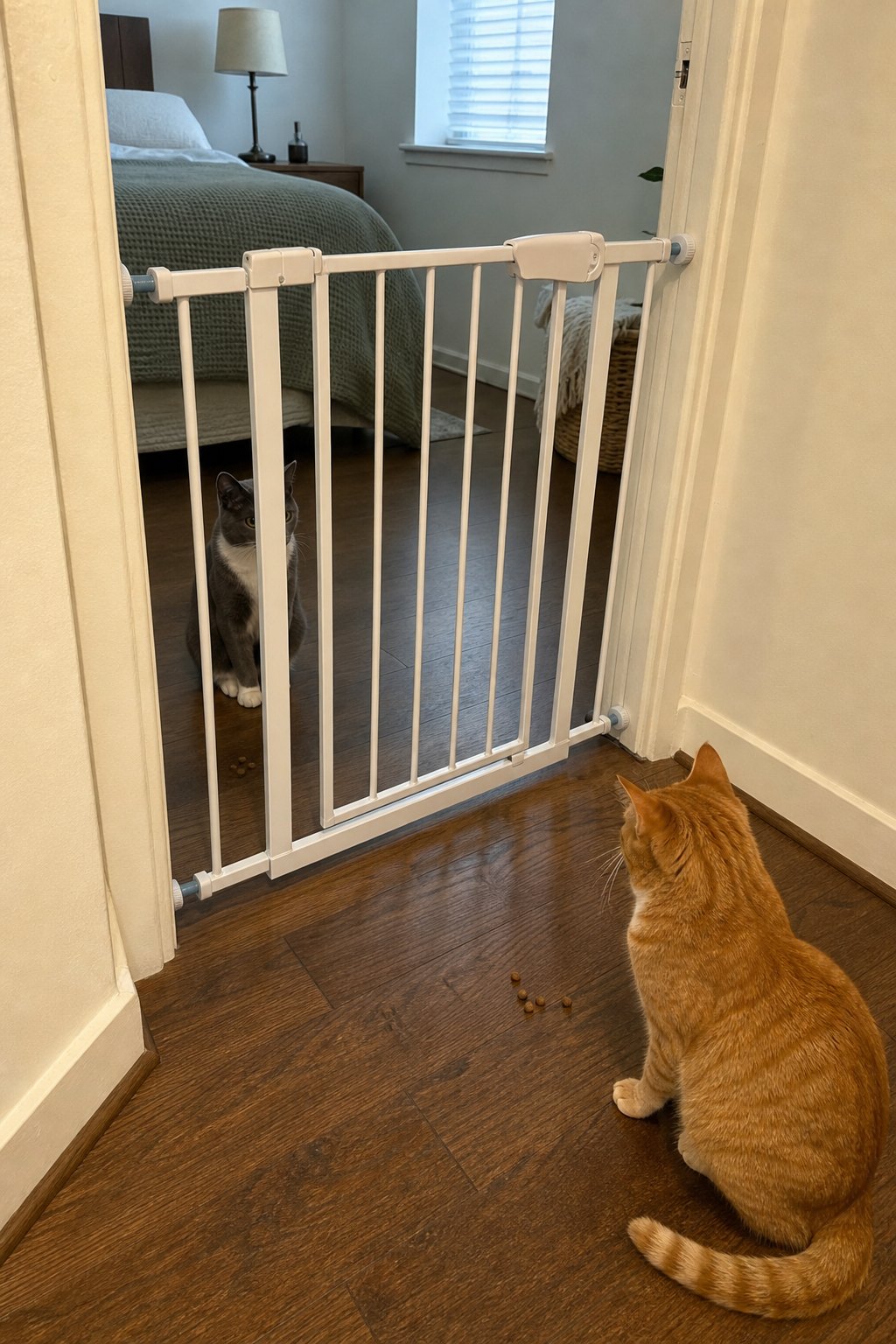
This is the first time the cats see each other, so keep it brief. The ASPCA suggests using a baby gate or a door opened a crack and letting them see each other for just a few minutes.
Keep meals, treats and play going near the barrier, just as in Step 3. Food and fun help the cats link each other with good things.
Move on when: there is no hissing or growling. The ASPCA says to move on only when that’s true.
Step 6: Short Supervised Visits in the Same Room
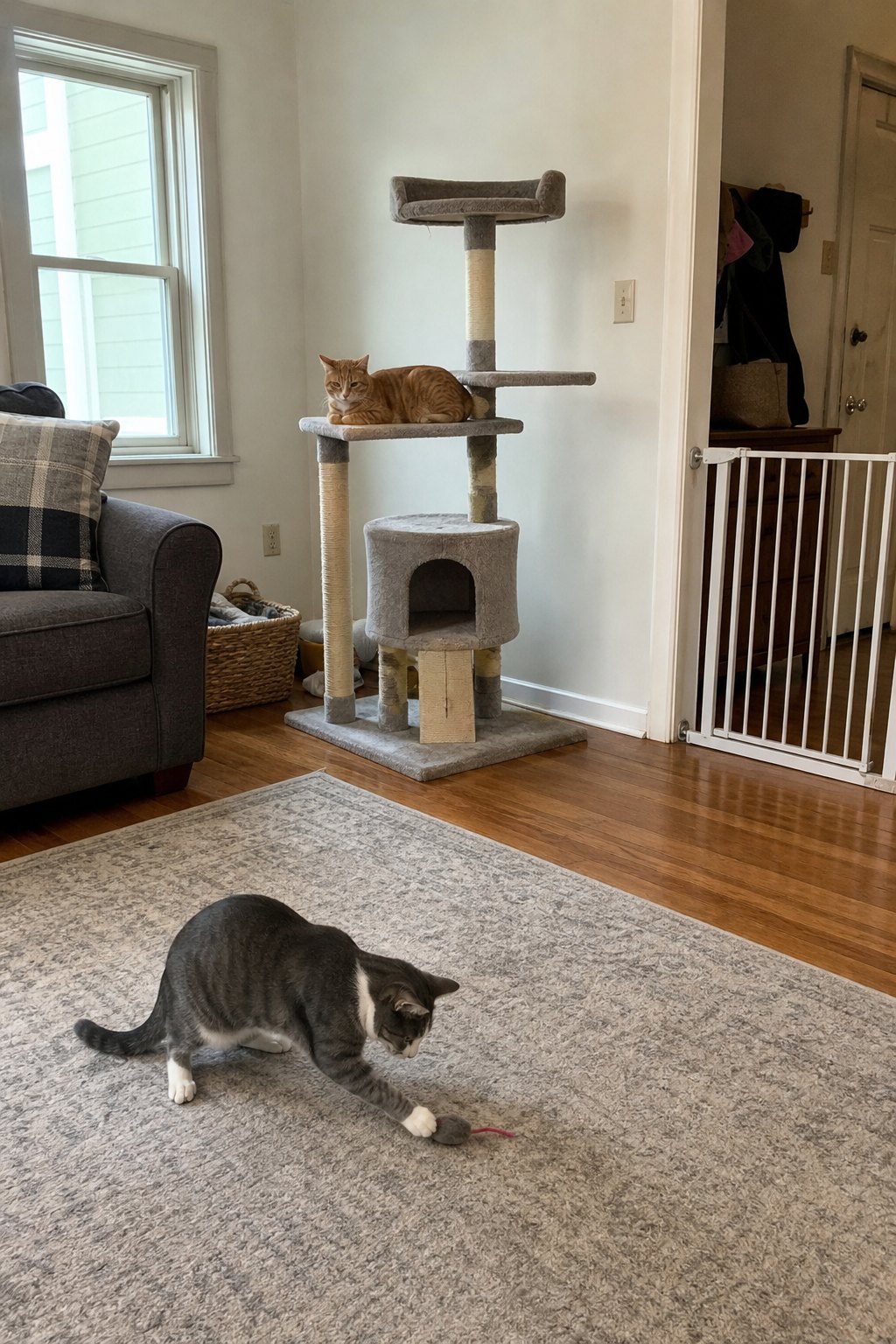
Now the cats share a room, with you watching. The ASPCA says to supervise first face-to-face meetings and keep them short. For shy cats, the SF SPCA suggests sessions of 10 to 15 minutes.
A few things make these visits go better:
- Distract with toys or food treats, as the SF SPCA suggests.
- Keep a large towel handy in case the cats fight, as the ASPCA advises.
- Don’t force the cats closer to each other. The ASPCA is clear on this, and the SF SPCA warns that forcing makes a cat more tense.
Leave them unsupervised only once you are confident they’re comfortable together, per the SF SPCA.
Signs to Slow Down
If you see any sign of stress, go back a step. The SF SPCA lists intense hissing or growling, not eating, avoiding the litter box and overgrooming as reasons to slow down. Texas A&M also describes hiding and putting distance between them as stress signs.
| Sign | What it can mean | What to do |
|---|---|---|
| Intense hissing or growling | One or both cats feel threatened | Go back to the last step where both cats were calm |
| Not eating | Stress, or a cat who feels unsafe near the other | Increase the distance and ease off the meetings |
| Avoiding the litter box | Stress, or worry about meeting the other cat on the way | Slow down and check the litter box setup |
| Overgrooming | A sign of stress, per the SF SPCA | Pause the next step and give the cat a calmer routine |
| Hiding most of the time | The cat is putting distance between them and the other cat, a stress sign | Slow down and see the help section below if it continues |
Stepping back is normal. After a setback, the ASPCA’s guide suggests repeating an earlier stage for about another week before trying again. Never punish a cat for aggression toward another cat, says the SF SPCA.
How Long Does It Take to Introduce Cats?
It can take days, weeks or even months. The SF SPCA says introductions can go smoothly within days or take weeks or months.
The ASPCA adds that different cats go at different paces, and relationships can take a long time. Texas A&M agrees that adjustment time depends on each cat.
So there’s no deadline to hit. Moving on when both cats are calm matters more than moving on by a certain date.
Set Up Your Home So Two Cats Can Share It
Cats share a home best when they don’t have to compete for resources. Texas A&M says to avoid competition over beds, litter boxes and food bowls.
The ASPCA recommends at least as many litter boxes as cats, ideally one more, placed in different areas and not side by side. Need ideas for placing them? These litter box hiding ideas keep extra boxes out of sight without making them hard to reach.
The ASPCA also lists these for a shared home:
- Multiple scratching posts
- Resting and hiding spots
- Several water bowls
- Separate feeding stations
- Perches
When to Get Help
Call in a professional if the cats don’t settle. The ASPCA says that if one cat hides most of the time or one bullies the other, reach out to a certified professional.
If your resident cat seems stressed, contact your veterinarian, as the SF SPCA advises. And if a fight leaves a cat injured, call your vet.
Your next step is simple: set up the new cat’s room before they come through the door. Then work through Step 1 and let the calmer cat set the pace.