
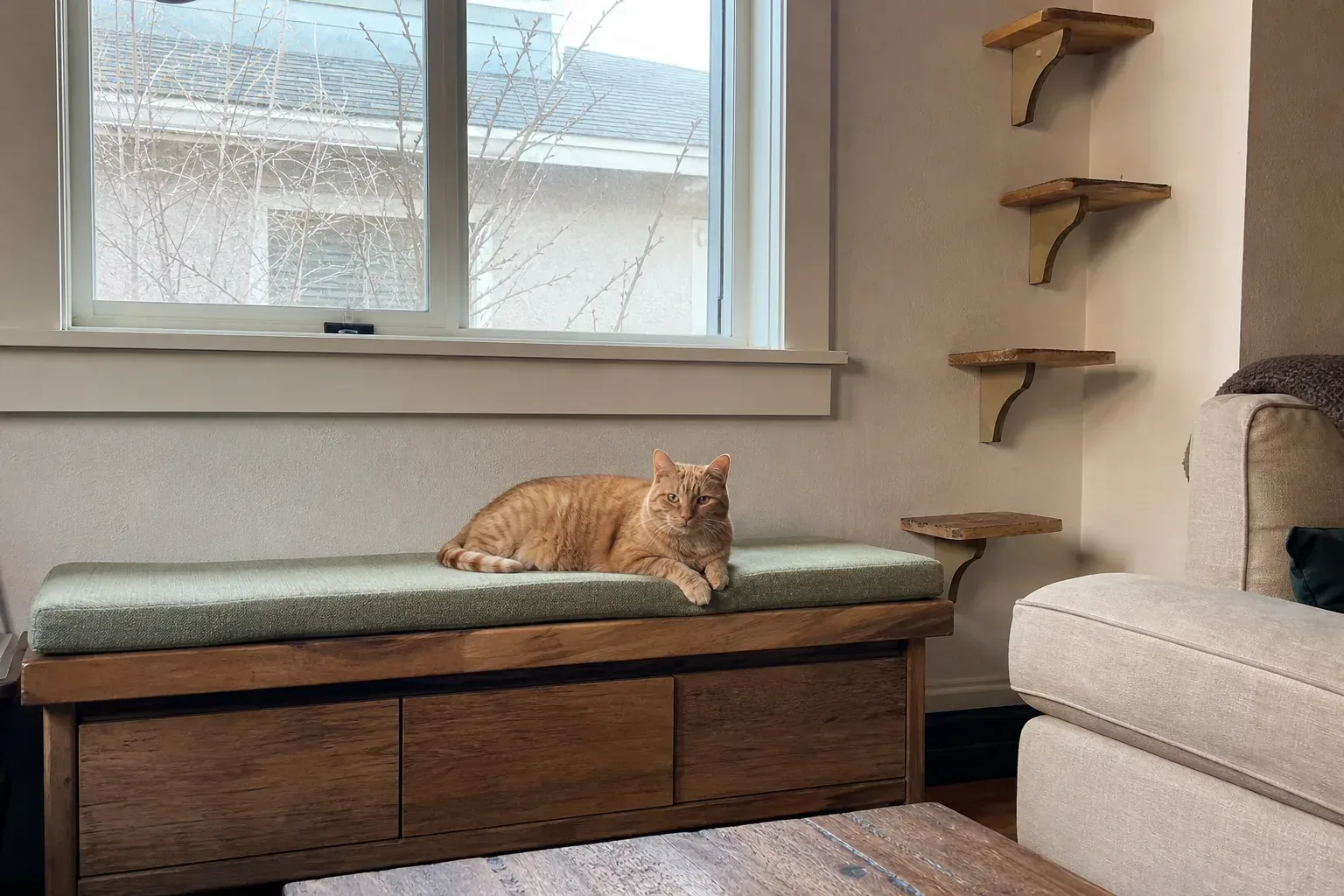
Cat room ideas for small homes start with the spots you already have: a little space under a window, the end of a sofa, or a blank stretch of wall. Any of those can become a place your cat goes to watch the street, stretch after a nap, or settle down while you work. An entire spare room is optional.
Start by noticing where your cat goes on an ordinary afternoon. A cat who naps under chairs might use a covered nook right away. A cat who spends half the day on the back of the sofa might get more out of a window seat. The 15 setups below include options for renters, cats who prefer to stay low, and cats who would happily spend the day above eye level.
Cat Room Ideas for Small Homes at a Glance
| What you have | Try this first | Add this if there’s room |
|---|---|---|
| A sunny window in a rental | A sturdy window-side bench | A freestanding step for easier access |
| A living room with a bare wall | A short run of wall steps | A wider landing shelf for naps |
| A studio with no spare corner | A side table with an open lower shelf | A flat scratch mat beside the sofa |
| A cat who avoids big jumps | A low perch with a stable step | A covered bed at floor level |
| Two cats who want the same spot | Two perches in different parts of the room | A separate scratcher near each cat’s usual route |
Key Tips to Keep in Mind
- Measure the usable space with doors and drawers open. Leave room for your cat to get on and off furniture and for you to walk past.
- Plan the way down when you plan the way up. For wall-mounted furniture, follow the manufacturer’s instructions for your wall type and intended load, and check your lease before drilling.
- Spread out food, water, litter, and resting spots as space allows. In a multi-cat household, pay particular attention to whether each cat can reach what they need without passing the other in a tight spot. AAFP and ISFM feline environmental needs guidelines
1. Give a Narrow Window a Bench Seat
Slide a sturdy, low bench under a window and add a grippy, washable mat. Choose a bench deep enough for your cat to turn around and stretch out, and check that it stays put when they hop onto the edge. Keep the window securely closed during perch time unless it has a secure screen that prevents falls. ASPCA window safety guidance
2. Turn an Awkward Corner Into a Cat Tree Spot
Measure the base of the tree against the space where it will actually sit. A broad top platform can still crowd a walkway even when the base fits neatly. Pick a stable tree with platforms your cat can use comfortably, then place it beside a solid wall and away from door swings. Follow any anchoring instructions that come with it.
3. Make a Nap Nook Under a Side Table
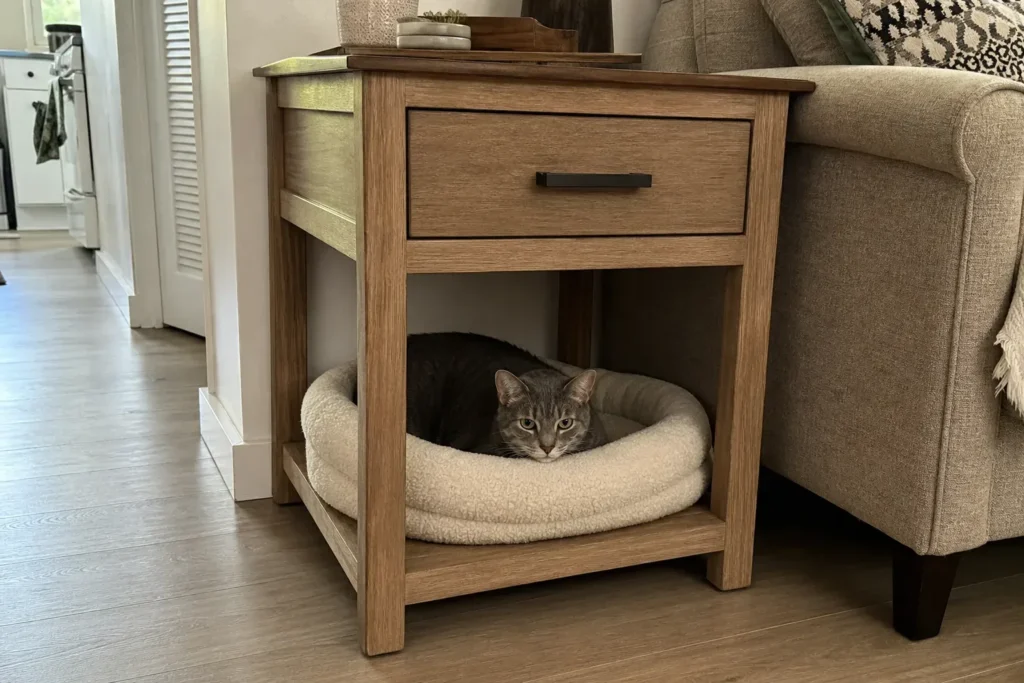
Set a washable bed on the open lower shelf of a stable side table or on the floor beneath it. This works especially well beside a sofa, where your cat can hang out close to you with a little cover overhead. Leave the approach clear and move power strips and chargers out of the nook. If your cat already likes to tuck themselves out of sight, see why a quiet hiding place matters.
4. Set Up a Foldaway Play Lane
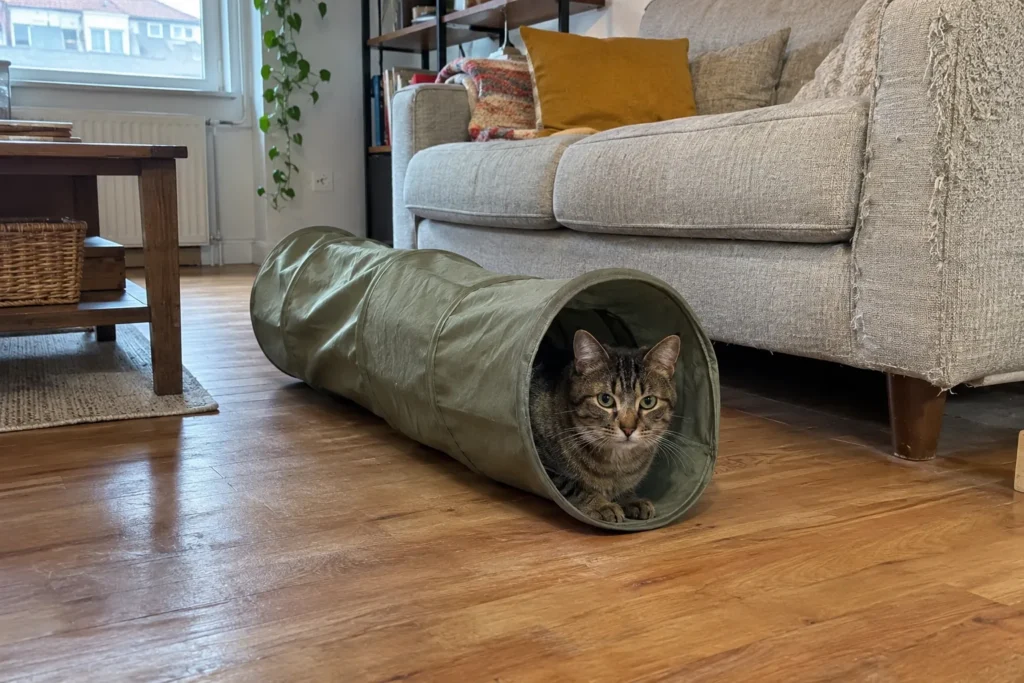
Unfold a short tunnel along a clear stretch of living room floor for playtime. Sit off to one side and move a wand toy across the far opening so your cat can peek, stalk, and pounce. Put the wand toy away after supervised play. When you need the floor back, fold the tunnel and slide it into a closet or under the sofa.
5. Put a Flat Scratcher Beside the Sofa
If your cat keeps going for the front corner of the couch, put a non-slip horizontal scratch mat right beside that spot. A low mat fits where a tall post would stick into the walkway. Cats have preferences about scratching surfaces and angles, so if yours usually stretches up to scratch, try a sturdy upright scratcher in the same location. Feline environmental needs guidelines
6. Fit a Scratching Panel to a Short Wall
A wall-mounted scratching panel can fit on a sliver of wall at the end of a cabinet run. Mount it where your cat can stand on the floor and stretch up comfortably without reaching into foot traffic. Choose a panel you can replace when the surface wears out and mount it according to its instructions.
7. Turn an Open Cubby Into a Hideout
Clear a floor-level cubby in a secure bookcase and slide in a familiar blanket. Pick a cubby deep enough for your cat to settle and wide enough for them to turn around. Keep the opening clear of storage baskets and give each cat another retreat elsewhere if one cat tends to camp outside the entrance. AAFP guidelines on tension between cats
8. Build a Short Climbing Wall With a Place to Turn
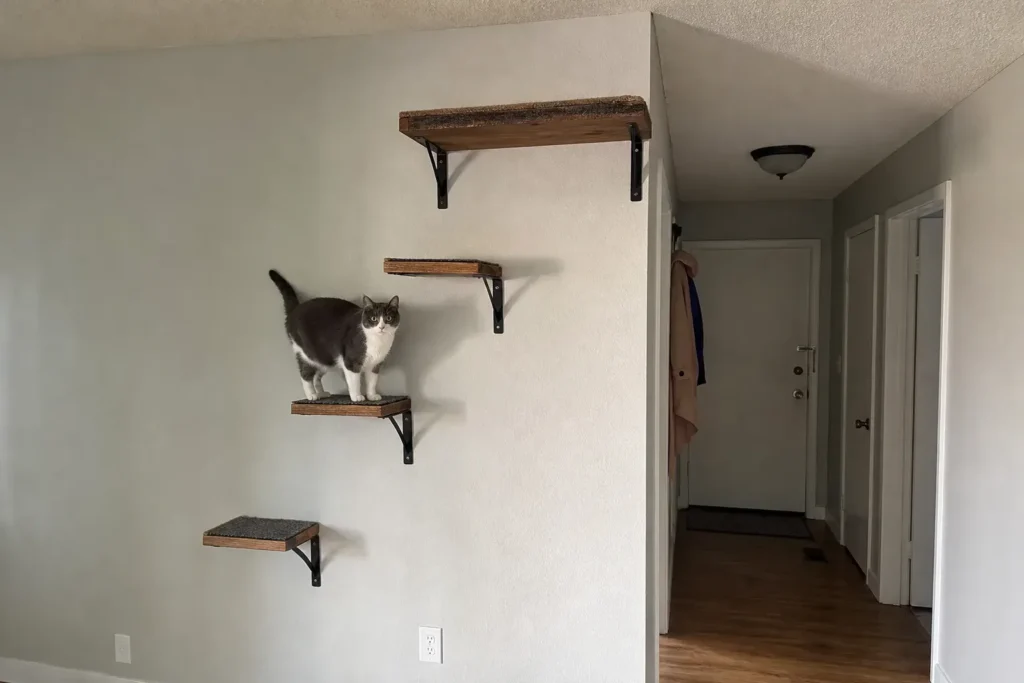
Use a few staggered cat steps to reach one wide landing shelf on a living room wall. Start by observing a jump your cat already makes comfortably, then lay out the route with that distance in mind, including the way down. Use secure, grippy platforms and leave enough space on the top shelf for your cat to turn. Keep the route away from doors, lamps, and busy walkways.
9. Add a Low Wall Hammock for Lounging
Put a purpose-made cat hammock at an easy-to-reach height on a quiet stretch of wall. Choose a design with a washable cover and follow its mounting and weight instructions. A low hammock saves floor space and gives your cat the option of resting just off the ground. If they hesitate at the moving fabric, give them a firm perch nearby to choose from.
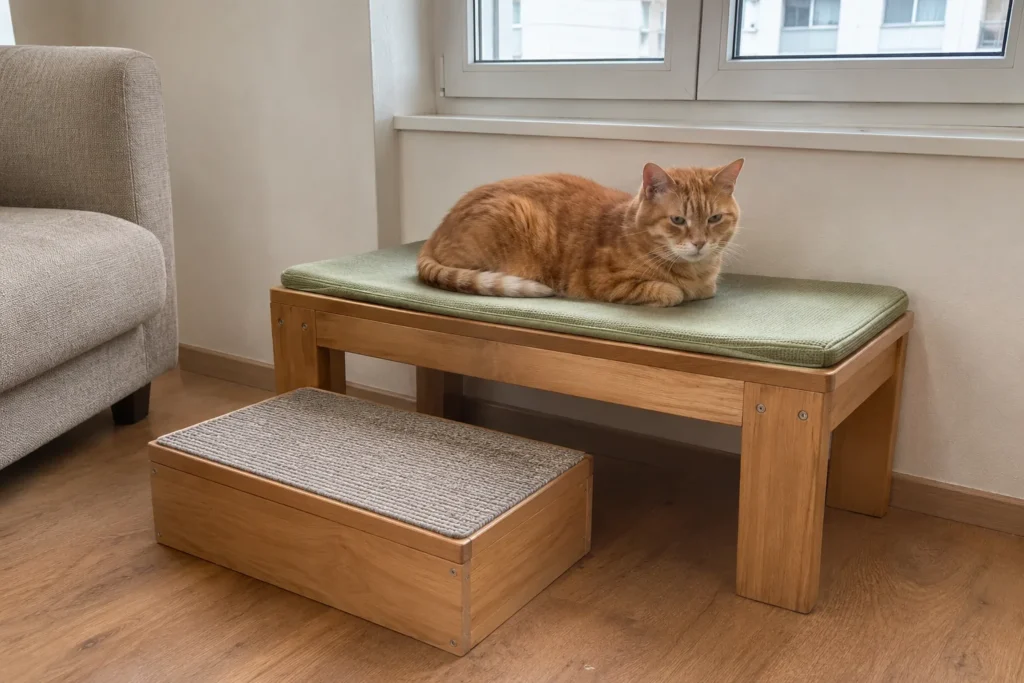
10. Use a Bench With a Step for Easier Access
If your cat already seeks out low furniture, put a wide, stable step beside a bench at the quieter end of the room. Add grip to both surfaces and make sure the step stays in place when your cat pushes off. A sudden change in how willingly your cat jumps is worth mentioning to your vet. Cornell Feline Health Center on arthritis and mobility changes
11. Give Your Cat a Place Beside Your Desk
Set a small chair or sturdy stool next to your desk and cover the seat with a washable pad. This gives a cat who likes to sit close to you a spot with a view of your hands and the room. Leave a clear route to the seat, keep cables tucked away, and allow enough space to roll your desk chair back without bumping it.
12. Use a Shallow Tray for Food Puzzle Time
Set a simple food puzzle on a washable tray in a quiet spot. Start with an easy puzzle and use a portion of your cat’s usual meal so you can see whether they understand how to reach it. The tray catches stray pieces and can go away when you’re done. In a multi-cat home, offer puzzles in separate spots so each cat can explore at their own pace. Feline environmental needs guidelines
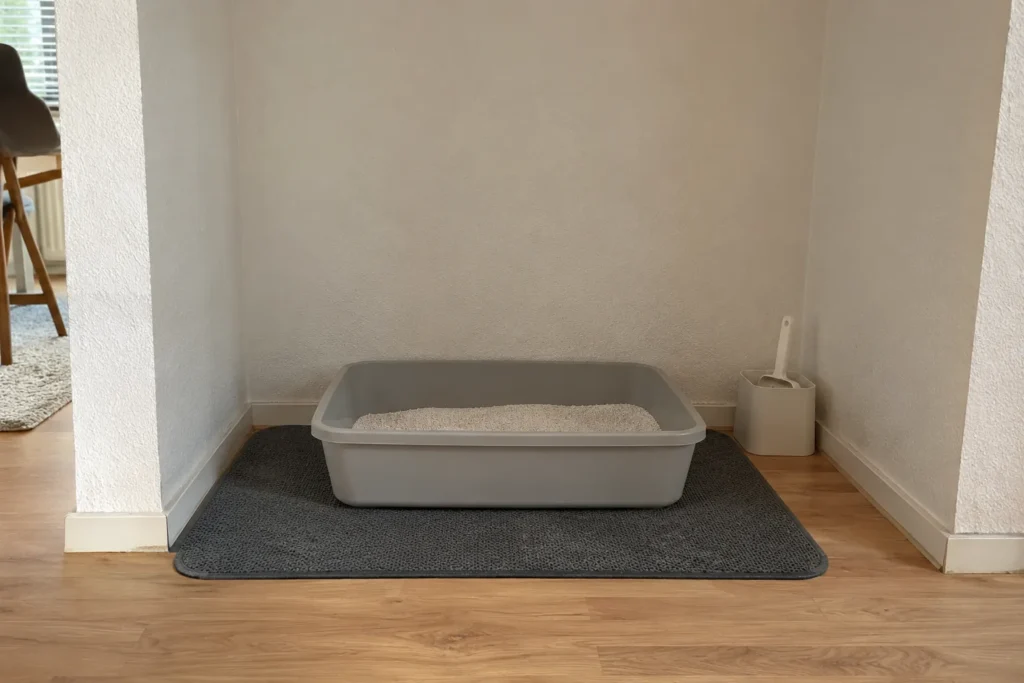
13. Make a Litter Station in a Quiet, Open Alcove
An alcove can tuck a litter box out of the main room while leaving enough space to approach it and scoop it. Before choosing the spot, check whether doors can shut your cat out and whether they’d need to squeeze past a noisy appliance or another pet. Keep food and water elsewhere. If you’re choosing between two locations, walk through this litter station planning checklist.
14. Give Two Cats Perches in Different Spots
Put one perch at the window and another near the bookcase or at the other end of the sofa. Start with two spots your cats already visit and watch what happens at busy times, like when you sit down in the evening. If one cat can guard the approach to both perches from the same spot, move the second one farther away or out of direct view. AAFP guidelines on tension between cats
15. Make an Under-Bed Retreat You Can Clean
If your cat already naps under the bed, keep an open path on at least one side and slide in a thin, washable mat close enough to retrieve. Move loose cords and unstable storage piles elsewhere, and leave your cat a clear way out. For a cat who has just moved in, you can build the retreat into a quiet first-room setup.
How to Put It Together in One Small Room
In a studio, try a bench at the window, a scratch mat at the sofa arm, and a covered bed beneath the side table. That gives your cat three usable spots along the edges of the room and keeps the center free. Put water and litter in separate locations as far apart as your layout allows.
If you’re starting with a bare wall, set up one short route with a landing you can reach to clean. Give your cat time to explore it on their own. Over the next few days, watch where they pause and how they get down. If they always turn back at the same spot, start by making that part of the route easier.
1 thought on “15 Cat Room Ideas for Small Homes, From Window Seats to Climbing Walls”