
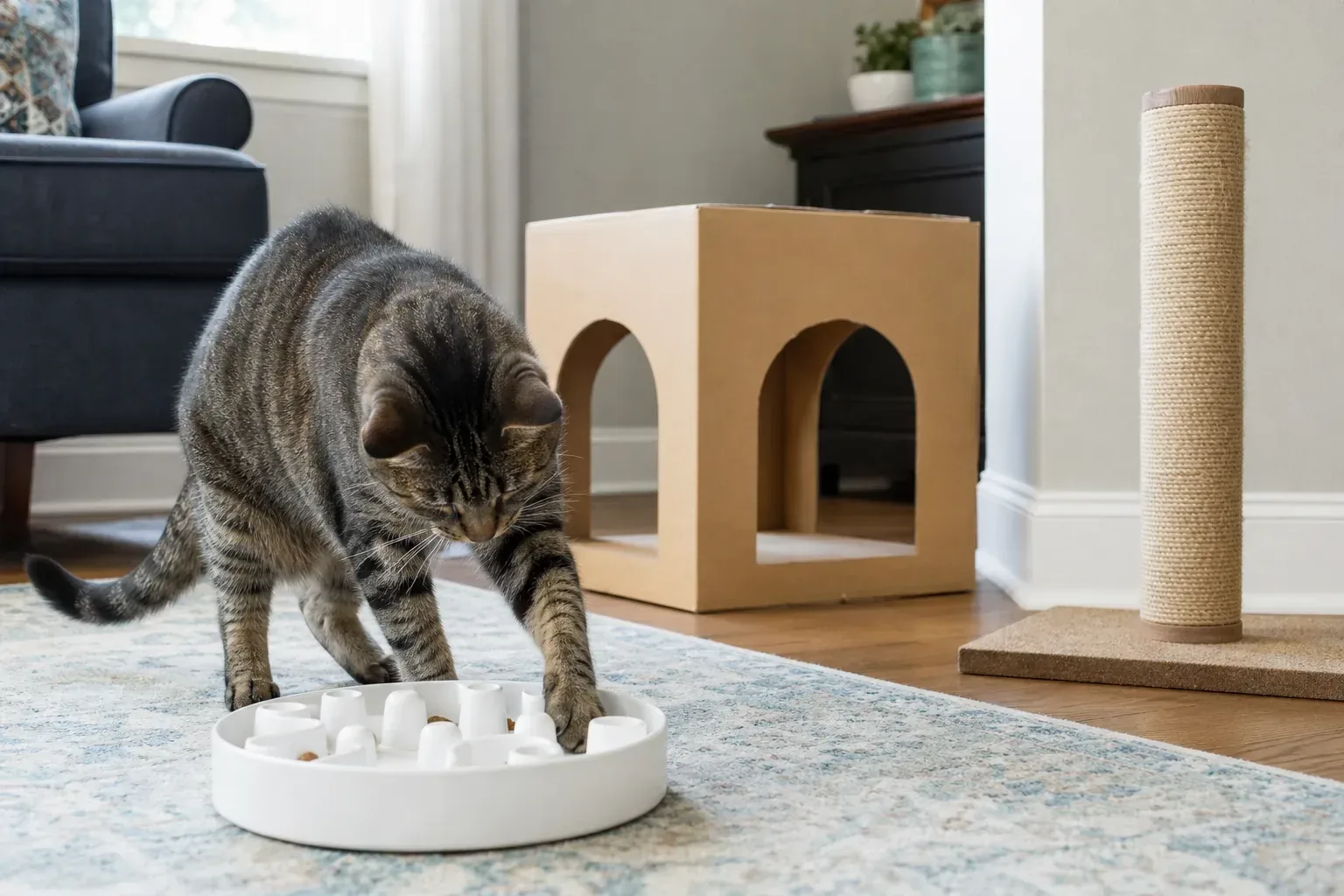
Indoor cat enrichment ideas can be as simple as moving a wand toy, offering an easy food puzzle, or making room for a quiet retreat. Choose two or three options from this weekend menu: hunting games first, then food activities, exploring and scratching, and gentle time together. Supervise new toys and homemade setups, and let your cat stop whenever they want.
1. Let a wand toy disappear around a corner
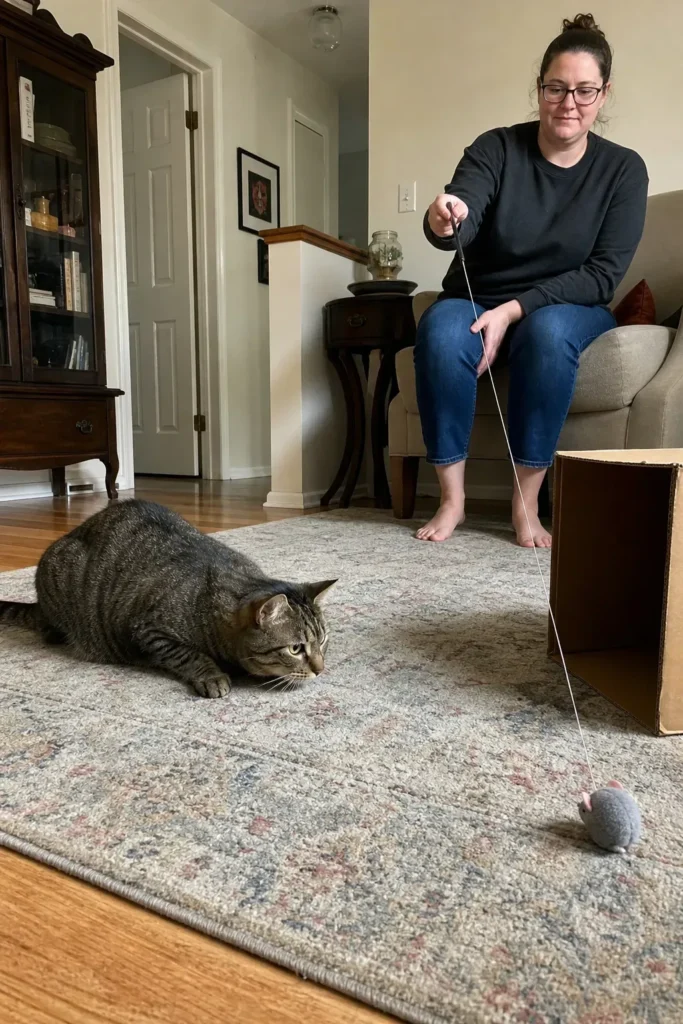
Hunting play · about 5 minutes · one clear patch of floor. Move a wand lure away from your cat, pause, then let it slip partly behind a box. The stop-start movement gives a watching cat something to stalk. Keep the lure low for a cat who prefers grounded play, and let them catch it regularly.
A crouch and a long stare can be part of the game; you do not need to keep waving faster. Finish after a successful catch while your cat is still comfortable. Put the whole wand away afterward. VCA’s veterinary behavior guide warns against leaving string toys unattended.
On this page
2. Roll a chase toy along a clear lane
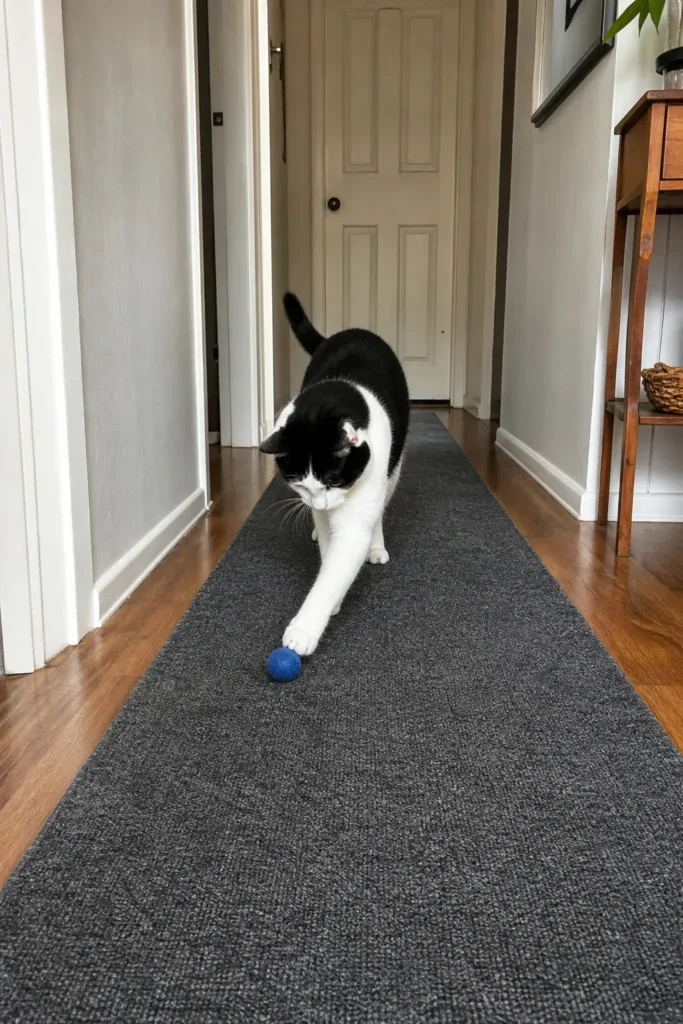
Chasing · about 2 minutes · a short hallway or room edge. Clear shoes and cables from a small lane, then roll a lightweight cat toy across your cat’s view. Start with a short, slow roll. A cat who watches but does not chase may prefer a different texture or speed.
Choose a toy too large to swallow but light enough to bat, and inspect it for loose pieces. A runner that stays flat gives paws a more predictable surface than a slick turn. Keep the route away from stairs and closing doors; this game works without a long sprint.
3. Offer a soft kicker for wrestling
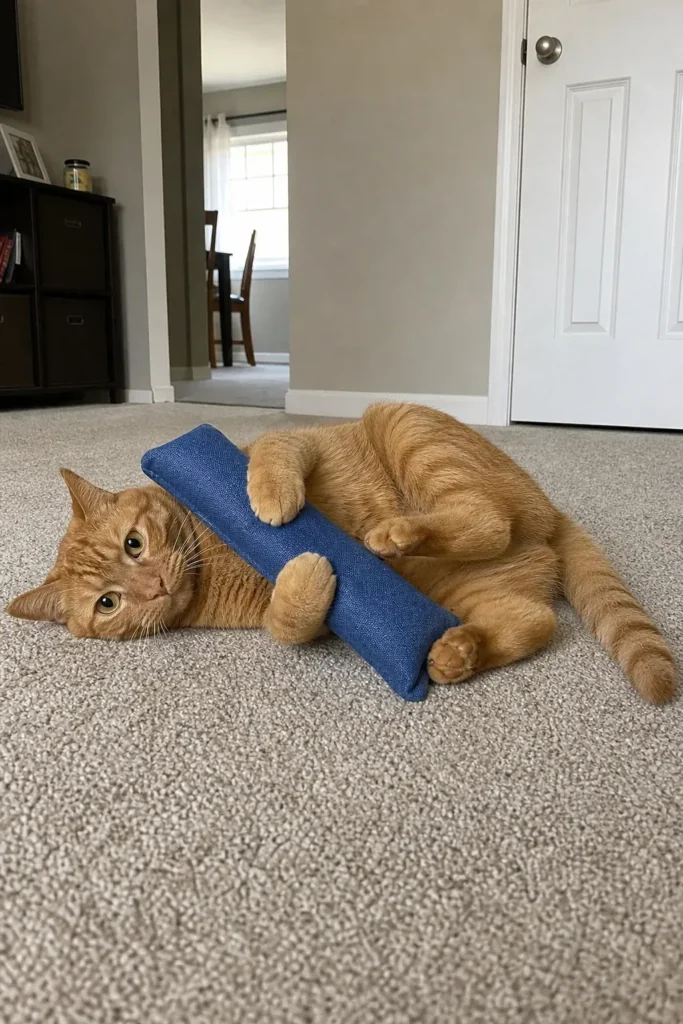
Grabbing and kicking · a few minutes · a rug-sized spot. Offer a sturdy fabric kicker your cat can hold with their front paws while pushing with their back feet. Set it beside them during an alert, playful moment and let them decide whether to grab it. Keep your hands out of the wrestling game.
Check seams before and after play. Retire a toy that sheds stuffing or has loose trim. If your cat prefers to carry a soft toy instead, allow that quieter version. The useful part is giving those paws an appropriate object, not getting a dramatic performance.
4. Bring back a forgotten favorite
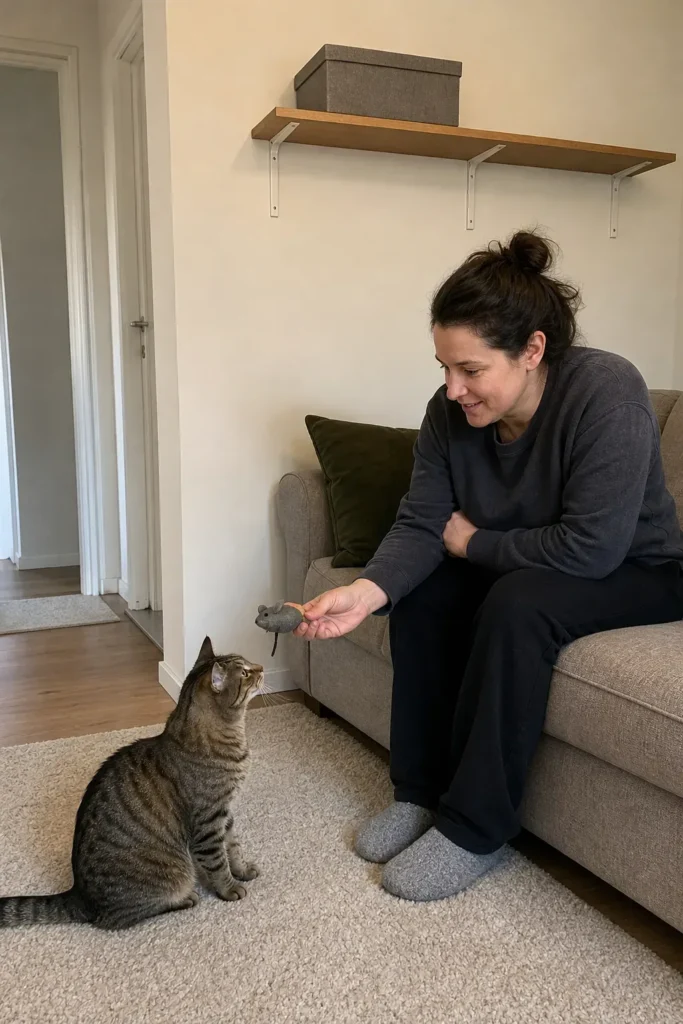
Novelty · 5 minutes of setup · no extra floor space. Put a few neglected toys away in a closed container, then bring one back at your cat’s usual active time. Offer it with a different movement or in a different clear spot. You may learn that the location mattered more than the toy.
Keep a well-loved comfort toy available. Ohio State’s Indoor Pet Initiative suggests rotating toys while leaving favorites that cats rest beside. Try a small rotation first, rather than replacing everything familiar in one afternoon.
5. Start with an easy food puzzle
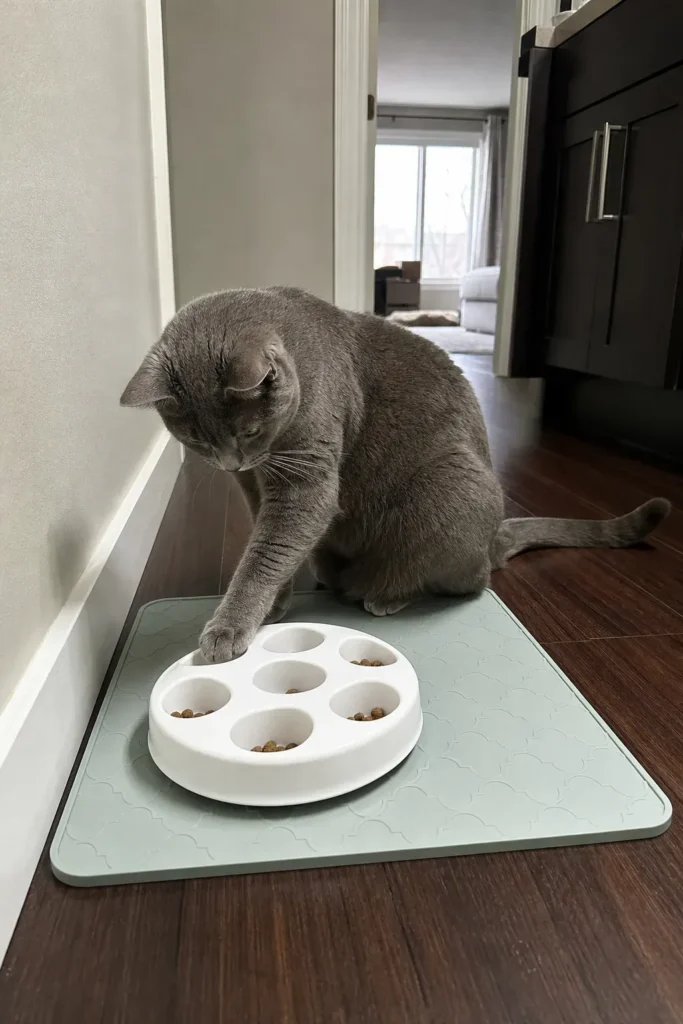
Food seeking · 5 minutes to introduce · one washable mat. Start with broad, open compartments and a few pieces from your cat’s normal food allowance. Leave the food visible and easy to reach. Sit nearby so you can notice whether a paw, a nose, or a simpler dish works best.
The first goal is an easy success. Do not make the entire meal depend on solving a new puzzle. Offer the remaining meal normally and check that your cat eats enough. Keep prescribed diets and feeding plans intact; ask your veterinary team before changing those. Wash the feeder as its instructions require.
6. Make a three-stop food hunt
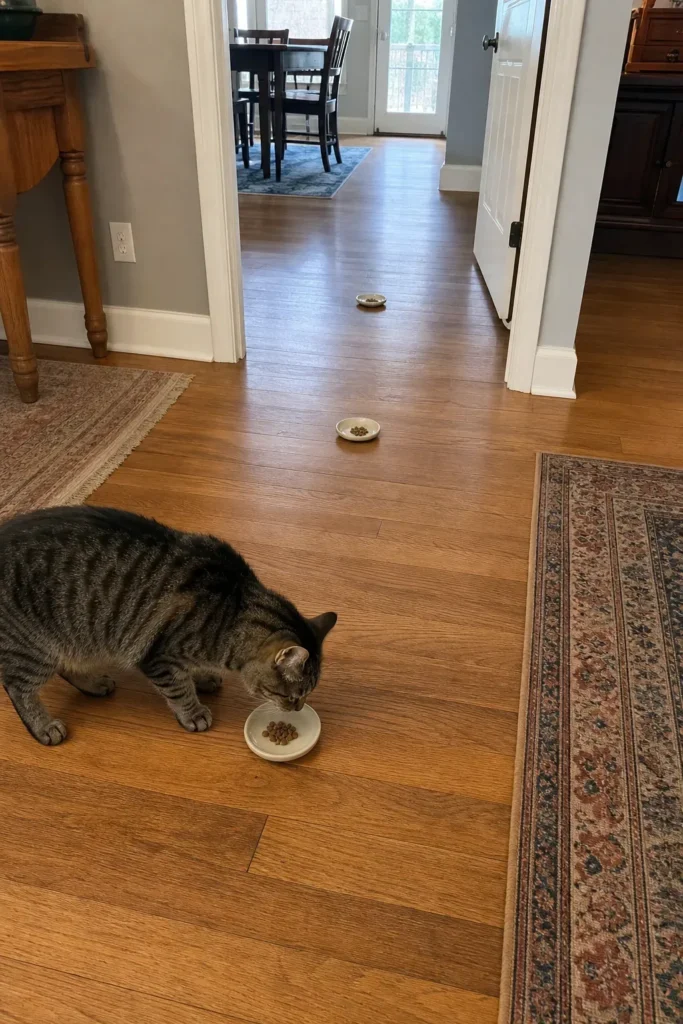
Searching · 5 minutes of setup · three quiet floor spots. Divide a small part of the usual meal between three shallow dishes. Put the first in an obvious place and the others a little farther along an easy route. Show your cat the starting point without carrying them from plate to plate.
Once the route is familiar, change one location at a time. Avoid high jumps, busy doorways, and litter areas. In a multi-cat home, give each cat a separate search area so a faster eater cannot take every portion. Count this food as part of the meal, and collect any leftovers.
7. Try a supervised cardboard reach tray
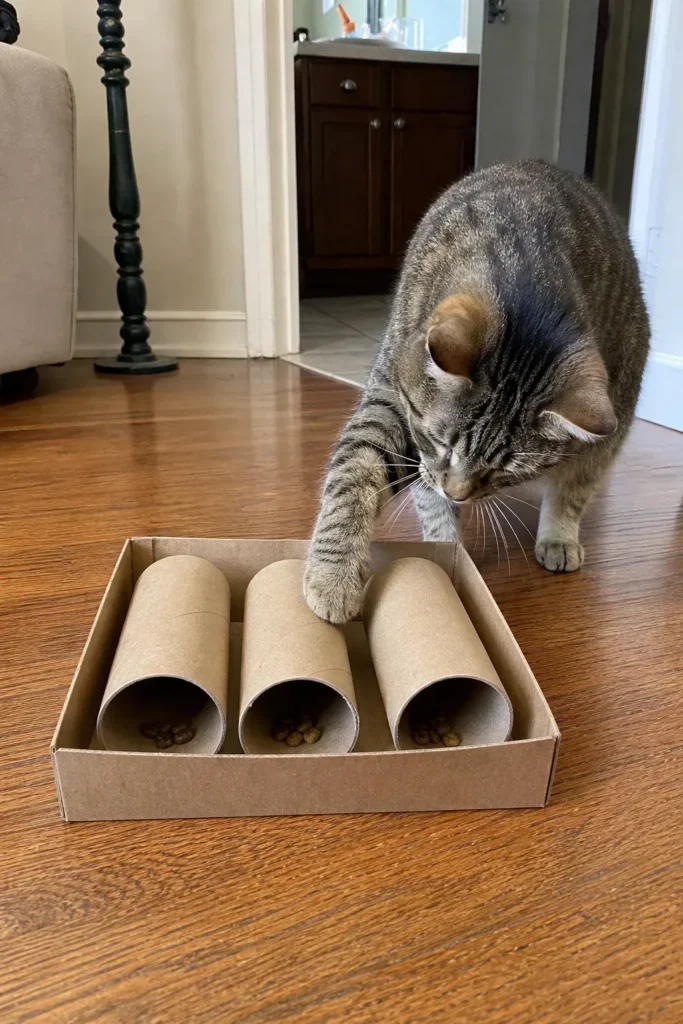
Paw exploration · about 10 minutes of setup · one tray. Place a few clean, broad cardboard tubes on their sides inside a shallow open box. Leave a piece of familiar dry food at an open end where it is easy to see and reach. Your cat can investigate with a nose or paw without facing a sealed puzzle.
Use plain cardboard without staples, loose tape, or sharp edges, and choose openings that cannot trap a paw. Stay with your cat and stop if they chew or swallow cardboard. The ASPCA’s DIY enrichment guidance calls for active supervision with homemade items. For a cardboard chewer, use a washable commercial feeder instead.
8. Let a treat ball do the moving
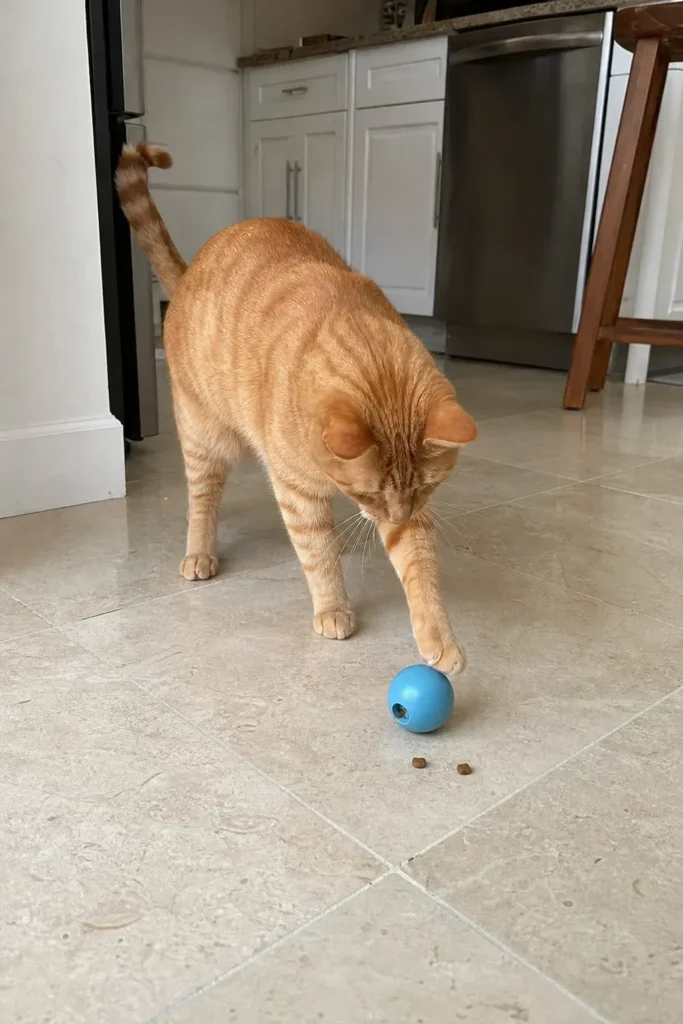
Moving food puzzle · 5 minutes to introduce · an easy-clean floor. A purpose-made dispensing ball adds movement to food seeking. Start on its easiest setting with a small measured portion, and show how a gentle nudge releases a piece. Keep it in a quiet room where it cannot disappear beneath a heavy appliance.
Choose a ball intended for cats and follow its cleaning and sizing directions. If the noise makes your cat back away, try a quieter surface or return to the stationary puzzle. Difficulty is adjustable; frustration is not a useful goal. Retrieve the ball and account for any food left inside.
9. Create a box retreat with two ways out
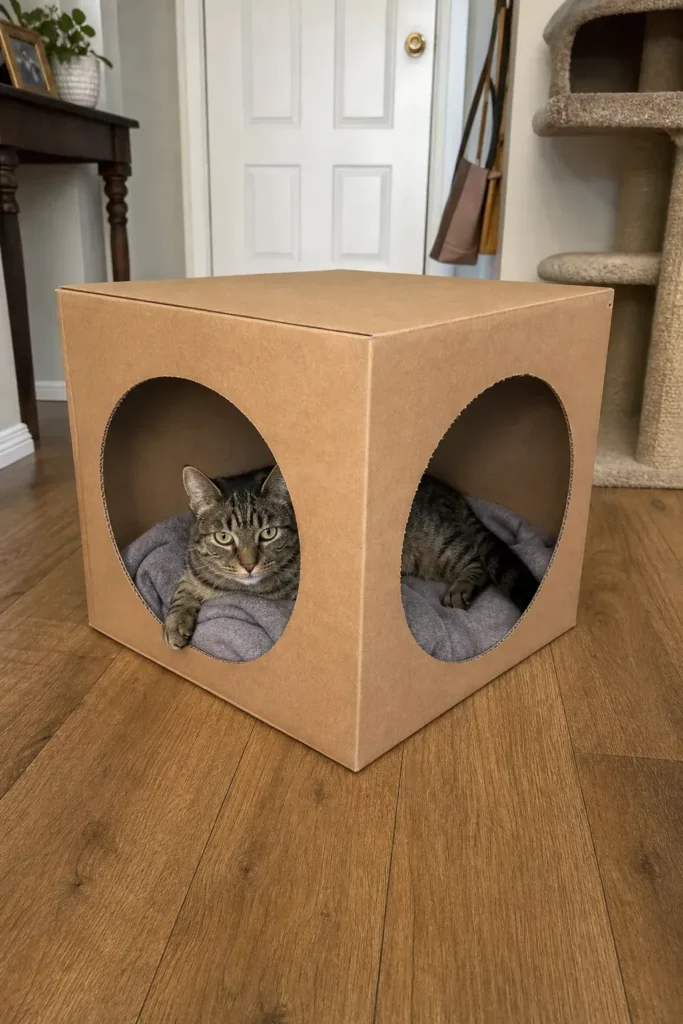
Retreat and observation · about 10 minutes of setup · one box footprint. A plain box can give your cat somewhere to watch without being in the middle of the room. Prepare two generous openings before bringing the cat over, remove tape and staples, and tuck in familiar bedding. Leave both approaches clear.
Place it away from an active play lane and let your cat enter alone. Do not reach in to pull them out for the next activity. FelineVMA’s environmental-needs guidance recommends safe retreats and separated options in multi-cat homes. Quiet use counts as a successful choice.
10. Set up a short exploration tunnel
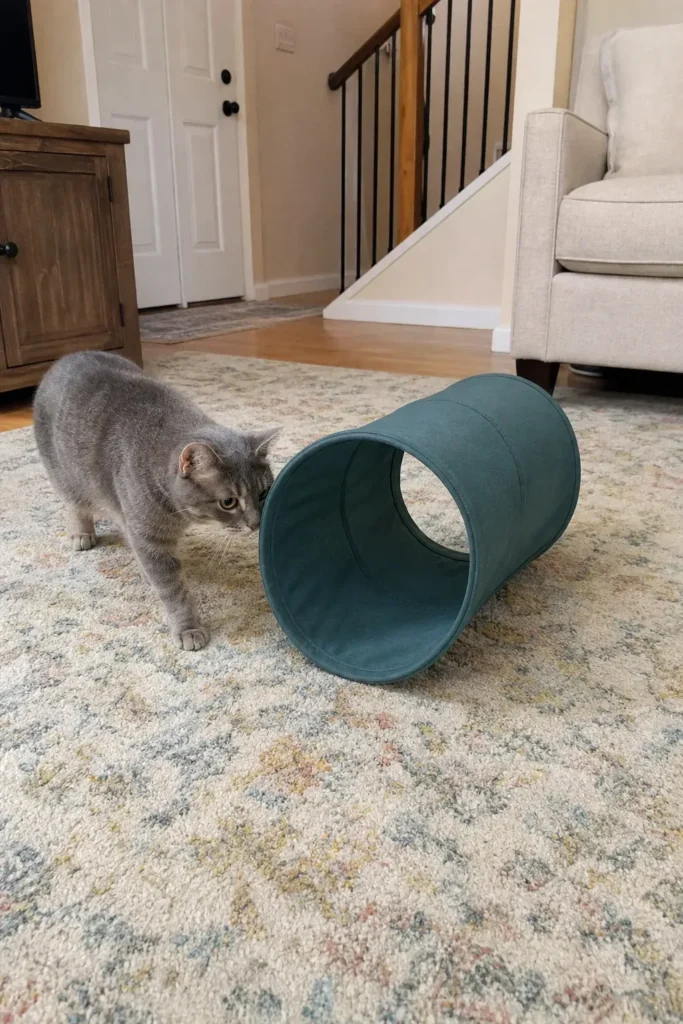
Exploring · 5 minutes of setup · a short strip of floor. Open a sturdy cat tunnel in a familiar room with both ends clear. Let your cat inspect it before adding a toy near the far opening. You can sit to one side so your body does not block the route.
Skip models with loose dangling pieces, exposed supports, or an opening too tight for your cat to turn comfortably. A timid cat may prefer a shorter tunnel that shows daylight through the other end. Pack it away if it crowds a household walkway, and check for wear whenever it comes back out.
11. Give window watching a comfortable seat
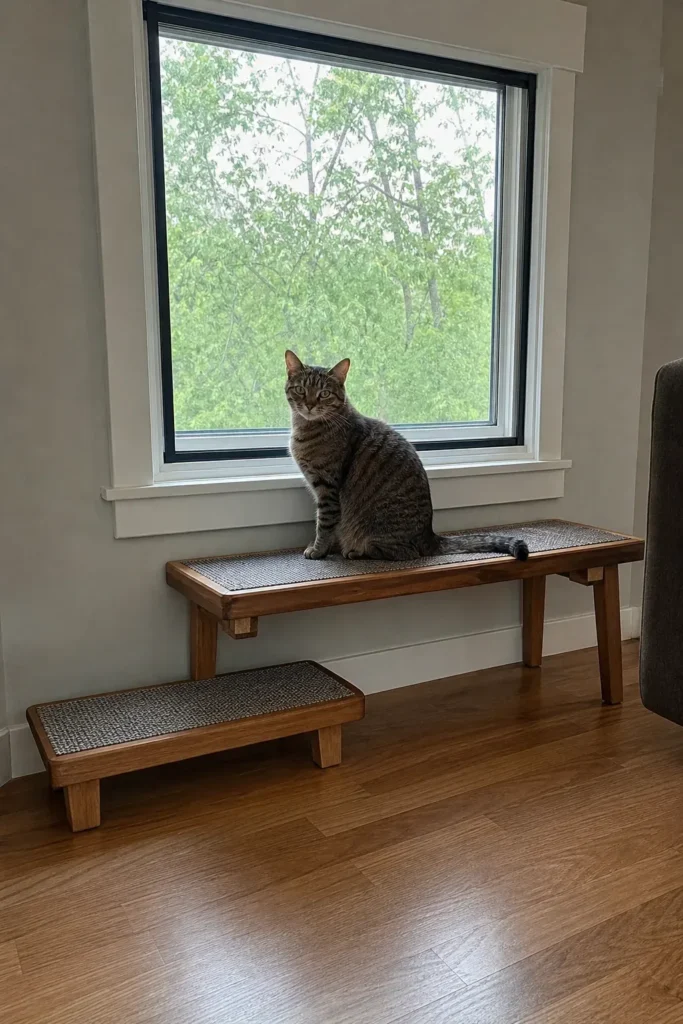
Watching · about 10 minutes to arrange · one window-side spot. Give an existing sturdy seat a thin nonslip pad and a clear approach beside a closed window. Check the view from cat height; a comfortable chair facing a blank fence may offer less interest than a lower seat overlooking moving branches.
Keep cords out of reach and provide a place to move out of direct sun. If outdoor animals prompt agitation, change the view or partly cover it. Our bench-to-window-perch guide covers stability, pad fit, and an easy step down. The weekend activity here is choosing the view, not building a complicated perch.
12. Refresh a low climbing route
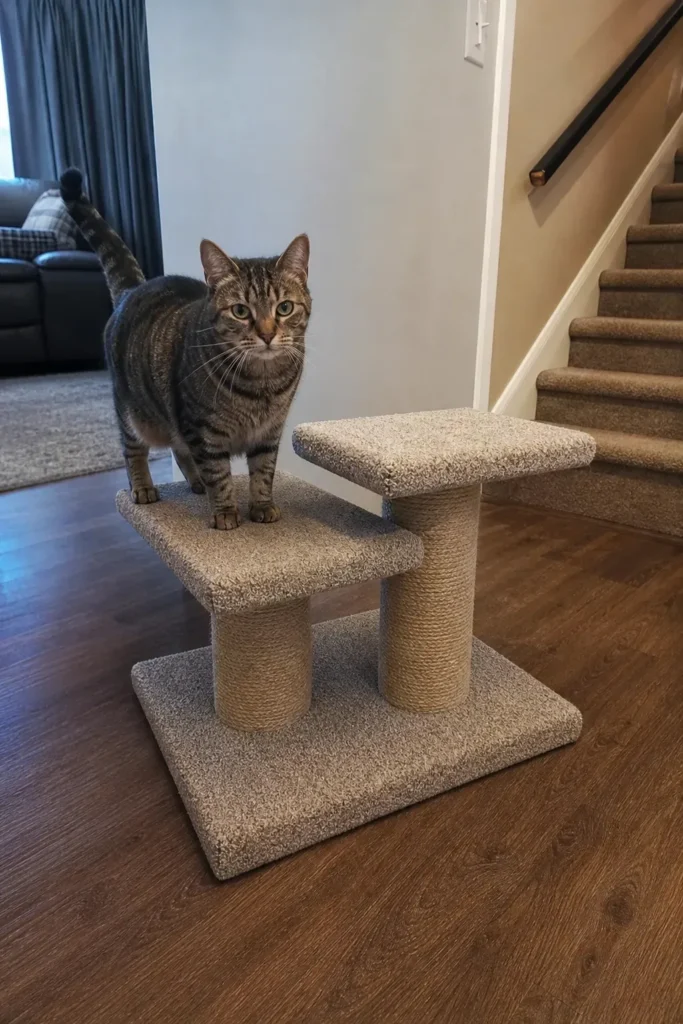
Climbing and surveying · about 10 minutes to check · an existing cat tree. Make a familiar low climbing route easier to use: clear its landing, check the base, and arrange the approach so your cat can go up and down without squeezing past furniture. Let exploration happen at their pace.
Follow the tree’s assembly and anchoring instructions, and match the route to movements your cat already makes comfortably. Avoid stacks of loose furniture. For room-wide placement options, see our small-home cat room ideas. A new reluctance to climb deserves a veterinary conversation rather than a more tempting toy at the top.
13. Put a scratcher where the stretch happens
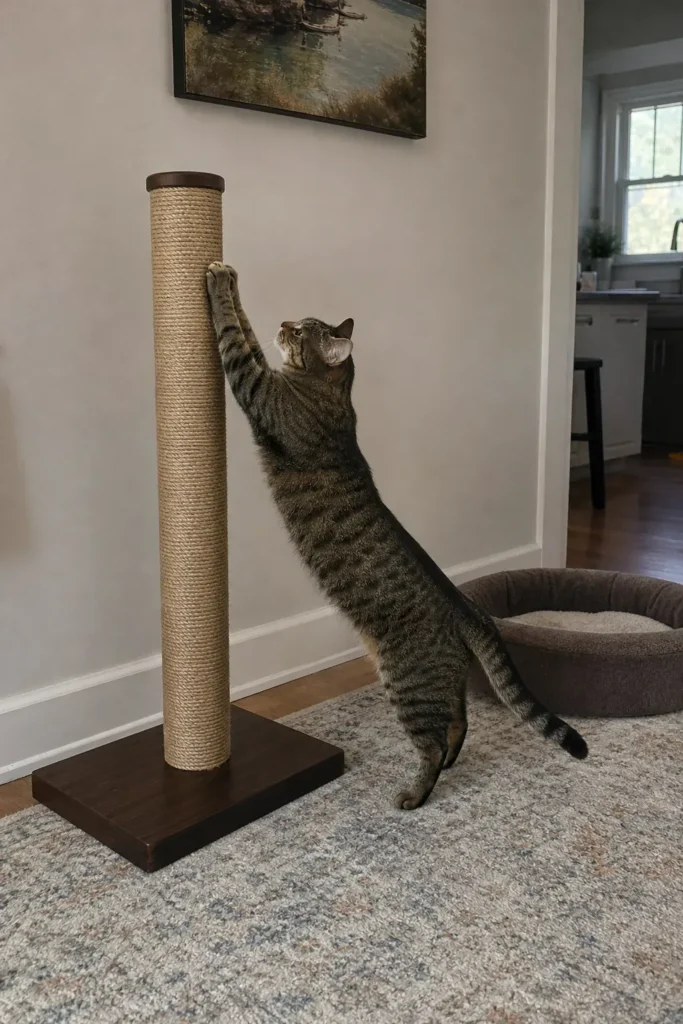
Upright scratching · 5 minutes to position · one stable base. Put a secure scratching post near a resting spot your cat already uses. Choose enough height for a comfortable stretch and a base that stays still under pressure. Leave room for the cat’s whole body at the front.
Watch the first few attempts before deciding whether the material suits them. Keep an old favorite available while introducing the new option. Do not hold their paws against the post. The Indoor Pet Initiative’s scratching advice explains why location, stability, and surface preference matter.
14. Offer a horizontal scratching choice
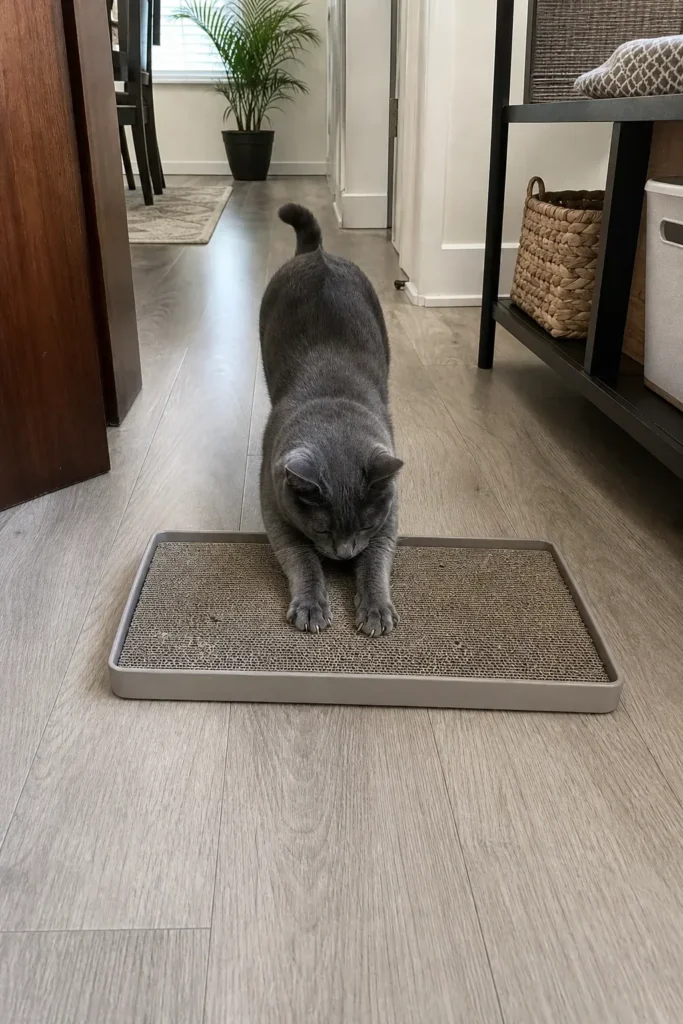
Horizontal scratching · 5 minutes to set out · one floor mat. Place a flat cardboard scratcher in a holder that does not skid. This gives a cat who reaches down to scratch a different body position from the upright post. Start near a spot where that downward stretch already happens.
Offer the two orientations as choices and notice which gets used. You do not need to keep buying surfaces if a familiar one is already popular. Sweep up loose cardboard, replace badly worn pieces, and avoid blocking a doorway. The aim is a usable scratching place in daily life.
15. Teach a simple nose target
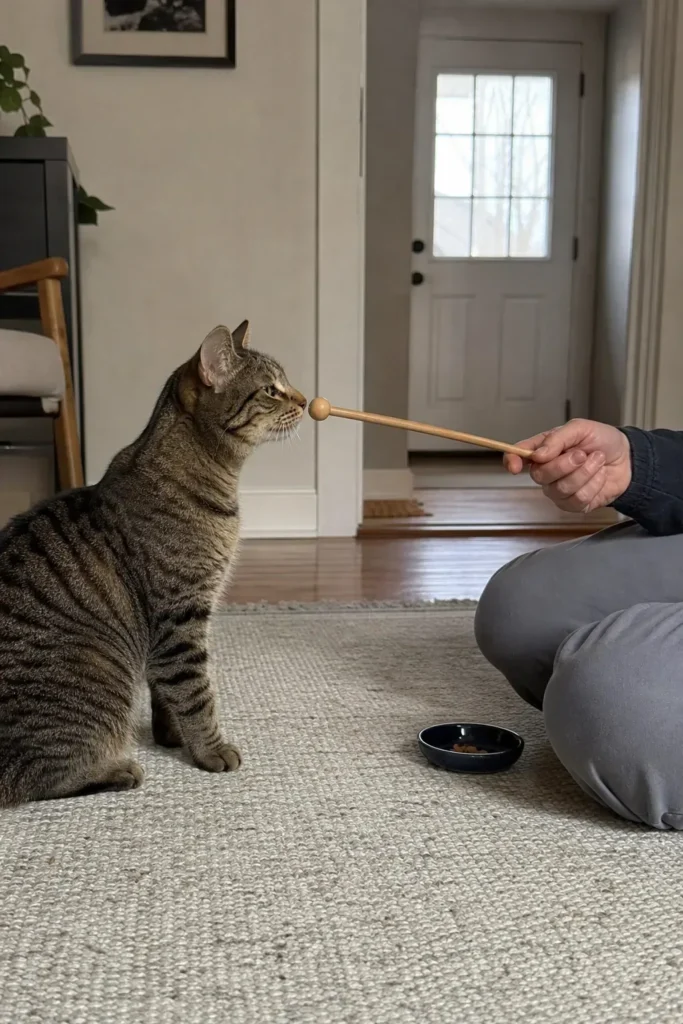
Learning together · 1–2 minutes · a quiet floor spot. First pair a soft “yes” with a small food reward a few times. Then hold a smooth, blunt target near your cat’s nose and wait. When they voluntarily touch it, say “yes” and reward immediately. Keep the target still instead of pushing it toward their face.
Finish after a few comfortable repetitions. If your cat turns away, give them space and try another time. AAHA’s cat-training guide describes this marker-and-reward approach. A tiny voluntary nose touch is enough for a first session; it does not need to become a weekend trick routine.
16. Turn the carrier into an optional hangout
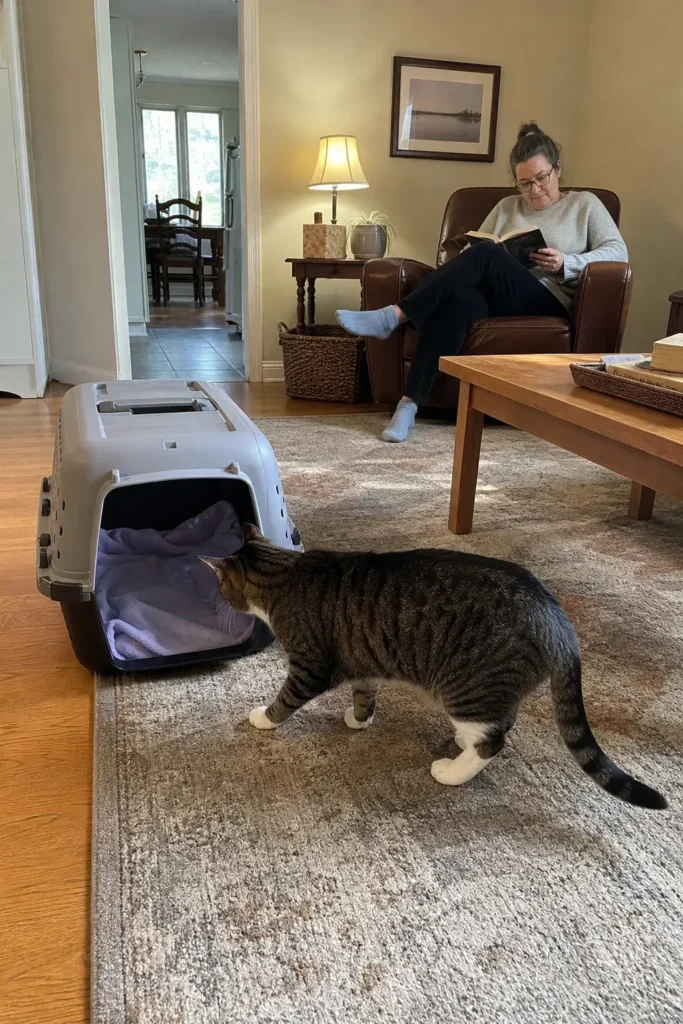
Familiar exploration · 5 minutes of setup · one carrier footprint. Leave the carrier in a quiet living area with familiar bedding and its door secured open or removed according to the manufacturer’s directions. Set a reward near the entrance, then let your cat choose whether to investigate. Keep the exit free.
For a worried cat, approaching the carrier may be the whole session. Do not shut the door as a surprise. FelineVMA’s carrier guidance supports keeping it accessible as a familiar safe place. This weekend can start a positive association; it does not guarantee a cat will be ready to travel.
17. Let your cat choose quiet company
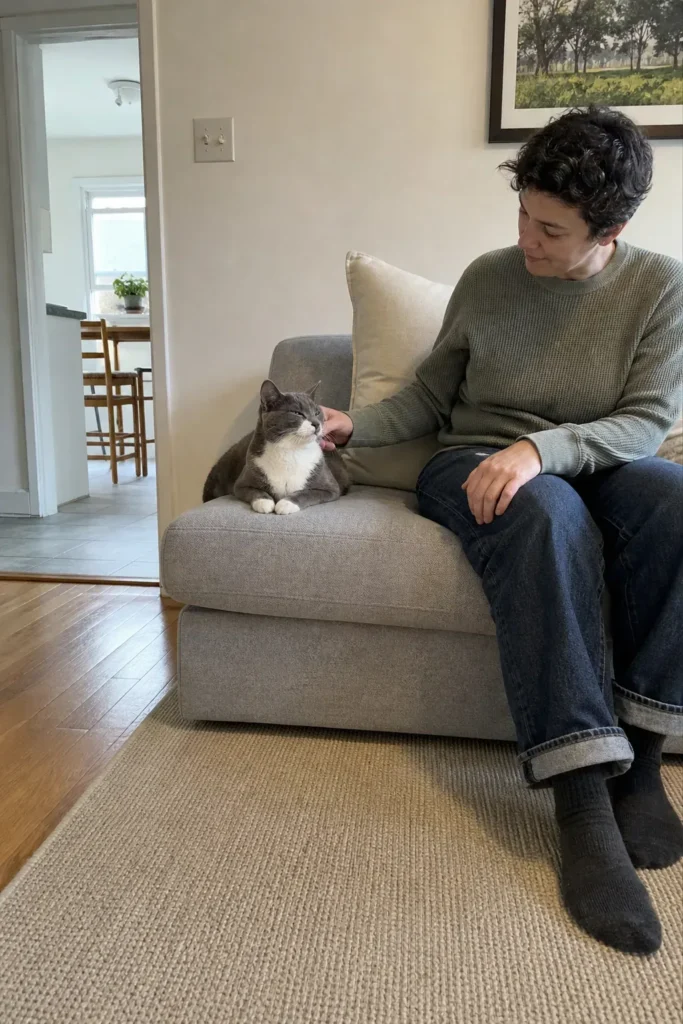
Social choice · a few quiet minutes · a familiar seat. Sit where your cat can approach and leave freely. Offer a little cheek contact if they seek it, then pause. If they lean back toward you, continue briefly; if they move away, let that be the end.
Some cats prefer nearby company to petting. Reading beside them can be the activity. Keep the routine predictable and offer individual attention when other pets make it hard to relax. For more on observing preferences and changes, visit our cat behavior guides.
Choose a weekend menu your cat can actually enjoy
You do not need to introduce all 17 ideas. The time estimates above are planning suggestions, not targets for how long your cat should participate. Start with one active choice and one quiet choice, then repeat whichever your cat voluntarily returns to.
- Saturday morning: try the wand game, then put it away and leave a retreat available.
- Saturday later: offer a small, easy food puzzle while serving the rest of the meal normally.
- Sunday: keep the successful activity and add one different choice, such as a scratcher orientation or a brief nose-target session.
For a small apartment, start with a rotating toy, a compact feeder, and quiet company. For a cat who avoids jumping, keep everything on the floor. In a multi-cat household, offer individual play and separated resources instead of expecting the cats to share one activity station.
Watch for voluntary approach, relaxed participation, and an easy departure. If your cat withdraws, make the activity simpler or stop. Sudden changes in appetite, movement, or behavior call for veterinary advice; an enrichment project is not a substitute for checking a possible health problem.
Images are AI-generated illustrations of the suggested setups, not photographs of product tests or installations.