
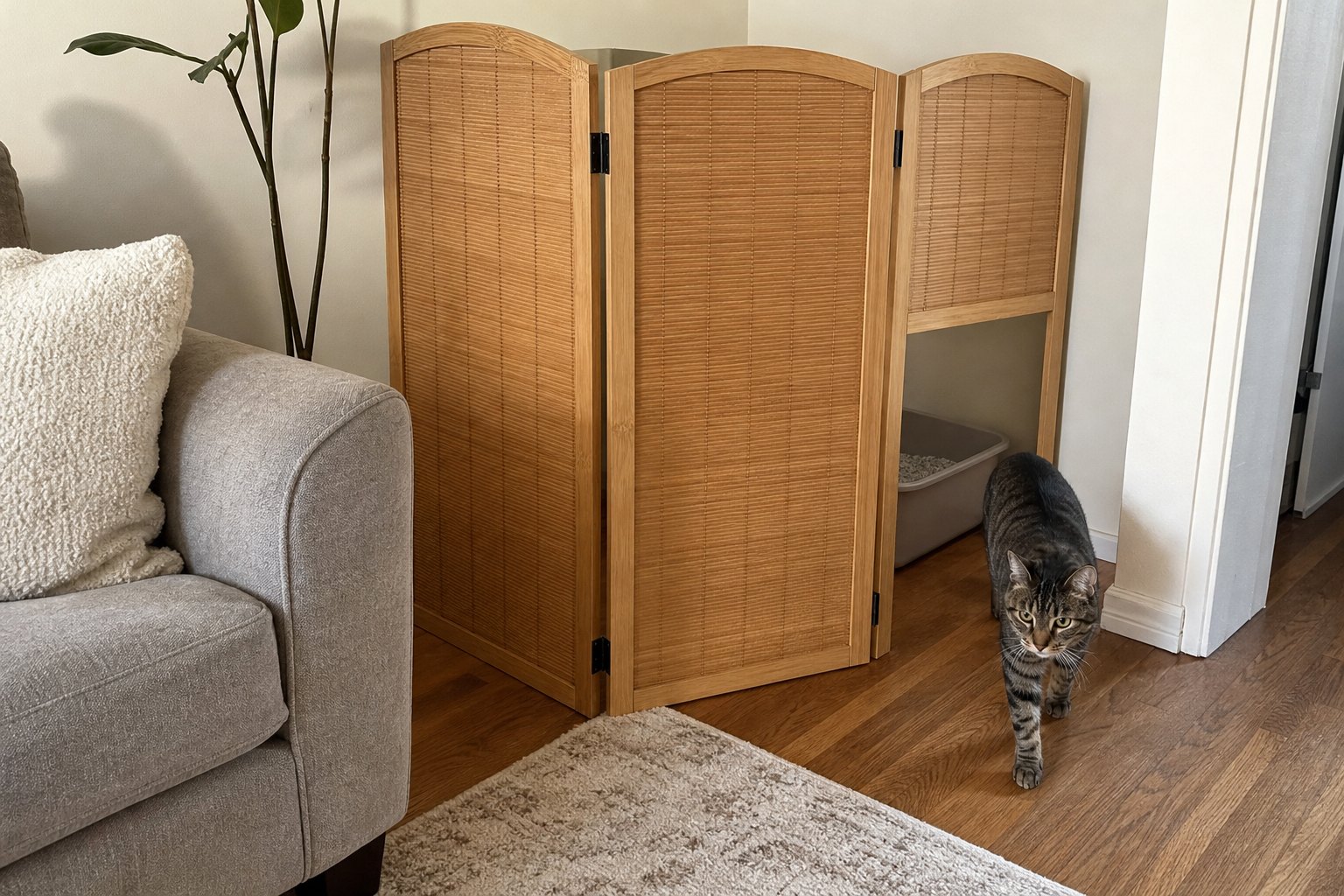
You can hide a litter box, but hiding it changes how it feels to your cat. The best litter box hiding ideas keep the box roomy, quiet and easy to get out of, so guests stop noticing it and your cat keeps using it.
Cats tend to like a box they can enter easily, see out from and leave in more than one direction. Each idea below is built around that. They run from the most open (easiest for cats) to the most enclosed, so I’d start at the top of the list.
If you are planning a whole corner of your home for your cat, these cat room ideas for small homes pair well with this list.
Litter Box Hiding Ideas at a Glance
| Idea | How open | Best for |
|---|---|---|
| 1. Folding screen | Open top | Living room corners, first try |
| 2. Low bookshelf half-wall | Open top | Studios and open-plan rooms |
| 3. Tall faux plant | Open top | Bright corners |
| 4. Big neutral storage tub | Open top | Large cats, any room |
| 5. Open-back end table | Open sides | Beside a sofa or bed |
| 6. Curtained storage bench | Partly enclosed | Entryways and long walls |
| 7. Sideboard bay | Partly enclosed | Dining or living rooms |
| 8. Closet floor | Partly enclosed | Hall or bedroom closets |
| 9. Under the stairs | Open front | Quiet houses with stairs |
| 10. Guest bathroom corner | Open box, door wedged | Homes with a spare bathroom |
1. Put a Folding Screen Around an Open Box
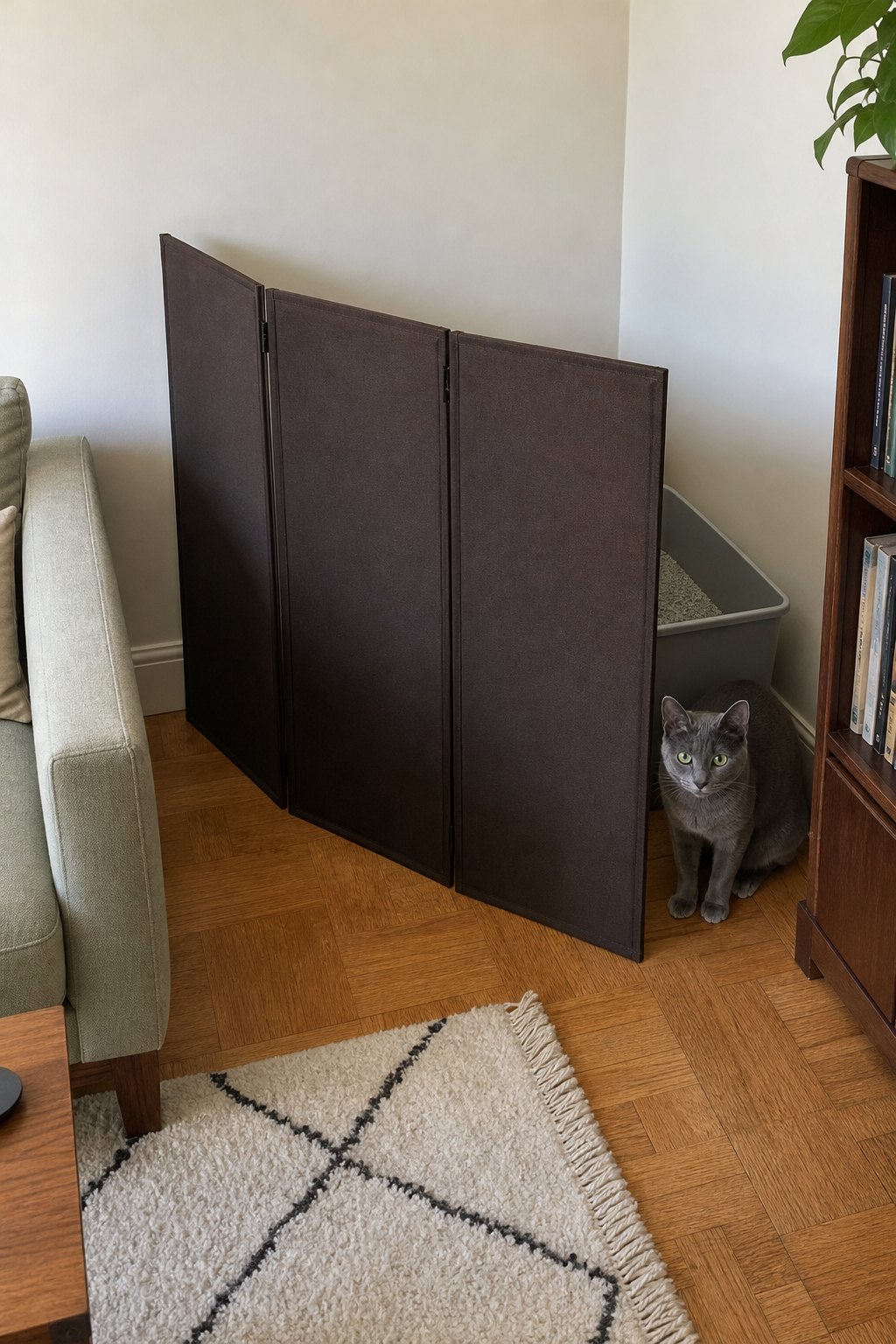
A folding screen hides the box from the room and leaves the box itself open. It is the best first try.
Set the screen in an angle or a U shape and leave a wide gap at one end. Your cat can still see who is coming and has more than one way out, which the ASPCA says cats prefer.
Tip: pick a screen you can slide aside with one hand, so daily scooping stays easy.
2. Use a Low Bookshelf as a Half-Wall
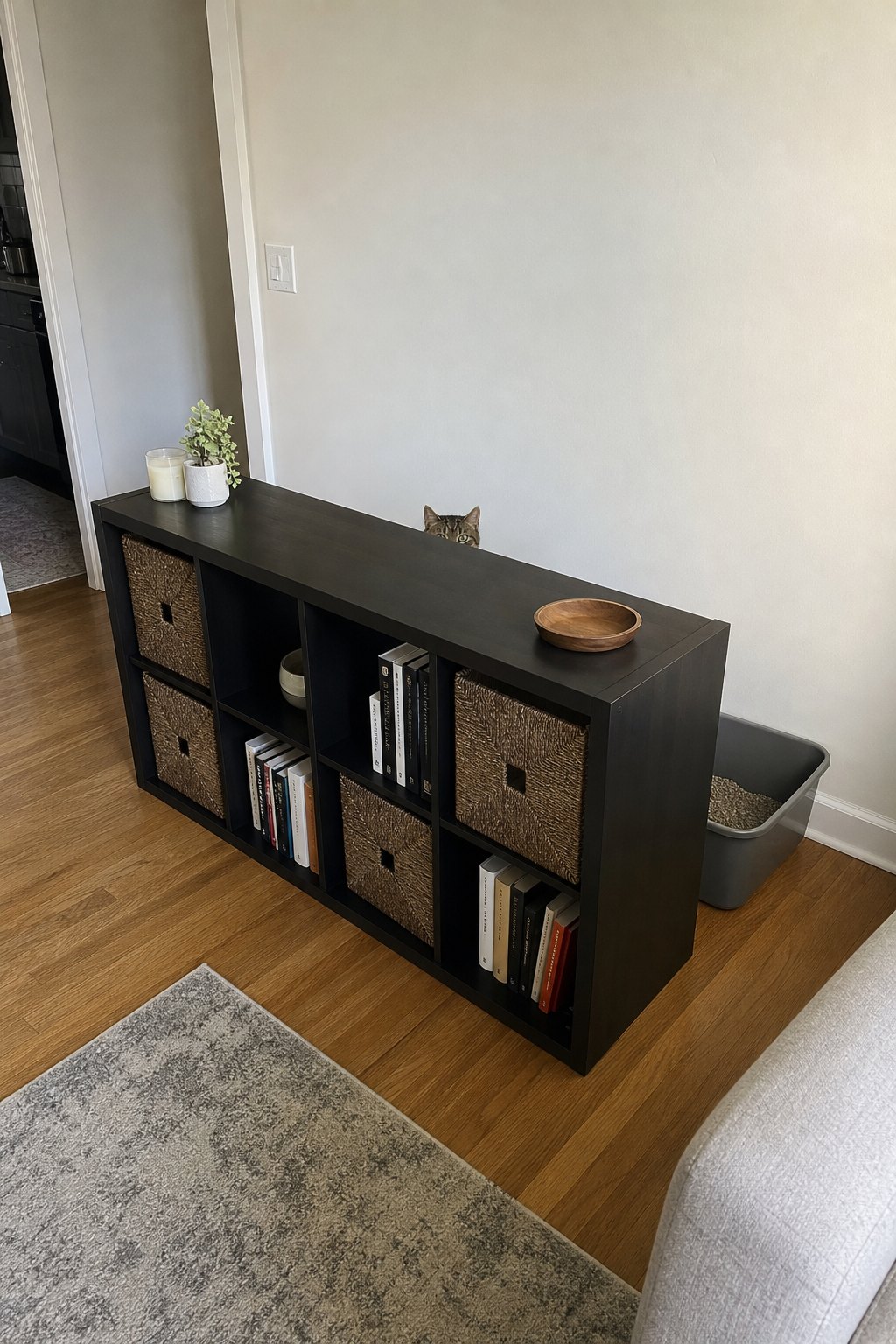
Turn a low, open shelf so its back faces the room. Put the box behind it with the top uncovered.
Leave a gap at both ends of the shelf. That gives your cat two ways out, and the shelf still blocks the view from the couch.
The shelf fronts can hold baskets for a scoop, spare litter and waste bags, so supplies stay close and out of sight.
3. Tuck It Behind a Tall Faux Plant in a Corner
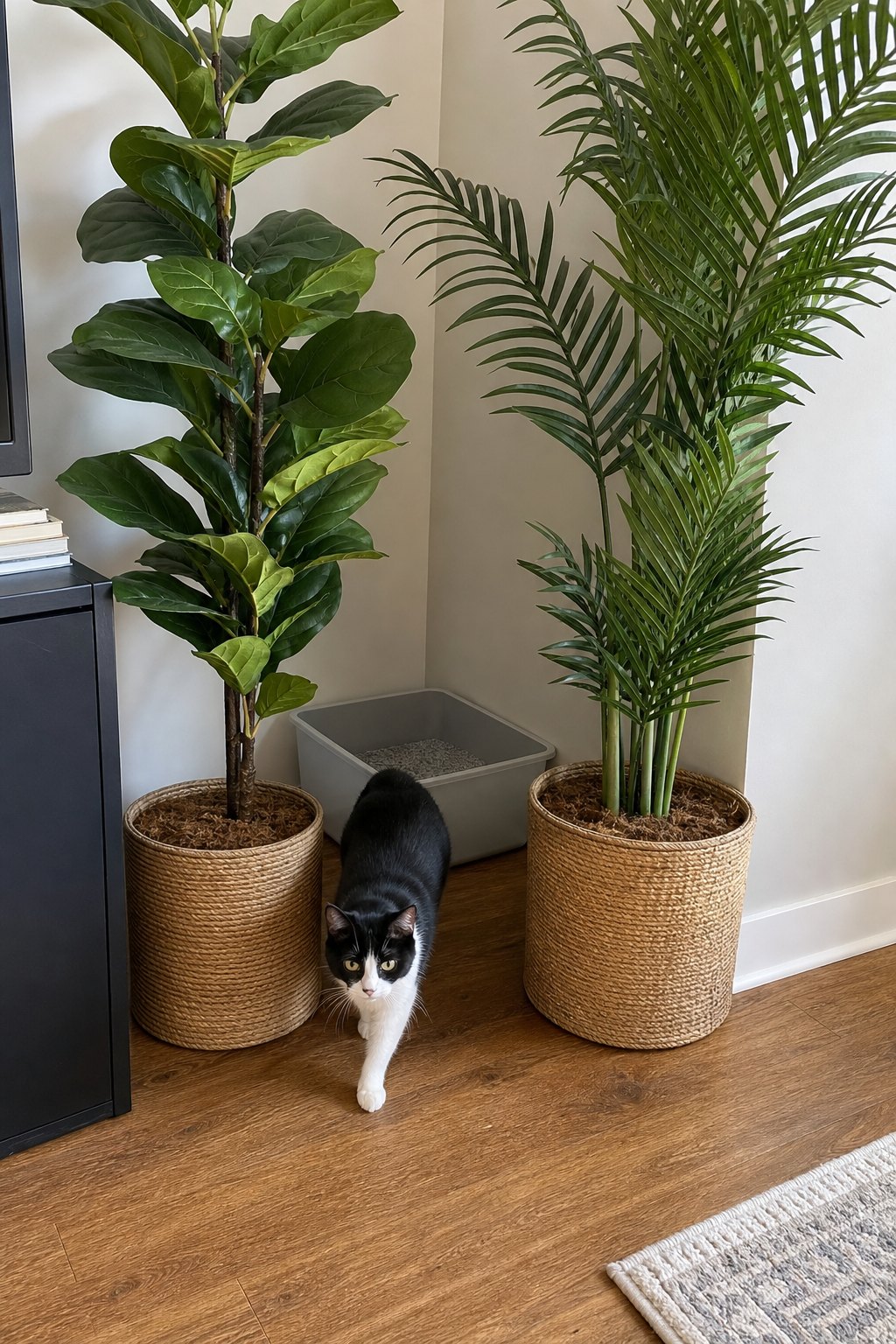
One large artificial plant, or two, in a corner can screen the box while the open side faces the room. The plant hides the box and looks like decor.
Choose artificial plants so there is nothing for your cat to chew. Keep the open side wide enough that your cat never feels cornered.
If you are styling the whole area, these cat corner ideas for the living room show how to make it look planned.
4. Swap to a Big, Neutral Storage Tub
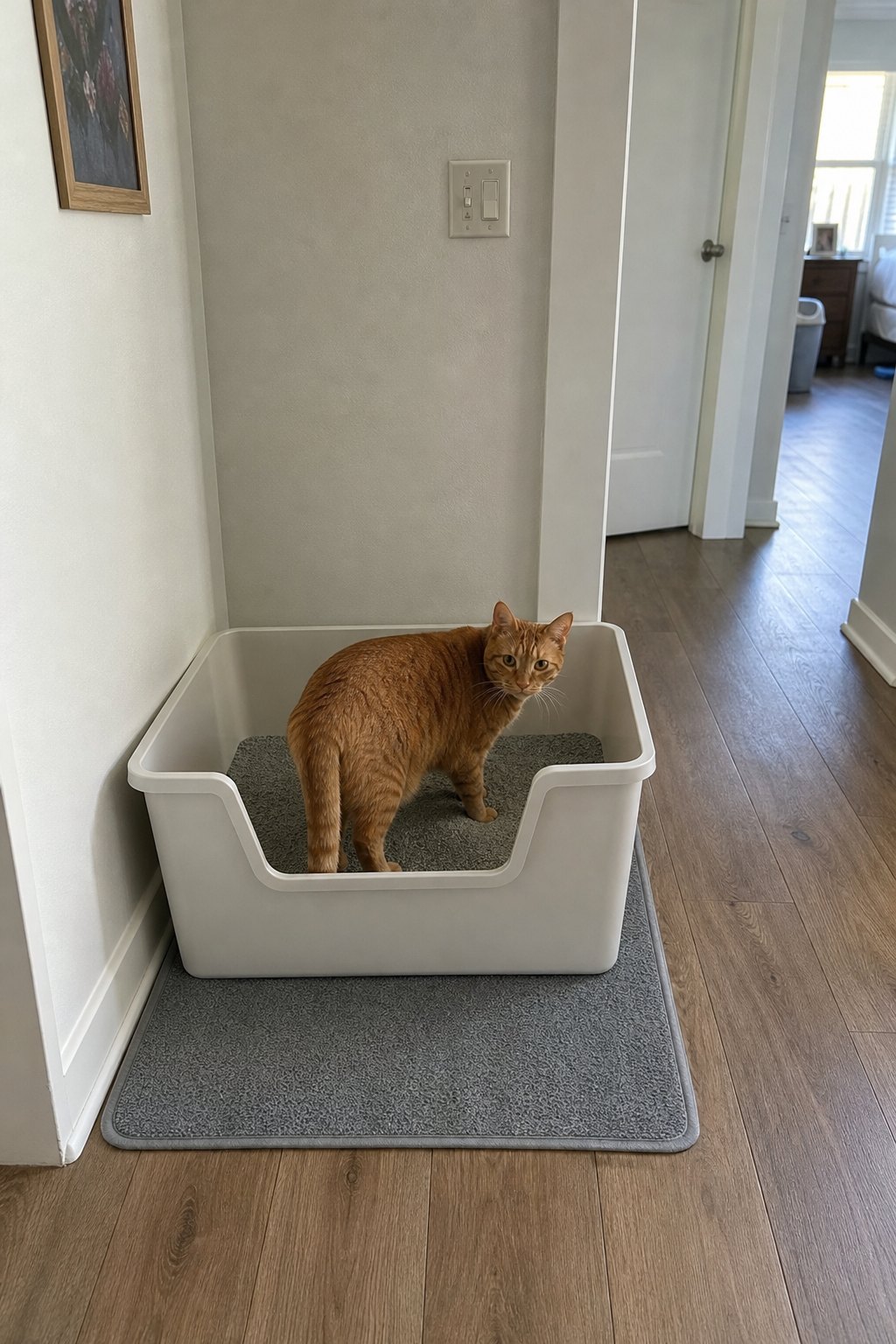
Sometimes the easiest way to hide a litter box is to make it look like something else. A large plain storage tub in a neutral color blends in better than a bright plastic pan.
It can also help your cat. Many boxes are too small, and Texas A&M’s vet school advises getting a large box. The ASPCA says most cats prefer large boxes they can enter easily. Look for a tub big enough to step in, turn around and dig comfortably.
Tip: if the walls are high, cut a low entry on one side and keep the top open. Sand any cut edge smooth.
5. Slide It Under an Open-Back End Table
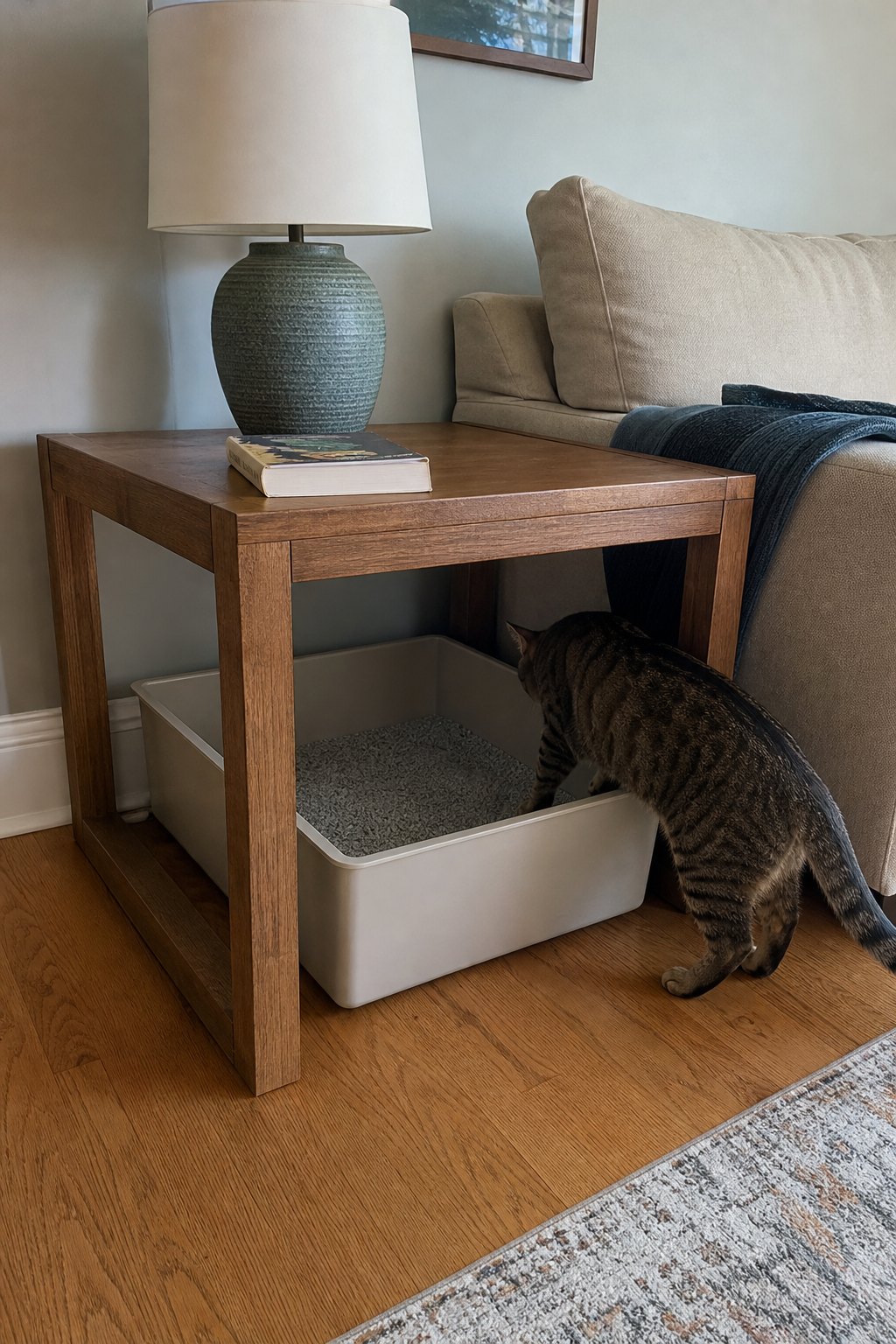
A table with open sides or an open back lets the box sit underneath, out of the main line of sight. Your cat can still look out and leave two ways.
The table must be tall and wide enough that the box fits with room to spare. Check that you can reach in to scoop without moving furniture.
This works well beside a sofa or bed, as long as the spot is quiet.
6. Hang a Curtain on a Storage Bench with an Open Side
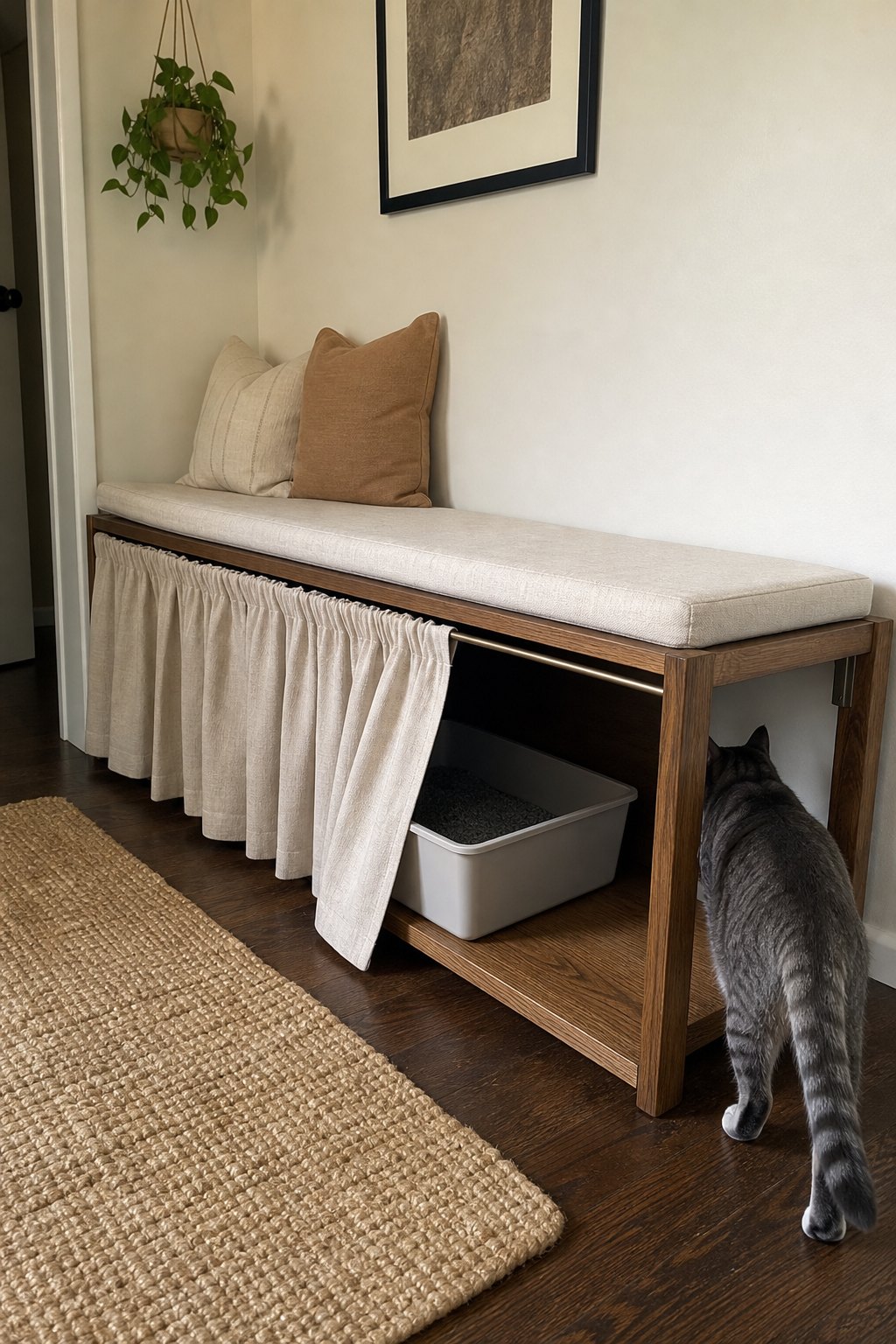
A storage bench or console with a fabric curtain across the front hides the box well. Keep one side open as the doorway.
Covered setups hold smells in. A 2013 study in the Journal of Feline Medicine and Surgery found covered boxes tend to trap odors, so scoop daily and watch how your cat reacts.
Choose a curtain that is easy to wash and tie it back so it cannot drop in front of the opening.
7. Take the Doors Off One Bay of a Sideboard
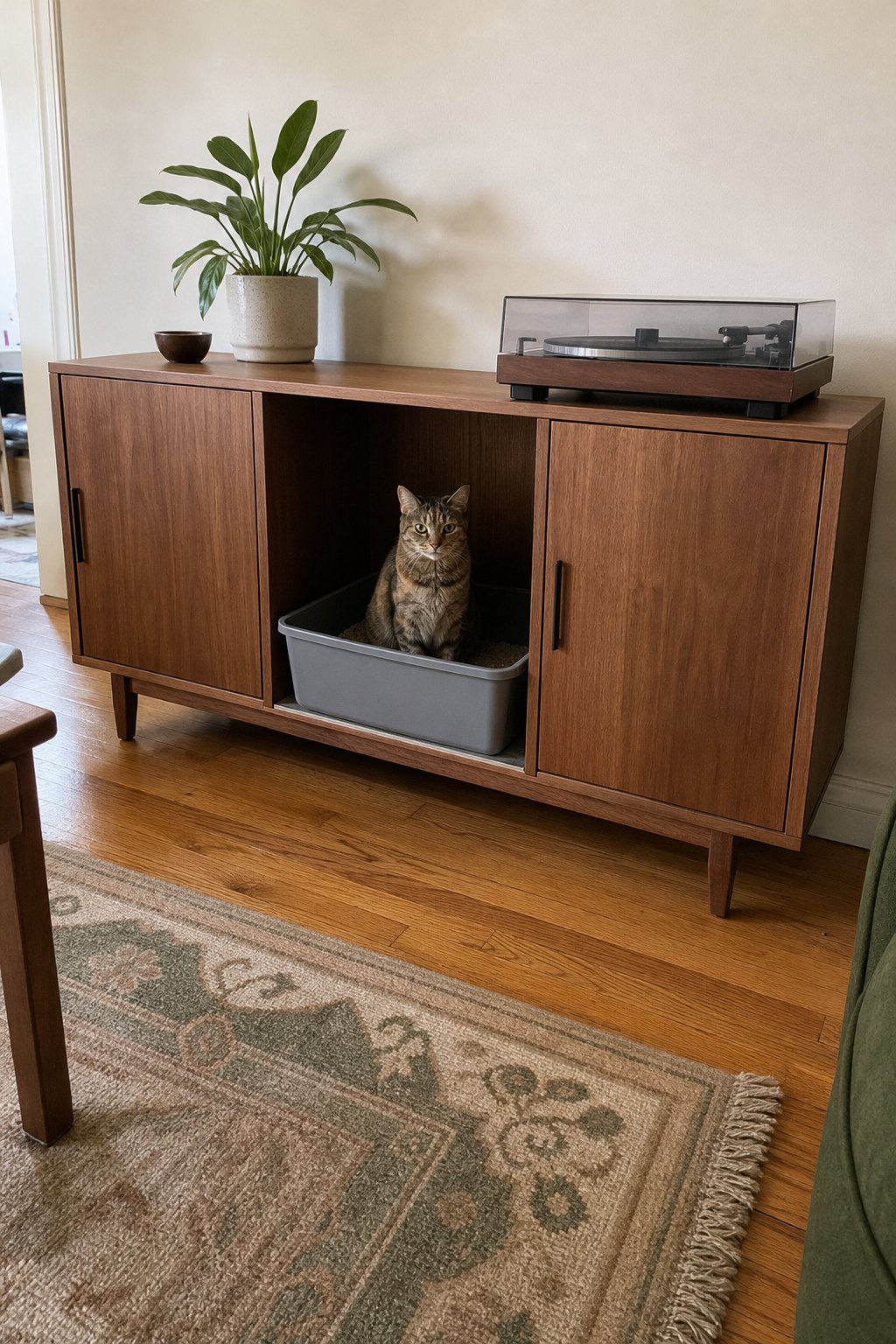
A low sideboard can hide a box in plain sight. Remove the doors from one bay and keep the opening large.
This is a more enclosed idea, so give it extra care. The Texas A&M guide notes some cats dislike covered boxes because they cannot survey their surroundings. The 2013 study found no overall difference between covered and uncovered boxes, but individual cats did have a preference.
Keep the box generous in size. Leave an open box elsewhere while your cat tries the new spot.
8. Turn a Closet Floor into a Litter Nook
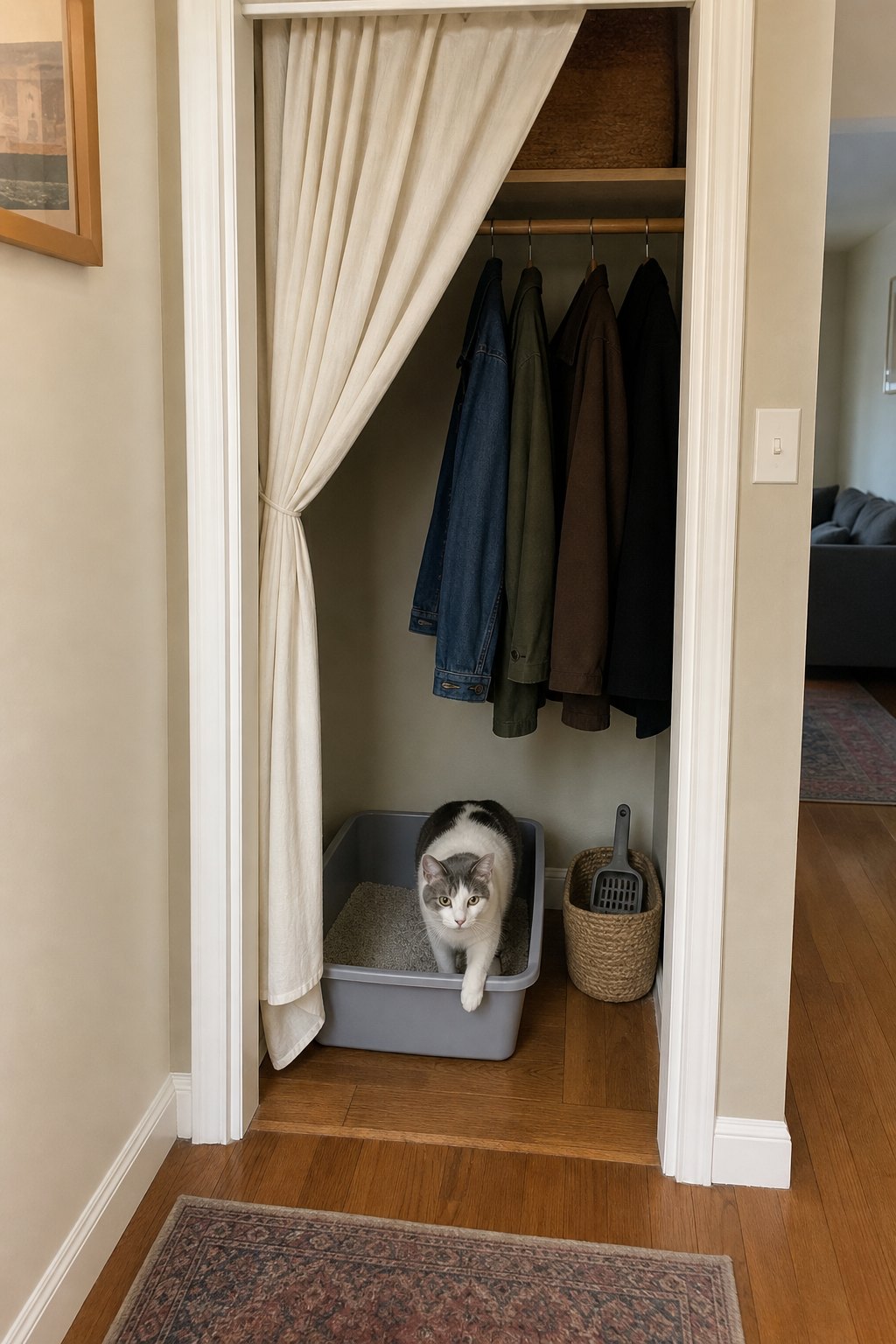
A closet floor is already out of sight. Remove the door, or tie it fully open, and hang a light curtain if you want more cover.
Never use a door that can swing shut. A cat who finds the door closed has nowhere else to go.
Set the box toward the front so your cat can see out. This idea also suits small homes, and it frees floor space for other cat room ideas for small homes.
9. Use the Under-Stairs Space, Left Open
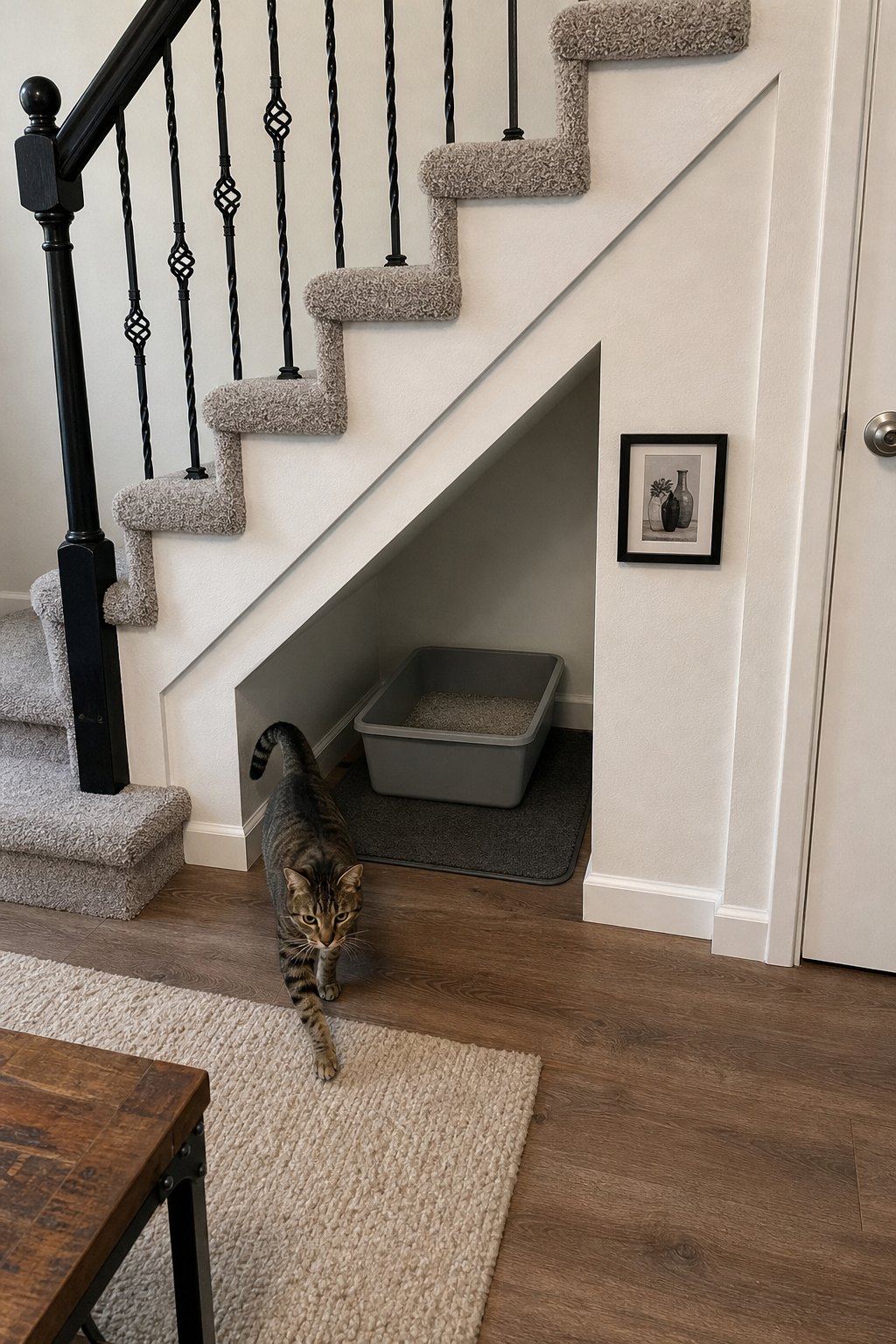
The space under a staircase is often quiet and unused. With no door, it can be a calm spot for a box.
Skip it if the stairs are a main route through your home. Skip it too if the space sits next to the furnace or laundry. Texas A&M advises quiet areas away from foot traffic and machinery.
Make sure the box fits without squeezing your cat under a low slope.
10. Give the Guest Bathroom Corner a Door Stop
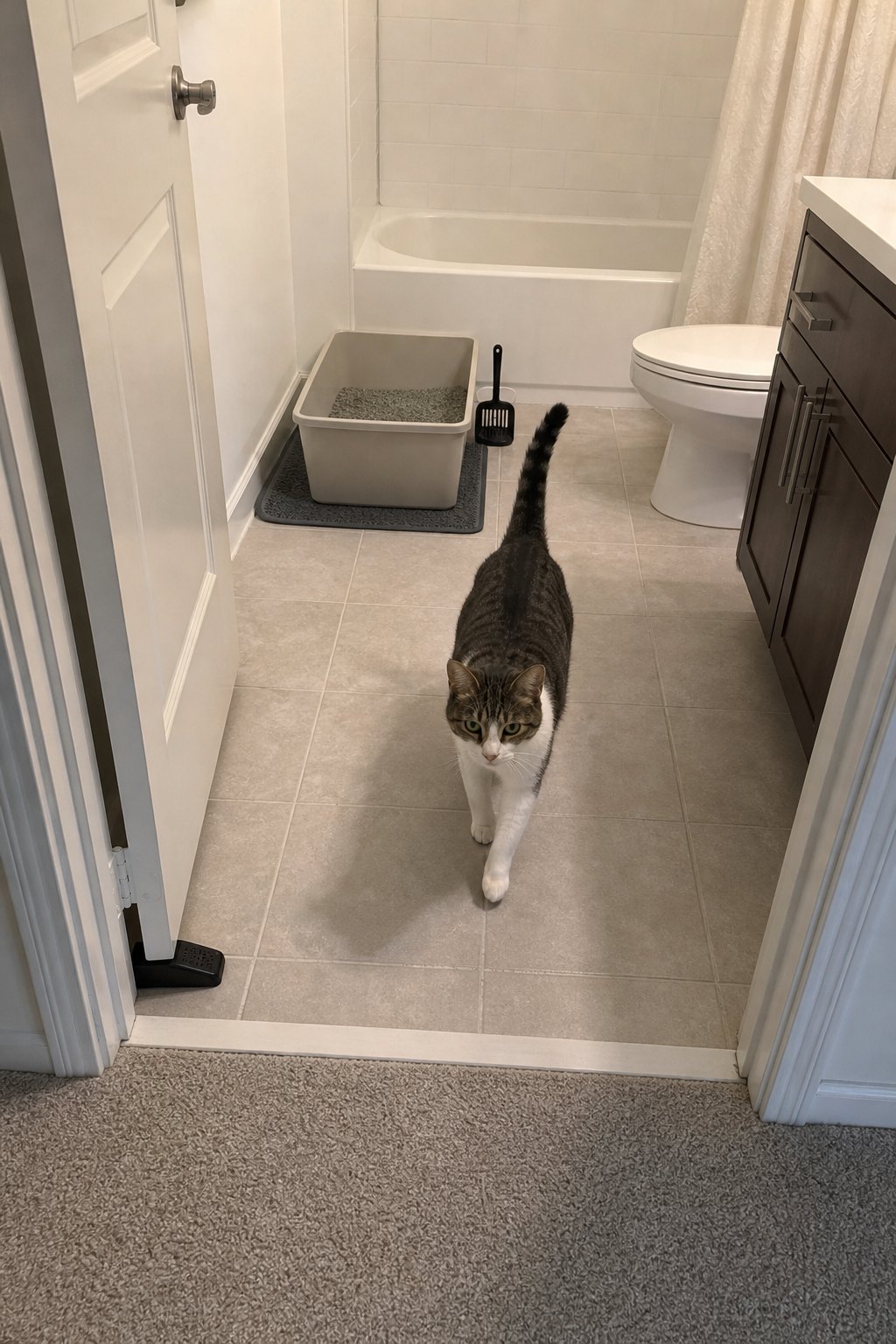
Bathrooms hide litter boxes well, and tile is easy to wipe clean. A corner of the guest bathroom keeps the box away from your living space.
Wedge the door open so it cannot close. A door stop works for this.
This suits homes where the bathroom is rarely used. A busy bathroom is not quiet enough.
Before You Hide It: A Quick Cat-Approved Checklist
Run through this list before you commit to any spot.
- Size: large enough to step in, turn around and dig (ASPCA, Texas A&M).
- Exits and view: two ways out and a view of who is coming. The ASPCA says cats like multiple escape routes and seeing others approach.
- Quiet: away from the washer and dryer and busy hallways (ASPCA, Texas A&M).
- Away from food: do not put food bowls right next to the box (ASPCA).
- Easy to scoop: you should be able to scoop at least once a day (ASPCA, Texas A&M).
- Unscented litter: the ASPCA recommends unscented litter. Skip air freshener inside an enclosure, since covered boxes can intensify litter fragrance, per the 2013 study.
- Enough boxes: one per cat plus one extra, so a hidden box should not be your only one (ASPCA, Texas A&M).
- Move gradually: this one is my own practical suggestion. Leave the old box where it is until your cat uses the new spot.
Spots to Skip
- Right next to the washer or dryer.
- Next to food bowls.
- Behind a door that can close.
- A dead-end corner in a multi-cat home. The Texas A&M guide notes cats can be ambushed when leaving the box, and a dead end leaves no escape.
Still deciding where the box should live in the first place? Here is where to put a litter box in a small apartment, with seven layouts for studios and one-bedrooms.
When to Call Your Vet
A sudden change in litter box habits is worth a vet check. If your cat suddenly stops using the box, or pees outside it, a medical problem could be the cause, so have your vet rule that out before you blame the new hiding spot.
Start with idea 1 or 2, watch how your cat responds, and adjust. For more setups like these, browse more home and litter guides.
1 thought on “10 Litter Box Hiding Ideas Your Cat Will Still Use”