
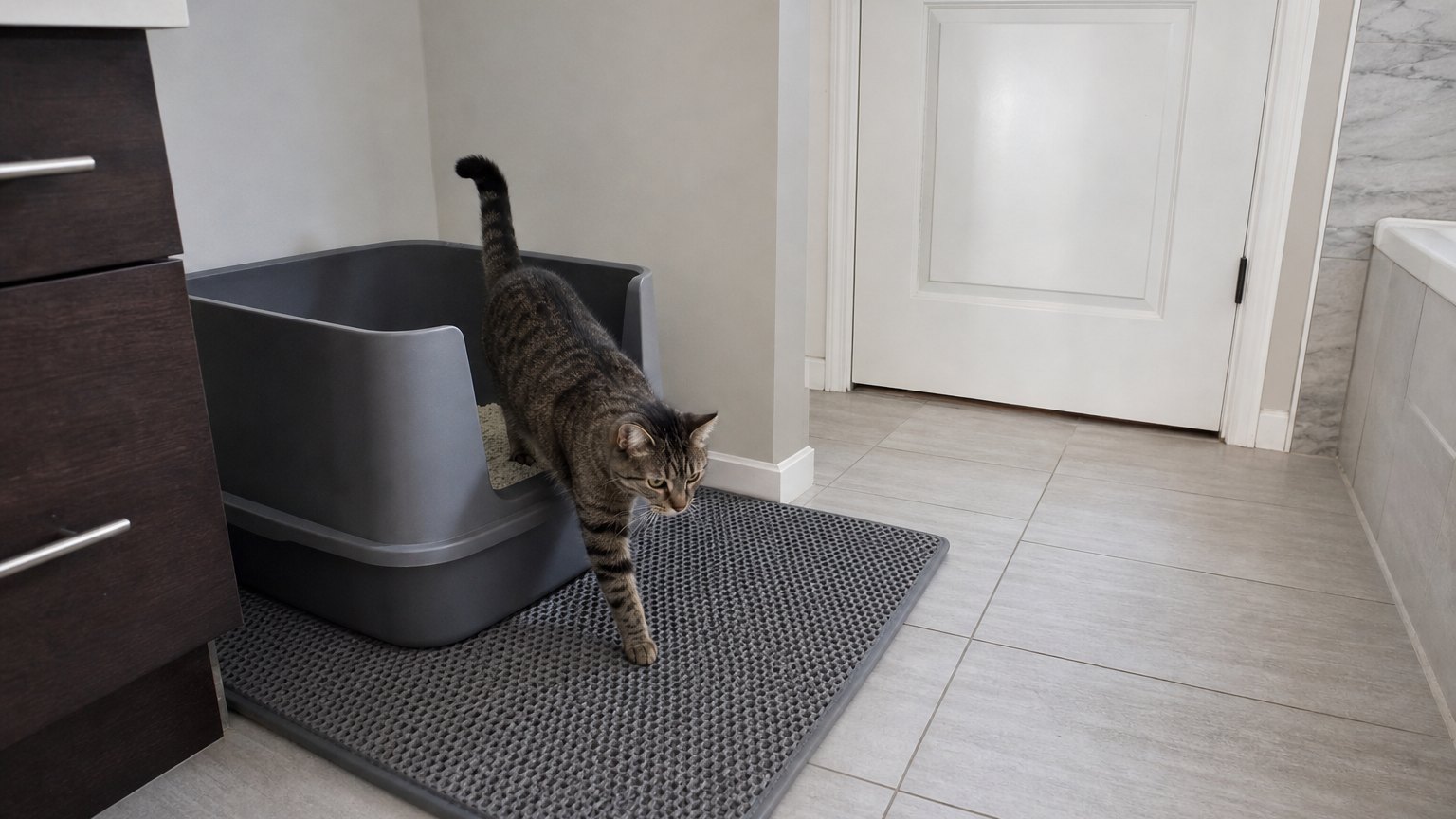
You step into the hallway barefoot, and something crunches. Again. You can’t stop cat litter tracking completely, but you can cut it way down: use a bigger open box, keep the litter about 1 to 2 inches deep, put a large mat where your cat steps out, and scoop and sweep daily.
The catch is that your cat has to keep using the box. So every change below follows one rule: don’t fix the mess by making the box worse for your cat. If you need the basics first, start with the litter station checklist.
1. Give Your Cat a Bigger, Open Box
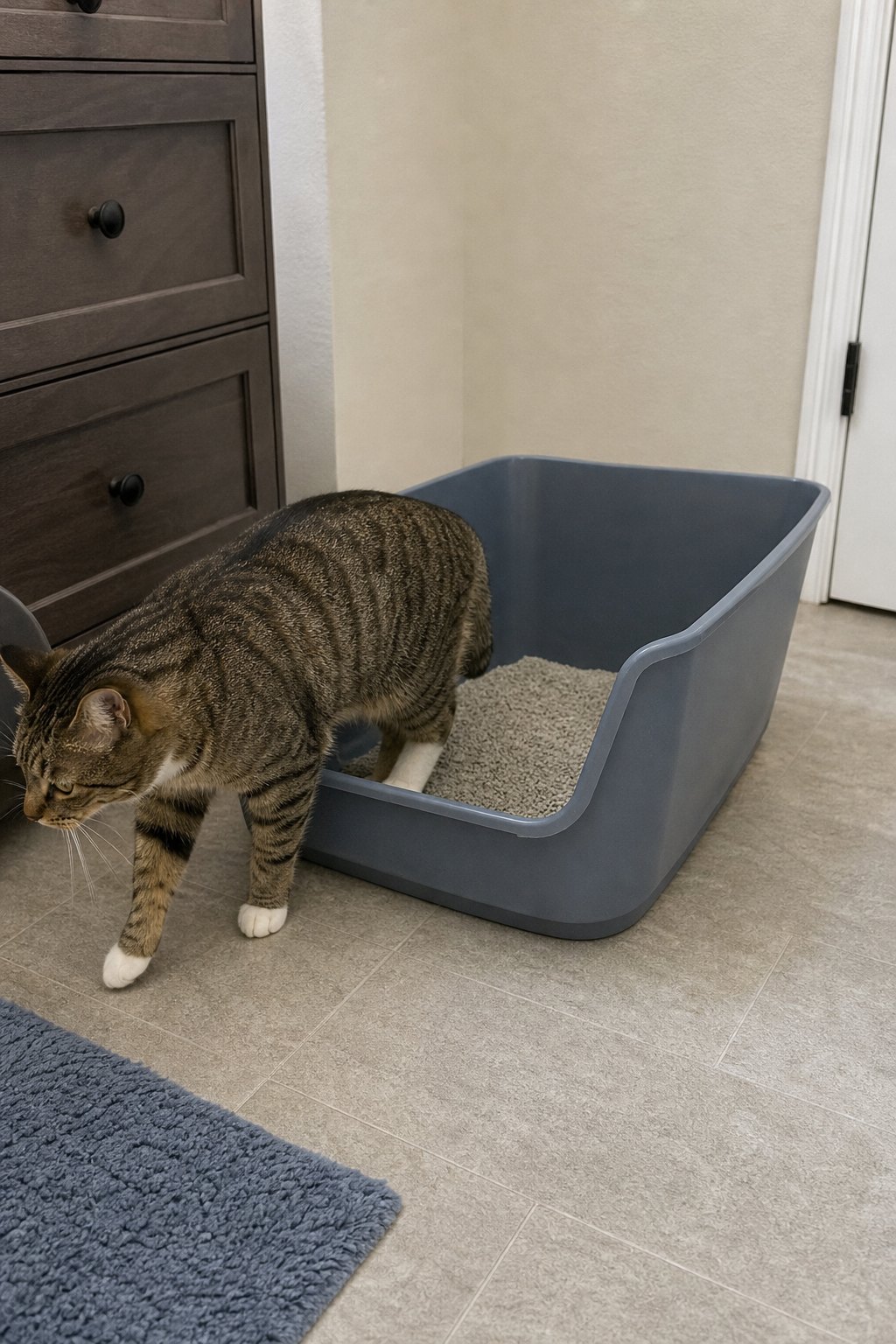
A larger box means less litter kicked over the edge and more room to turn around. The ASPCA says most cats prefer large boxes they can enter easily, and Texas A&M’s vet school notes that many boxes are simply too small. Humane World for Animals adds that a cat should be able to turn around comfortably.
A high-sided open box with one lower entry is a good middle ground. It holds in more flying litter, and your cat still walks in without a climb.
Be careful with covered and top-entry boxes. The ASPCA says most cats dislike covers, and a top entry can be hard for older, arthritic and very young cats. If you like the look of an enclosure, see these litter box hiding ideas that keep the box open and reachable.
2. Keep the Litter at the Right Depth
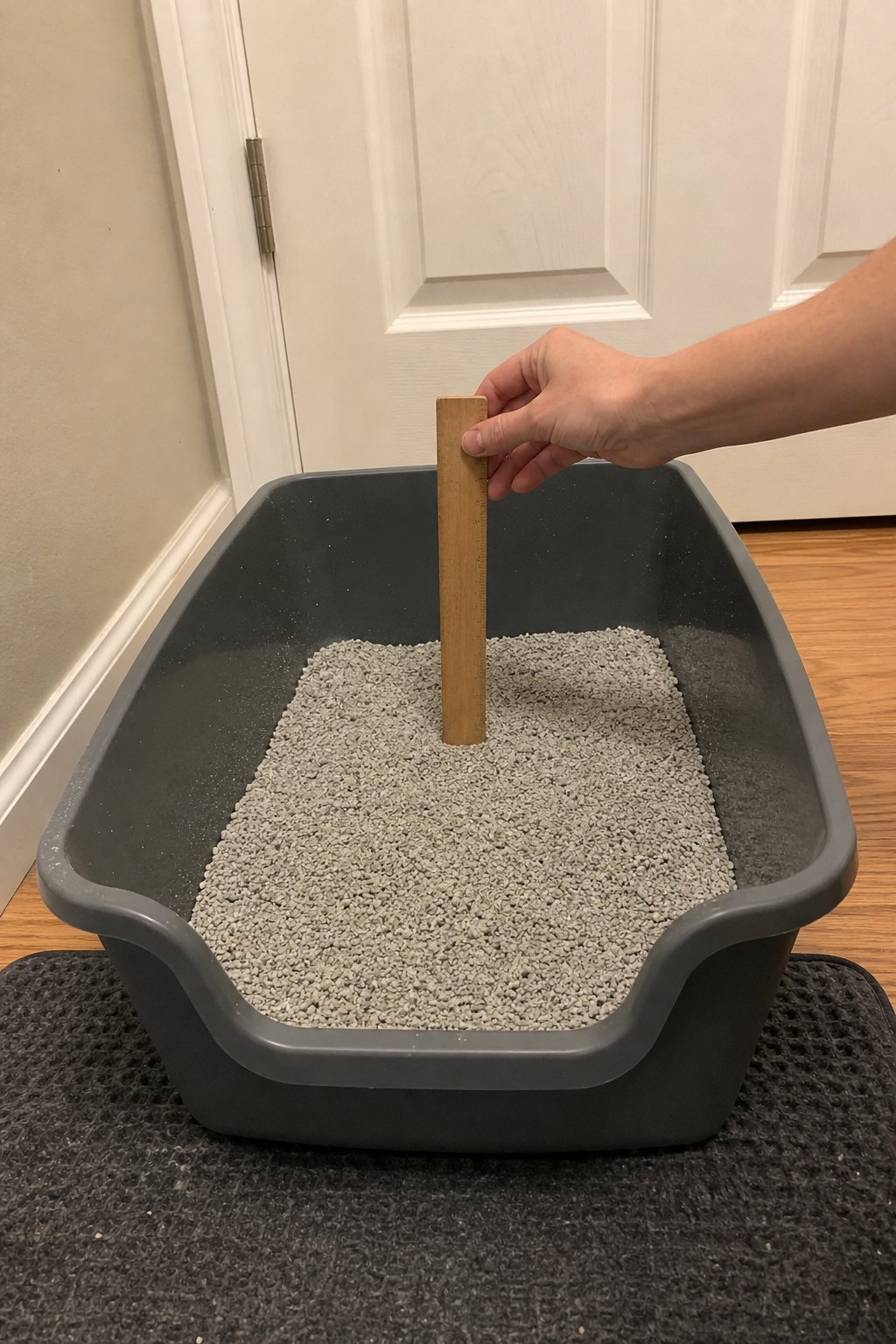
Aim for about 1 to 2 inches of litter. Texas A&M suggests about 2 inches for standard clumping litter. More isn’t better here.
Overfilling is a common reason litter ends up outside the box. A deep pile gives your cat more to dig, and digging flings it.
Tip: Hold a ruler against the litter in a few spots. If it’s piled well past 2 inches, scoop some out.
3. Change the Litter Slowly, If at All
If your cat uses the box happily, think twice before swapping the litter just to reduce scatter. Cats have strong texture preferences, according to Texas A&M, and Humane World says they tend to prefer a fine, sand-like texture.
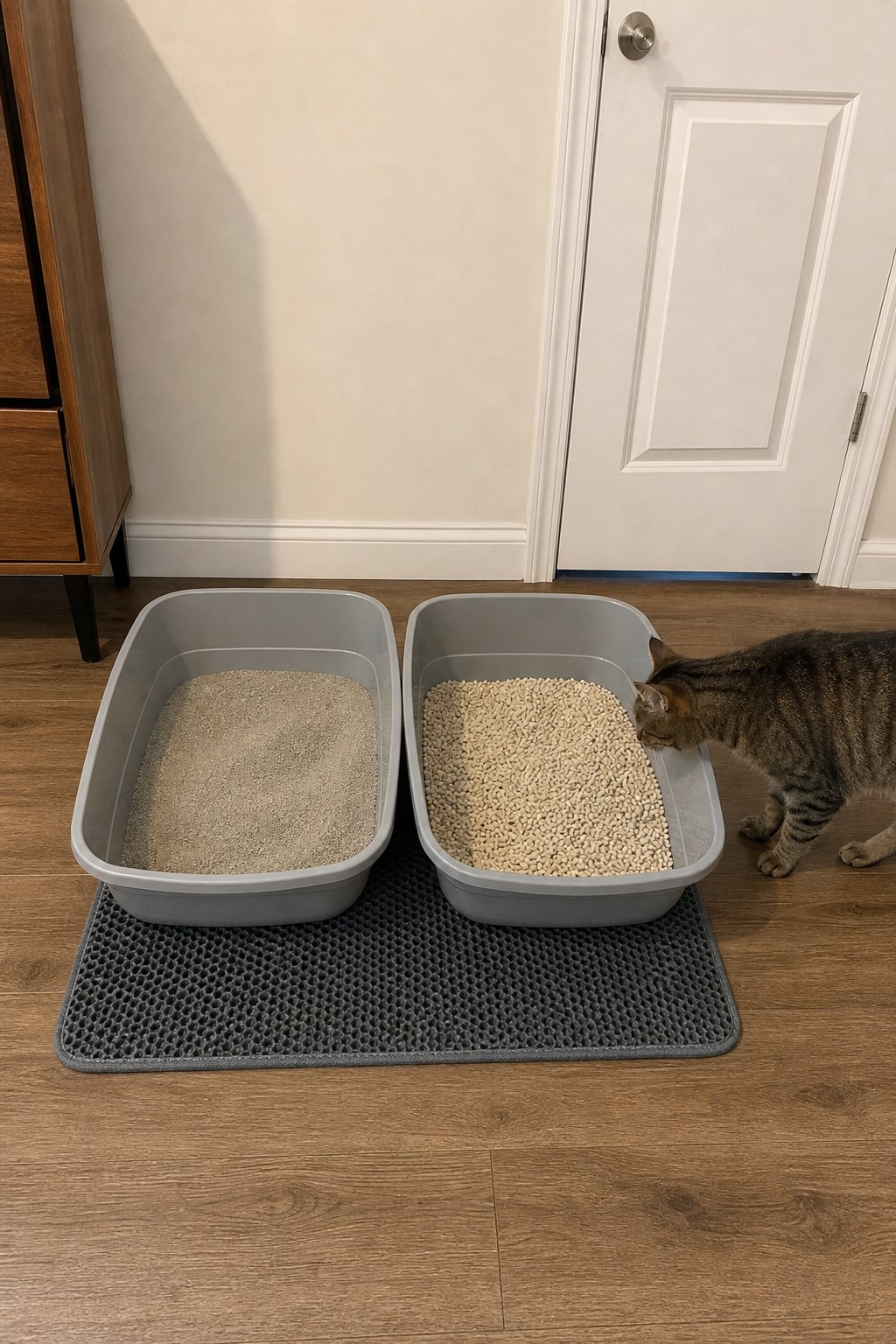
If you still want to try a different litter, don’t replace the old one overnight. Set up a second box beside the first, fill it with the new litter, and see which one your cat picks.
This is also a reason to be wary of “low-tracking” claims. A litter that stays put but that your cat refuses is not a win.
4. Put a Mat Where the Paws Land
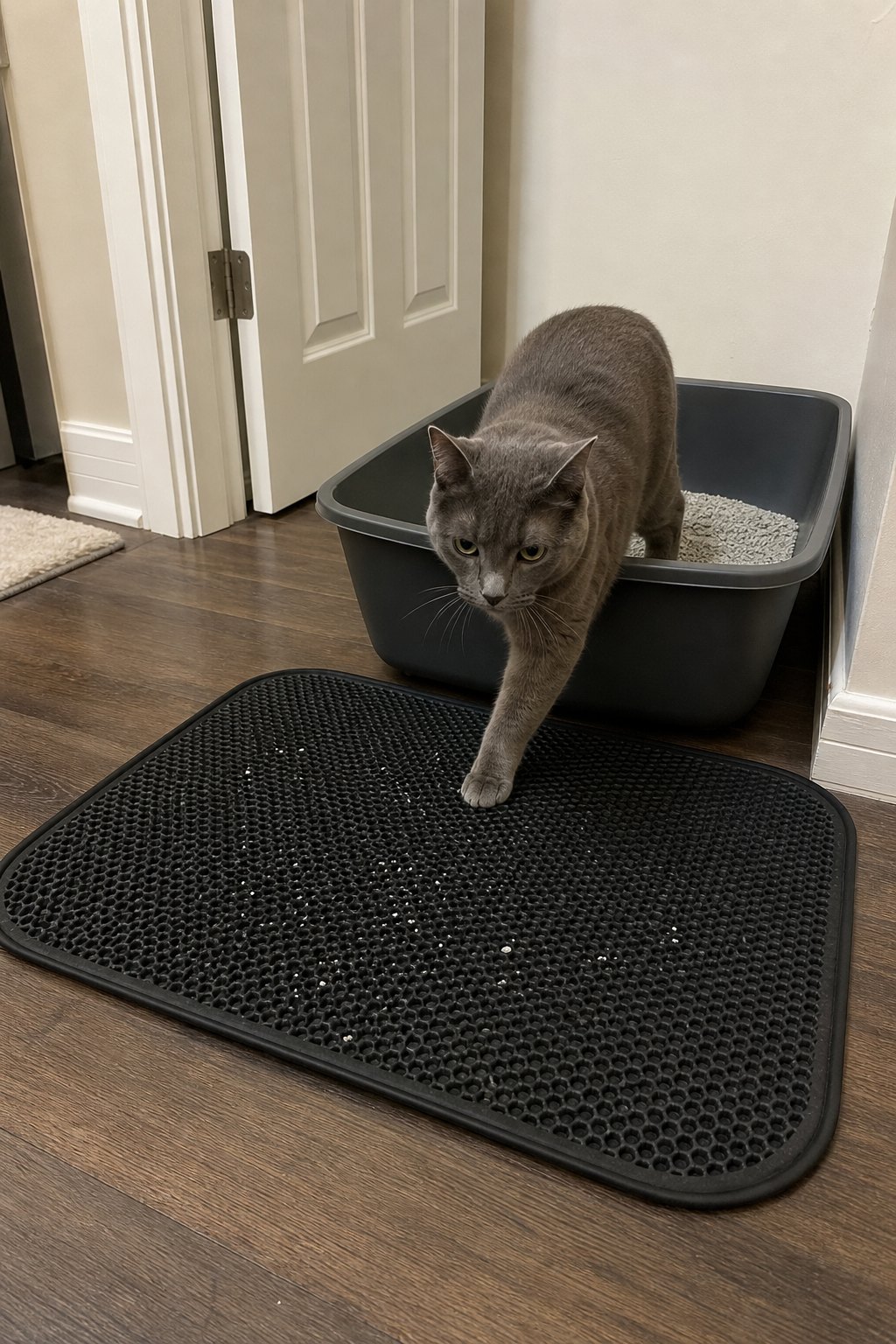
A mat outside the exit catches litter from paws before it reaches the floor. Make it big enough for several steps, not just one.
Textured mats tend to catch more than smooth ones, since granules sit in the grooves instead of sliding off. Shake it out or vacuum it daily so it doesn’t turn into a litter launchpad.
Tip: Put the mat on the side your cat actually uses to leave. Watch a few exits and you’ll see it.
5. Give the Exit a Runway
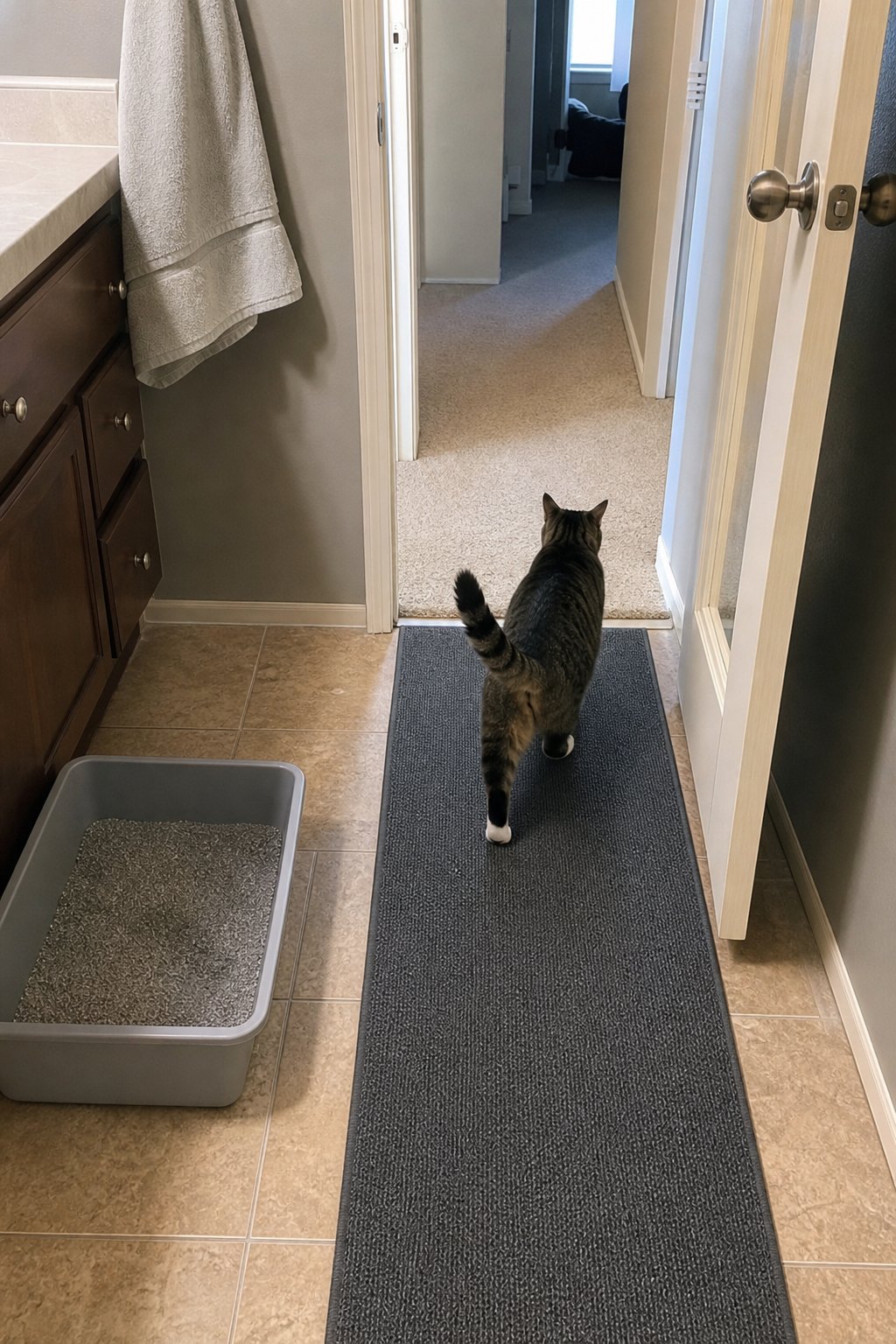
Place the box so your cat steps out onto an easy-to-clean path, like a hard floor with a mat on it, and not carpet or the hallway. That path is the runway. Most litter drops in those first few steps, so that’s where you want it to land.
Keep the spot quiet but not cornered. The ASPCA says cats like to see anyone approaching and want escape routes, so don’t wedge the box into a dead end just to hide the mess. For spot ideas, see these litter box spots for a small apartment.
If you have to move the box, the ASPCA’s general care guidance says to move it only a few inches a day.
With more than one cat, each box gets its own scatter zone. Plan a runway for each one using this multi-cat litter setup.
6. Keep Long Fur Between the Toes Tidy
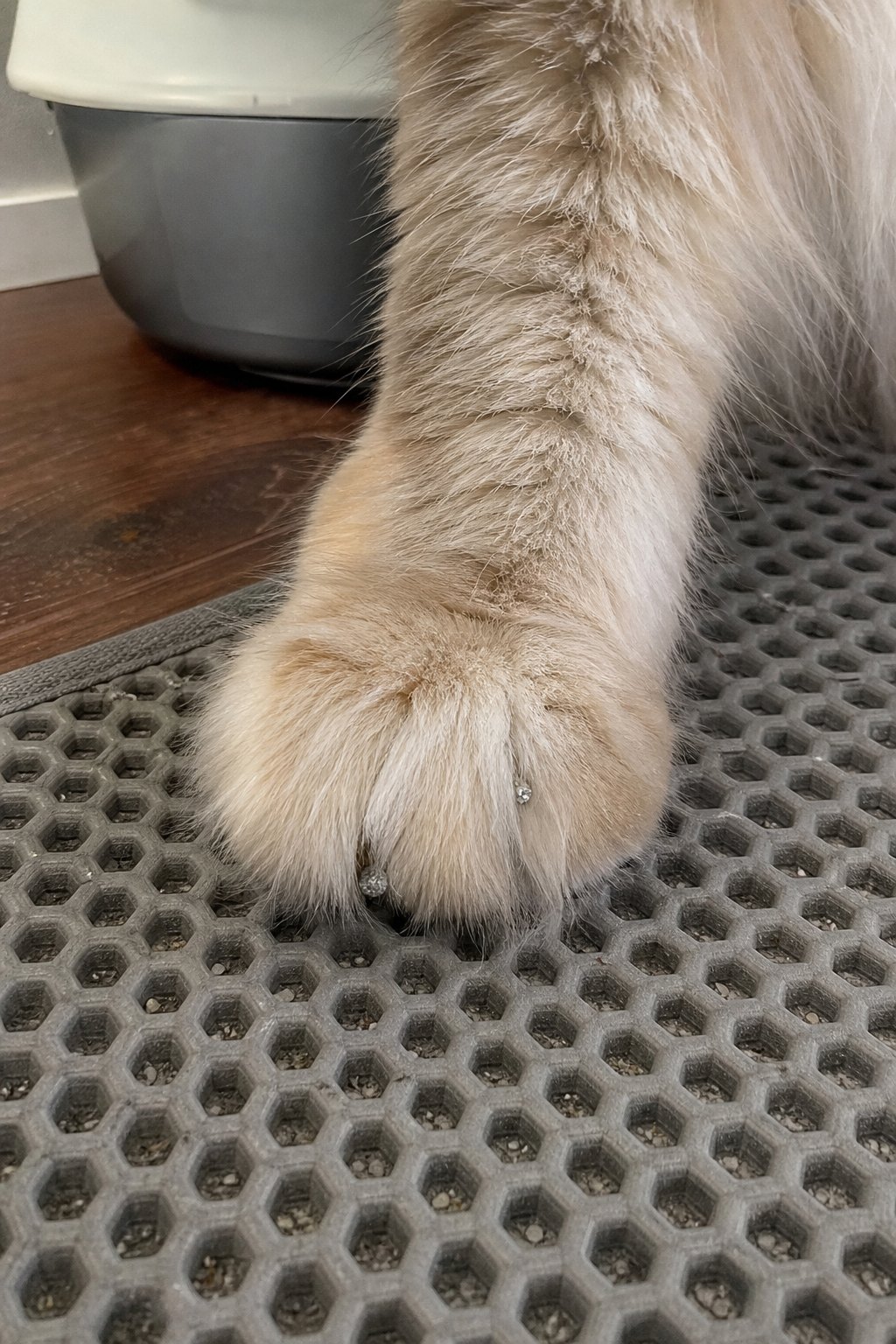
Long-haired cats can carry litter out in the fur between their toes. It clings, then drops on your floor an hour later.
If your cat tolerates it, a groomer or your vet can trim that fur. Leave the paw trimming to a professional, though. Don’t try it near the paw pads yourself, especially if your cat squirms.
If your cat won’t sit for it, skip it. The mat and runway do most of the work anyway.
7. Scoop and Sweep on a Schedule
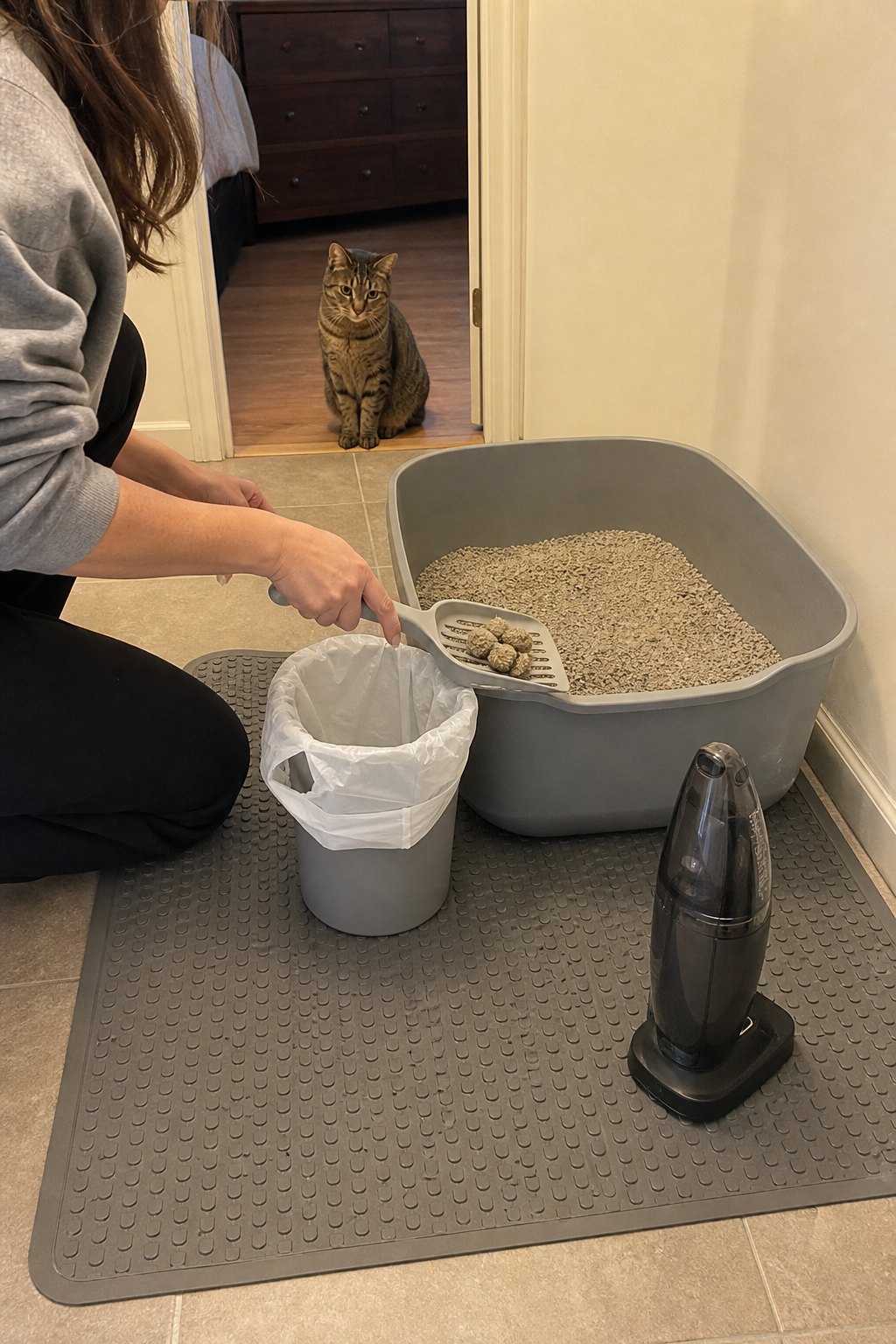
Scoop at least once a day. Both the ASPCA and Texas A&M say so, and a clean box is a more inviting one.
After you scoop, give the runway a quick sweep or a pass with a handheld vacuum. Ten seconds is enough when you do it daily. Wash the box and refill it with fresh litter at least weekly, per the ASPCA.
Mat or exit path: which helps more?
You don’t have to pick one, but each does a different job. A mat catches litter on the paws. A runway decides where the rest of it lands.
| Setup | Catches | Works best when | Watch out for |
|---|---|---|---|
| Mat only | Litter shaken off paws at the exit | The box already sits on a hard floor | Litter that skips past a small mat |
| Exit runway only | Litter dropped in the first steps | The path is hard floor and easy to sweep | Carpet or a hallway in the cat’s path |
| Both | Paw litter and the scatter that follows | The mat is large and the path is clear | A mat that never gets shaken out |
If you can only do one today, I’d start with the runway. A mat on a bad path still leaves a mess.
Change one thing at a time
Make one change, then wait a few days before the next. If you change the box, the litter and the spot all at once, you won’t know what your cat dislikes.
Watch for your cat sniffing and leaving, perching on the edge, or going outside the box. If you see any of that, undo the last change.
If your cat keeps avoiding the box even after you reverse it, it could be medical. The ASPCA says litter refusal can have a health cause, so check in with your vet. Our guide to questions to ask your vet can help you plan that visit.
Your next step
Pick the easiest change today: check the litter depth with a ruler, or lay a bigger mat at the exit. Then give your cat a few days before trying the next one.
For more on keeping the whole litter area working, browse the Home & Litter hub.
1 thought on “How to Stop Cat Litter Tracking: 7 Changes to Make Around the Box”