
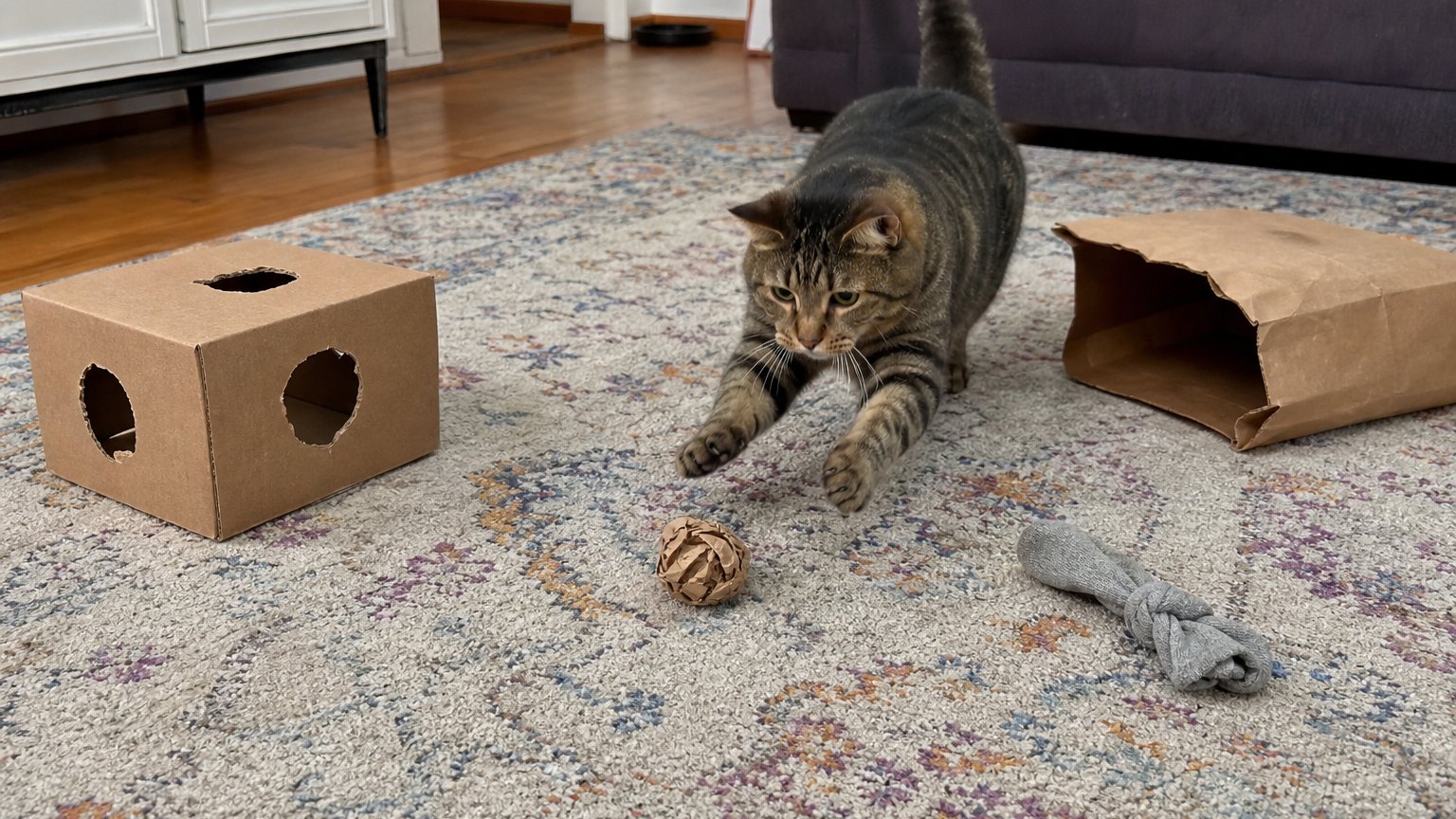
You bought the fancy toy, and your cat is sitting inside the box it came in. The easiest DIY cat toys use what’s already in your recycling bin and laundry pile: paper, cardboard, tubes, socks and an old T-shirt. Keep anything with a string for supervised play and put it away afterward, and skip small parts that can come off.
Each toy below has a label. “Leave out” means it’s fine on the floor between play sessions. “Play together, then put away” means you hold it, then store it. Looking for more ways to keep a bored cat busy? Try these 17 indoor enrichment ideas.
1. Crumpled Paper Ball
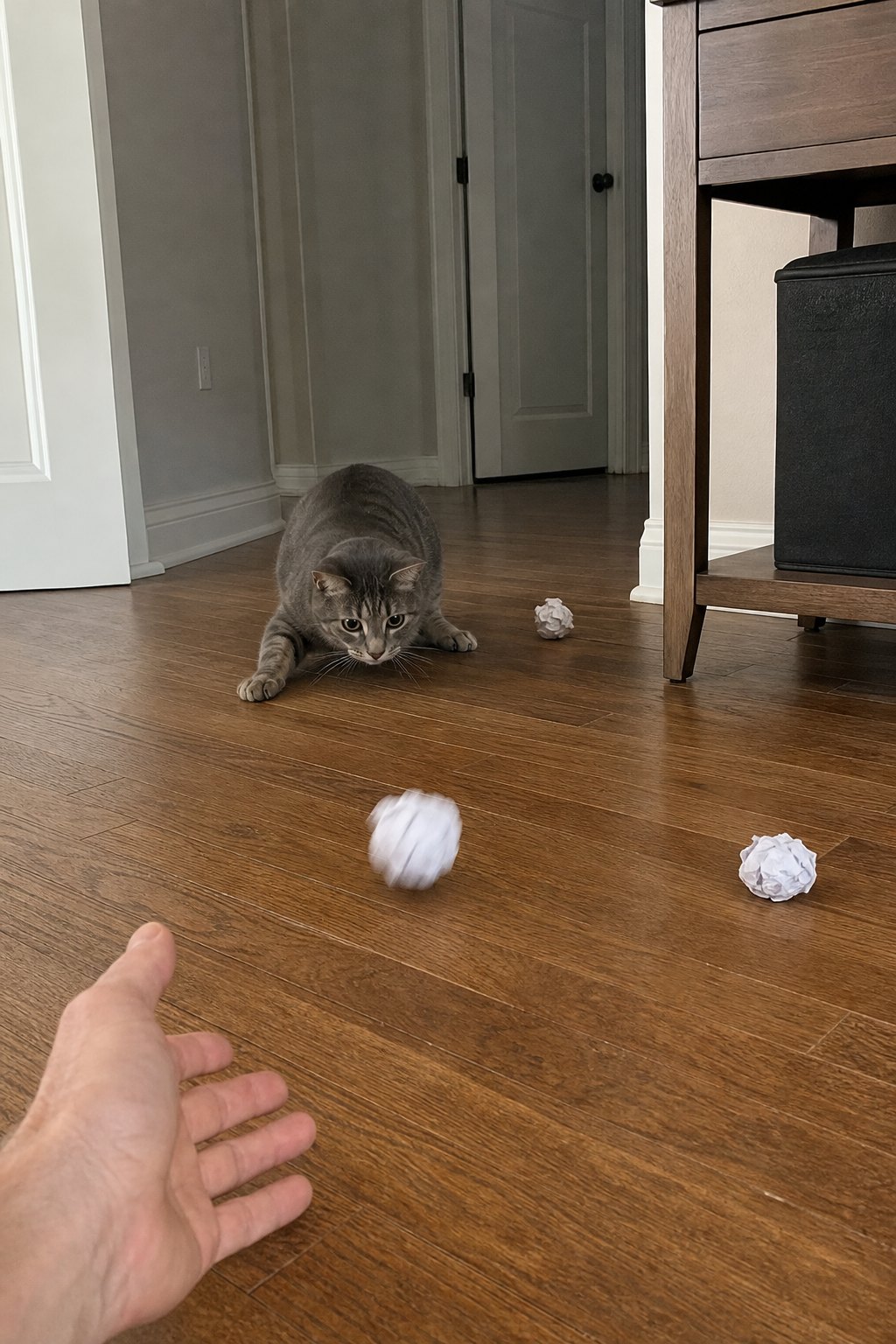
Label: Leave out. Prey type: mouse-type. Ohio State’s Indoor Pet Initiative jokes that to a cat, a ball of paper is lunch.
You need: a sheet of plain paper. No tape, no staples.
- Crumple the sheet into a loose ball about the size of a golf ball.
- Squeeze it once so it holds its shape.
How to play: Roll it across a hard floor, or toss it down a hallway. Some cats will bat it, chase it and carry it off.
2. Ping Pong Ball in the Bathtub
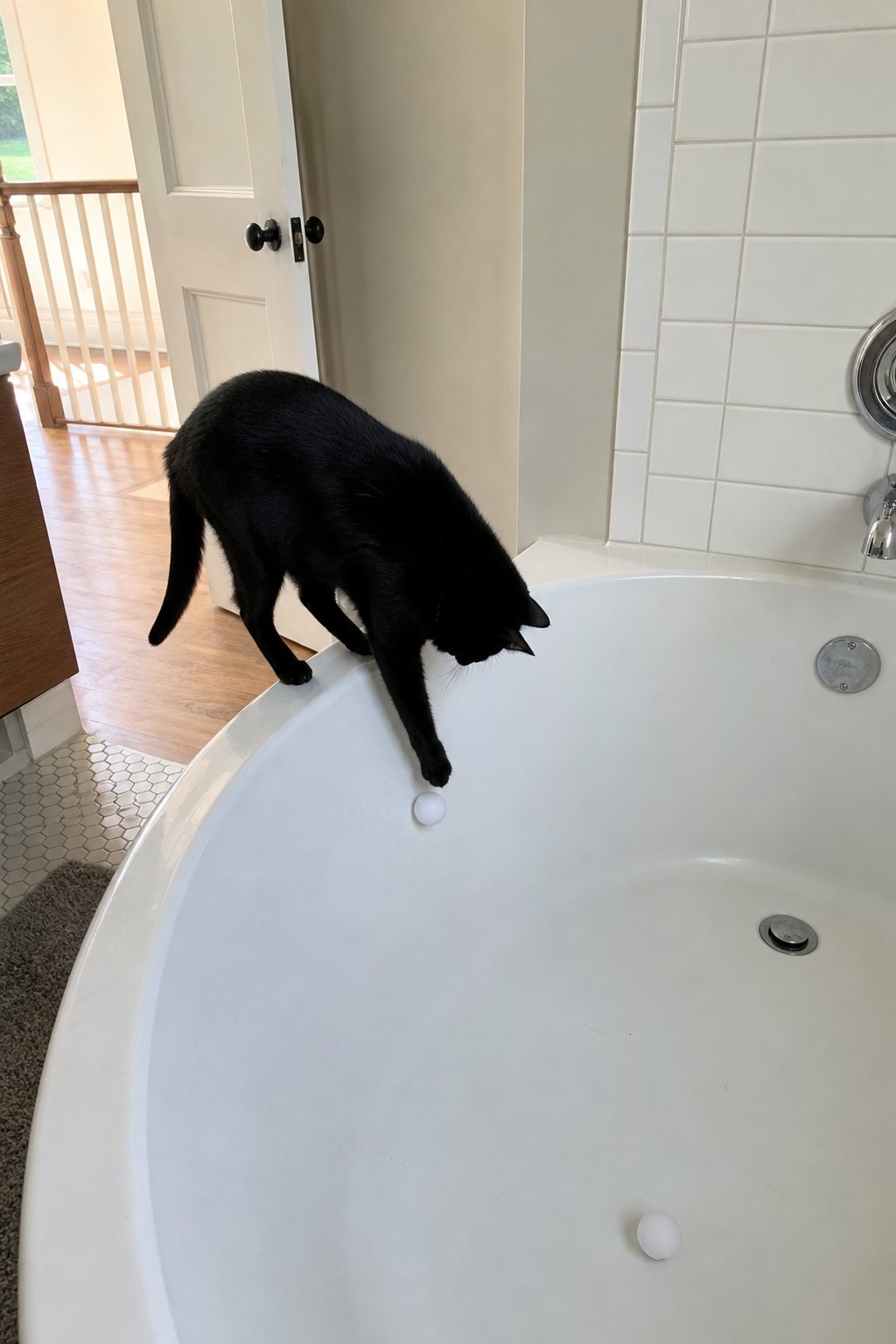
Label: Leave out while you’re home. Prey type: mouse-type, the rolling, scurrying kind.
Cornell’s Feline Health Center lists ping pong balls among the things that can be tremendously entertaining, and the tub keeps the ball from vanishing under the couch.
You need: one ping pong ball and a dry, empty tub.
- Make sure the tub is completely dry.
- Drop the ball in and walk away.
How to play: Tap the ball so it rolls up the curved side. The sound alone often gets a cat’s attention.
3. Cardboard Pounce Box
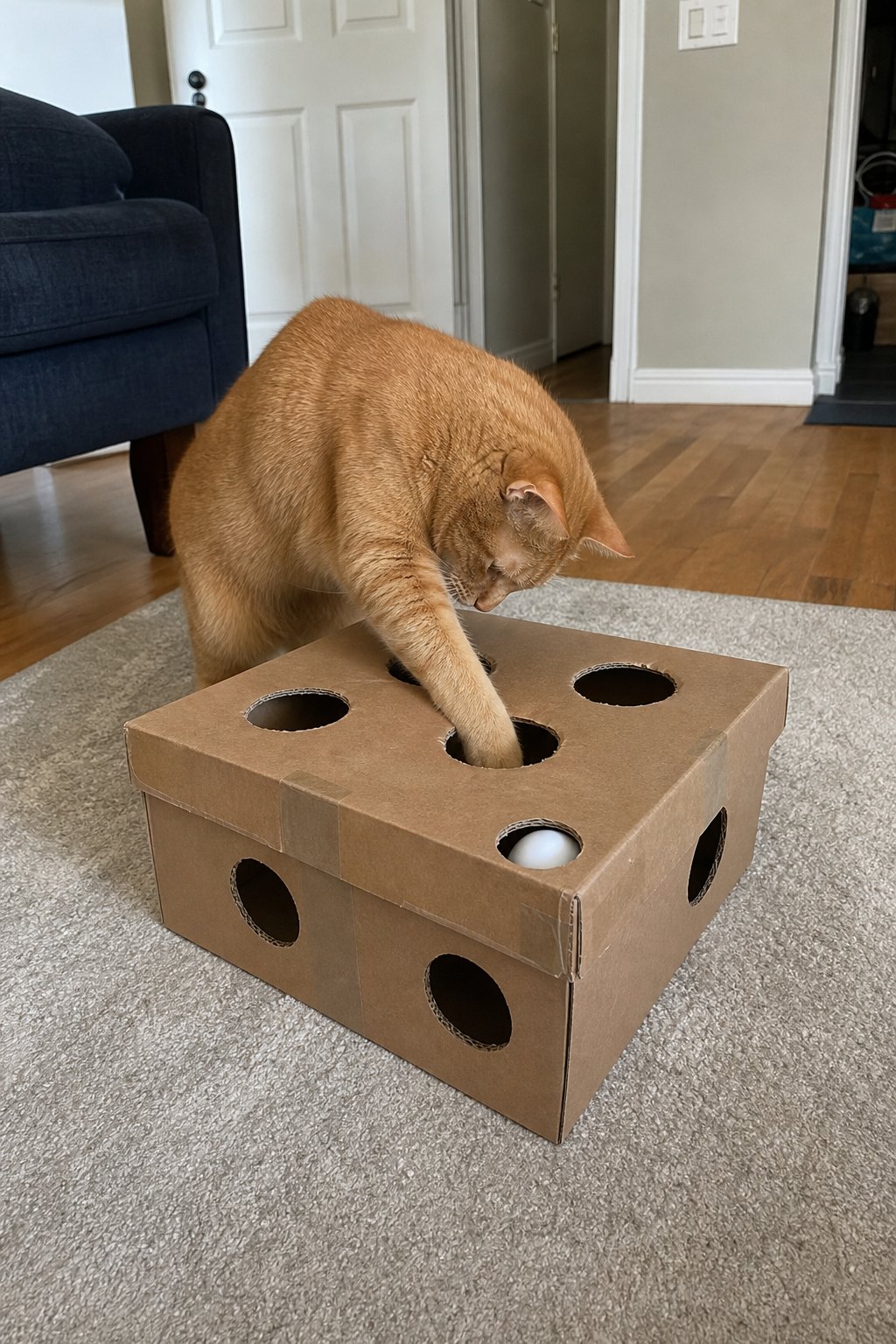
Label: Leave out. Prey type: mouse-type, something small hiding in a hole.
You need: a shoebox with a lid, tape, scissors and one ping pong ball.
- Cut paw-size holes in the top and sides.
- Put the ball inside.
- Tape the lid shut.
How to play: Set it on the floor and let your cat reach in and fish around. Check the cut edges now and then for anything frayed.
4. Paper Bag Hideout
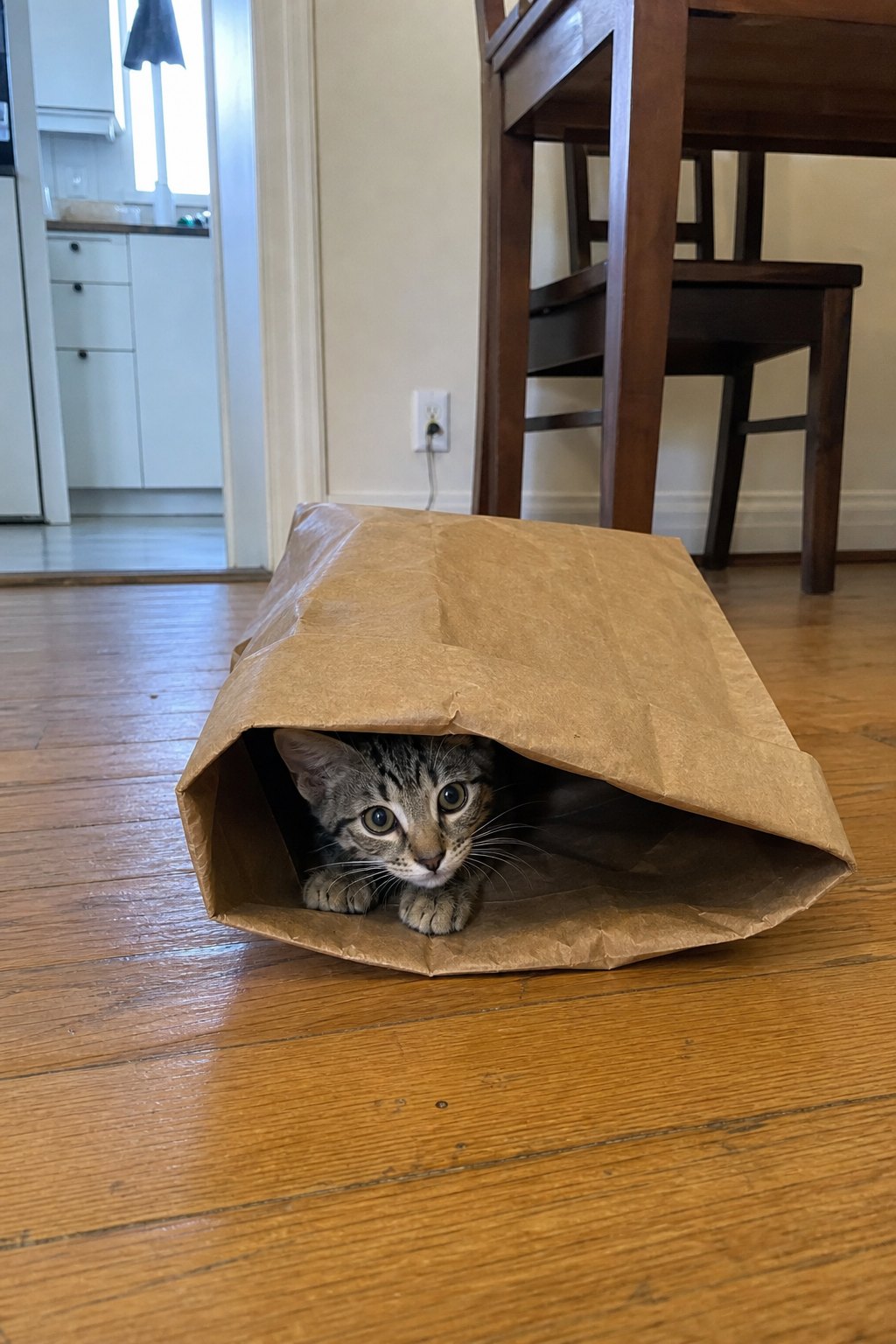
Label: Leave out. Prey type: none, this one is for ambush.
You need: a plain paper grocery bag and scissors.
- Cut the handles off completely.
- Cuff the top edge outward a few times so the opening stays wide.
- Lay it on its side.
How to play: Skip the instructions. Cats climb in, hide and pounce on whatever walks past. Some cats also use a bag or box as a safe retreat, so don’t be surprised if it becomes a favorite spot.
5. Toilet Paper Tube Tumbler
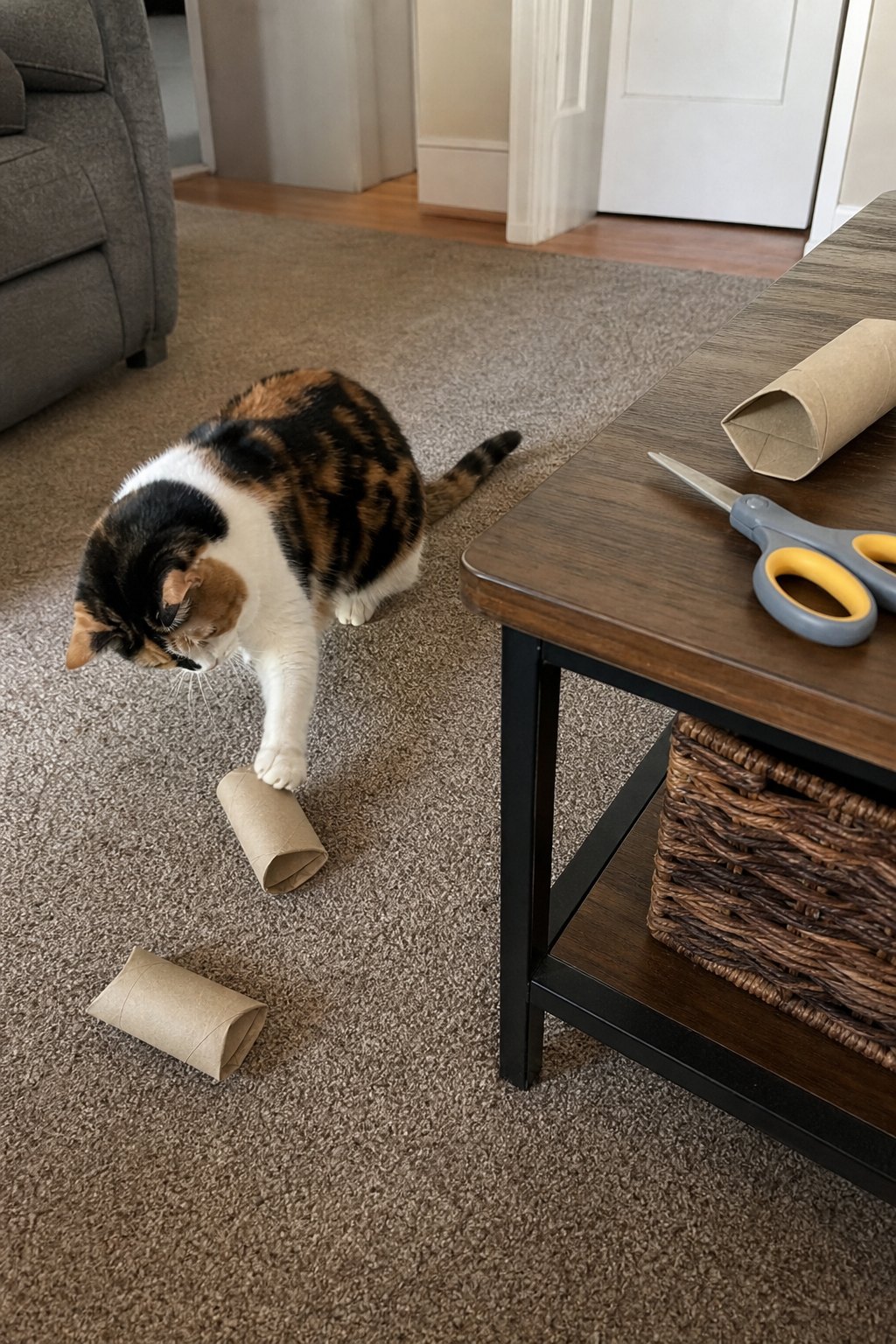
Label: Leave out, and toss it when it gets soggy. Prey type: mouse-type.
OSU lists toilet paper center rolls as an easy toy for cats who like to catch and toss.
You need: one empty cardboard tube. A pinch of catnip is optional.
- Fold one end of the tube in on itself.
- Add a pinch of catnip if you like.
- Fold the other end in to close it.
How to play: Flick it across the floor. Your cat will bat it, carry it and probably flatten it.
6. Tube Box Fishing Game
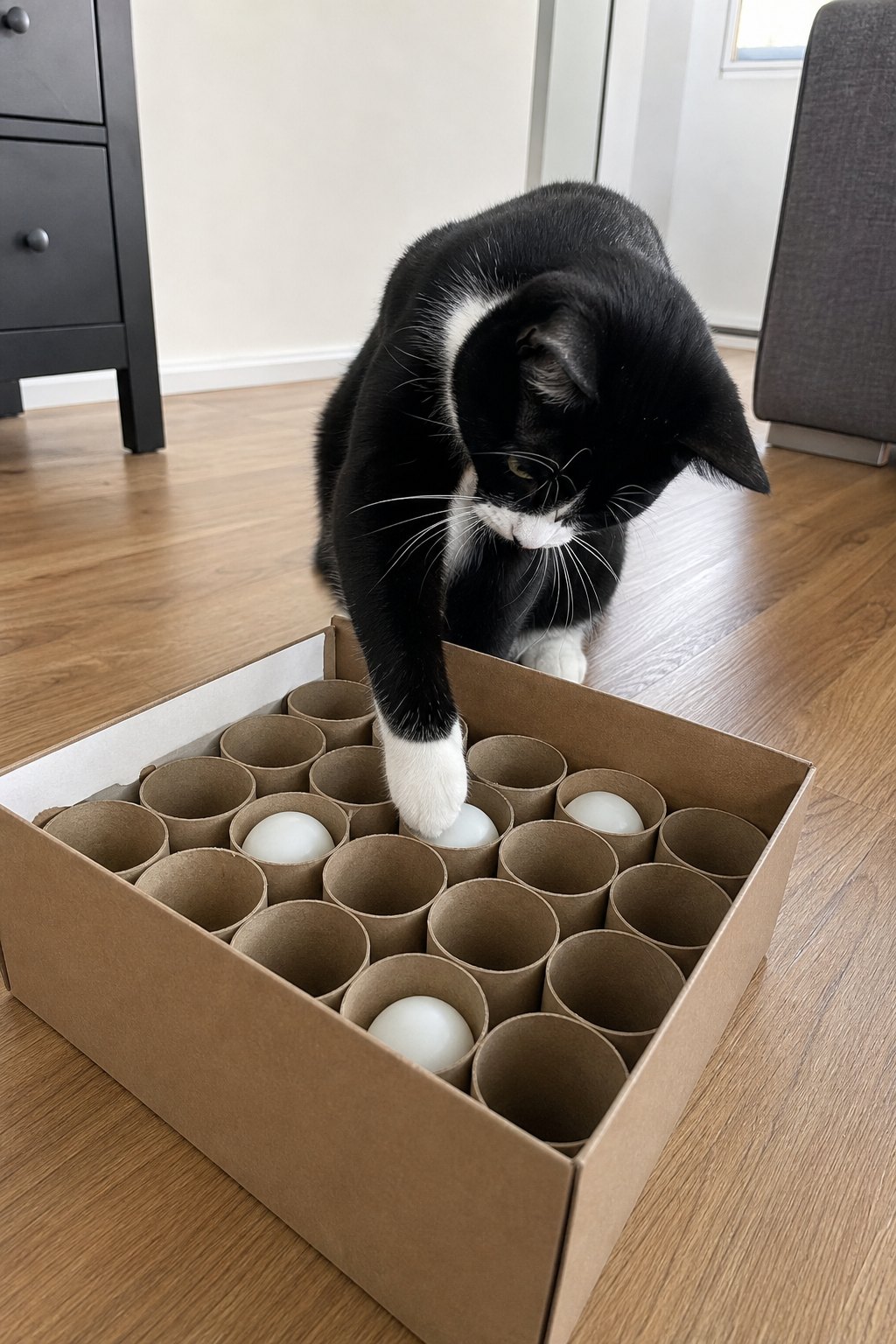
Label: Leave out. Prey type: bug-type, something to dig after in a tight space.
You need: a shoebox, a handful of empty toilet paper tubes and a few ping pong balls. No food goes in this one.
- Stand the tubes upright and pack them snugly into the box.
- Drop a ping pong ball into a few of the tubes.
How to play: Your cat reaches in a paw and hooks the balls out. Reset it whenever the balls are all on the floor.
7. Catnip Sock Kicker
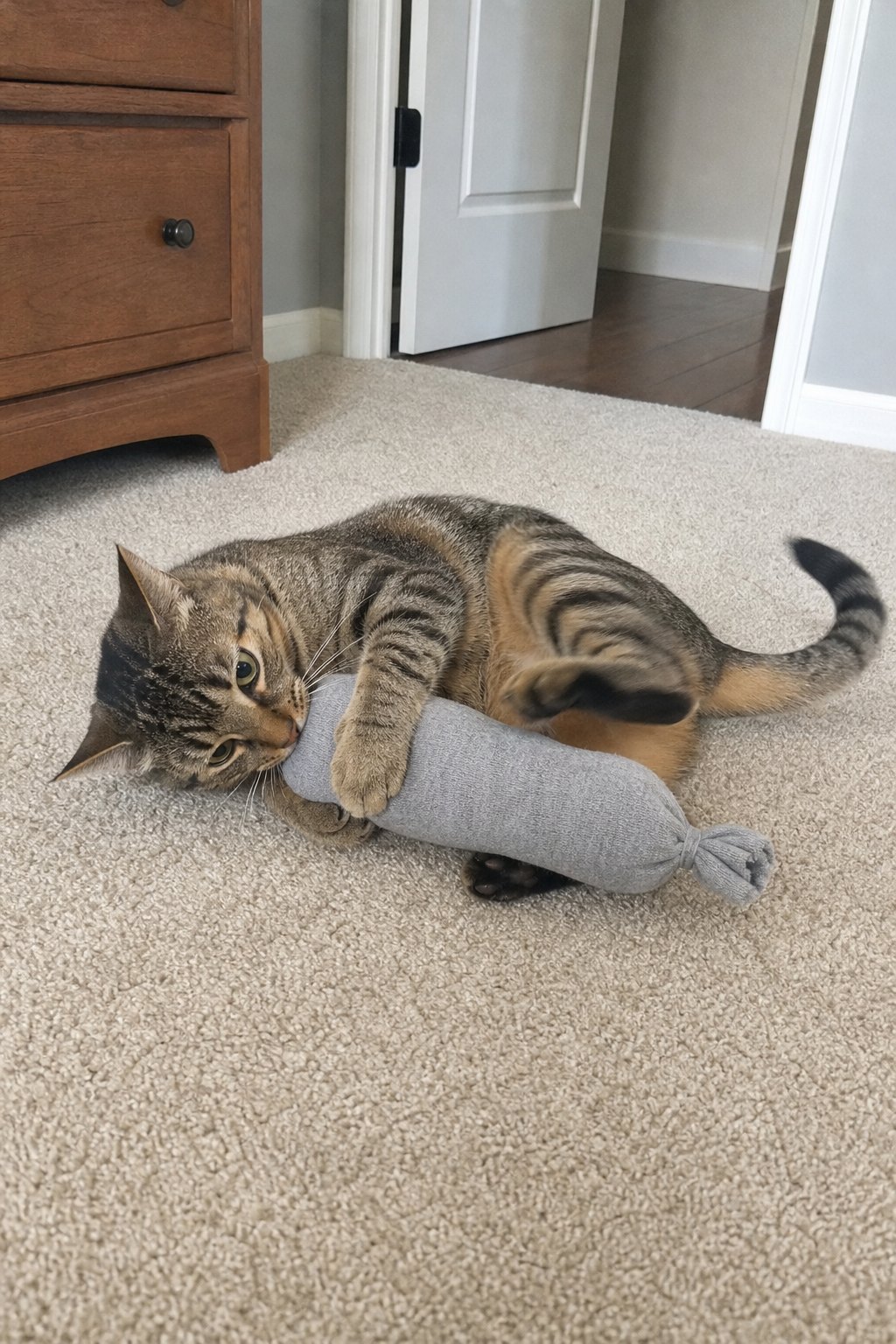
Label: Leave out. Check it often and toss it when it tears. Prey type: mouse-type, the kind you can grab and bunny-kick.
This is the method from OSU’s toys page: stuff an old cotton sock with cotton balls and a little catnip, then knot the end.
You need: one clean cotton sock, cotton balls, a little catnip.
- Fill the sock with cotton balls and a little catnip.
- Tie a firm knot in the open end.
How to play: Toss it to your cat and let them wrestle it. If you see a hole or loose stuffing, it’s done.
8. Crinkle Paper Kicker
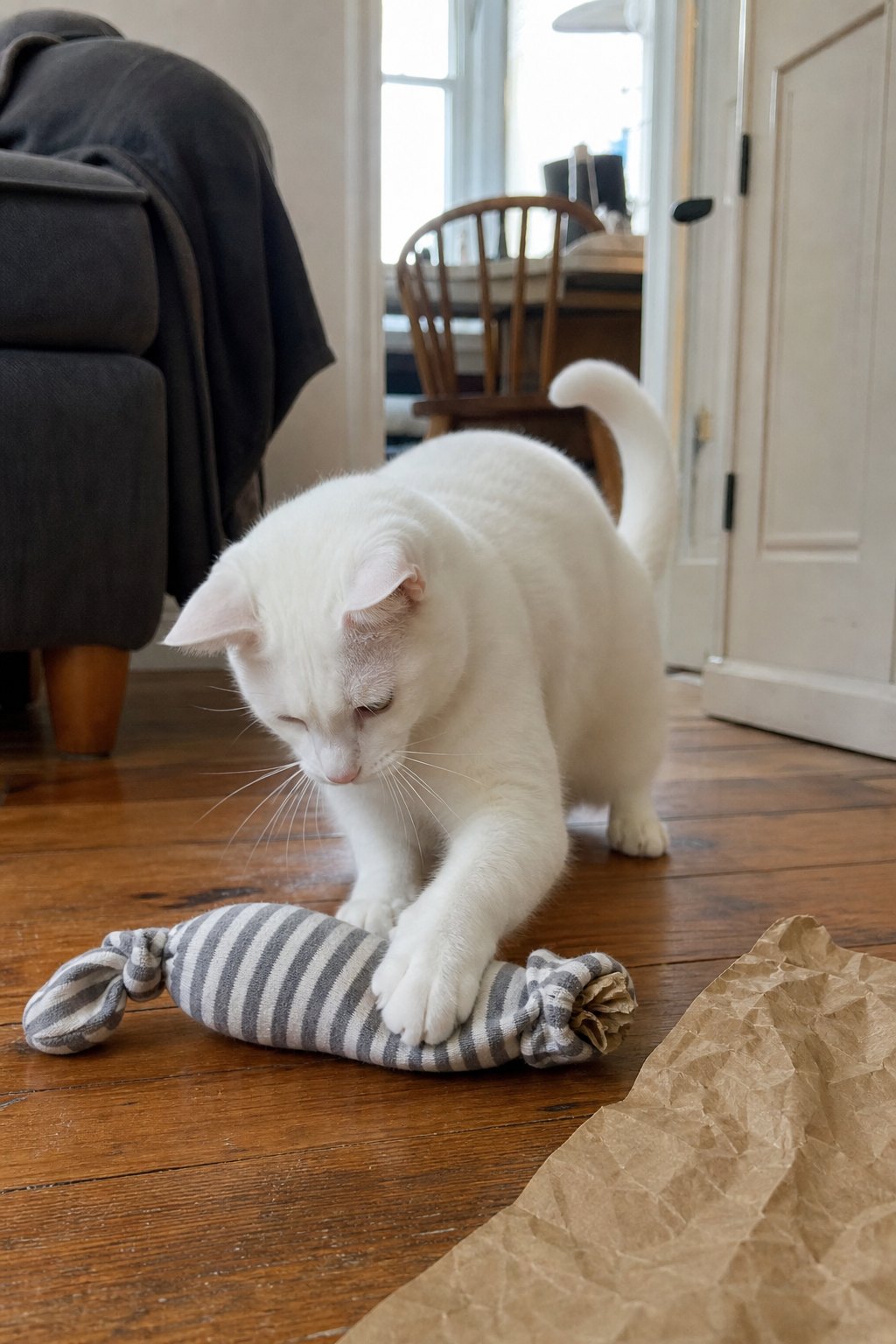
Label: Leave out. Check the seams. Prey type: mouse-type.
You need: a sock or a tube of scrap fabric, plus kraft paper.
- Crumple the kraft paper into loose wads.
- Stuff the sock or fabric tube with the wads.
- Knot the open end tightly.
How to play: The crinkle sound makes it more fun to kick than a plain sock. Toss it when the fabric wears thin or the knot loosens.
9. Cardboard Tunnel
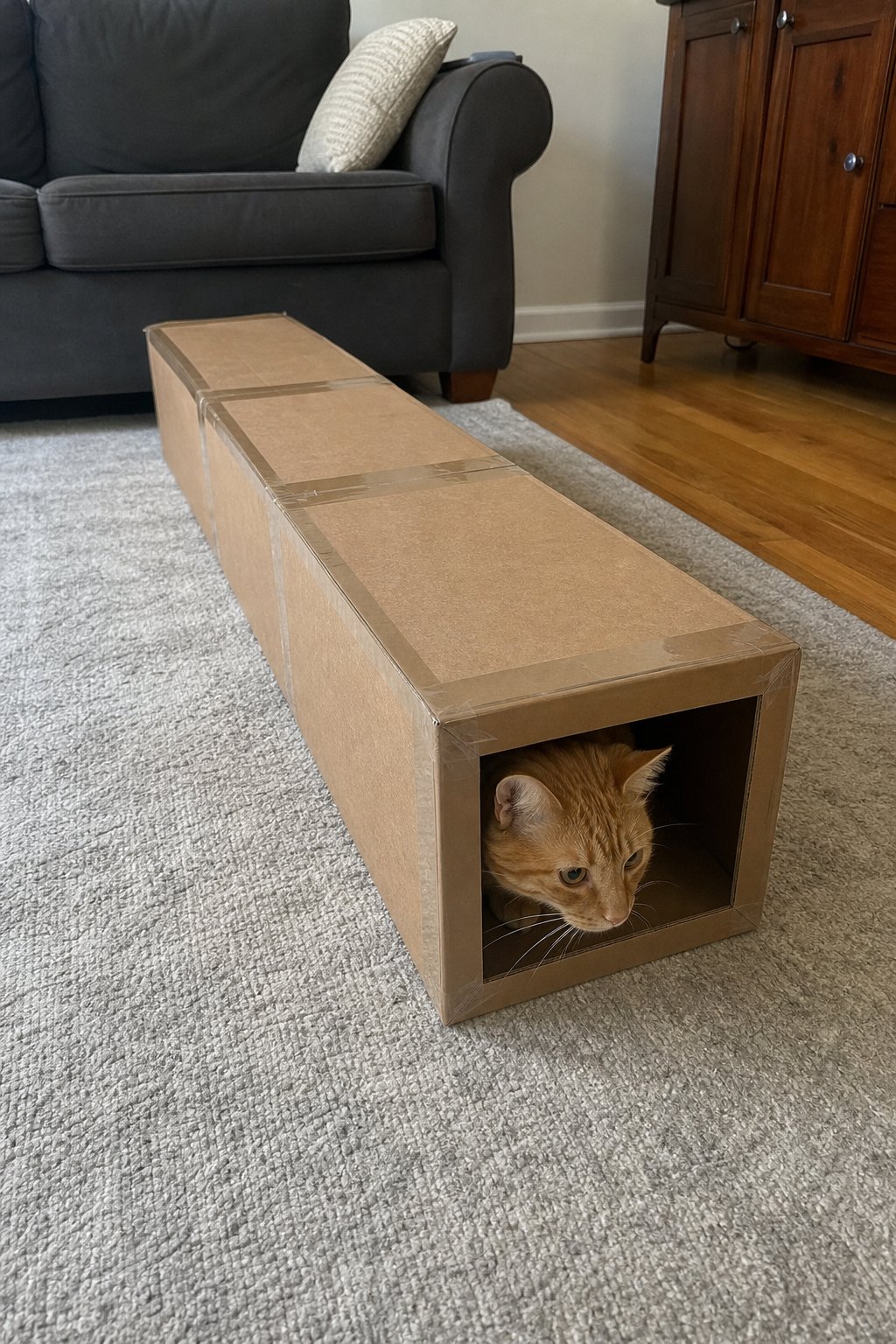
Label: Leave out. Prey type: none, it’s a chase-and-ambush course.
You need: two or three cardboard boxes, tape and scissors.
- Open both ends of each box.
- Line the boxes up end to end and tape the joins.
- Tape down any rough or sharp edges.
How to play: Roll a ping pong ball through, or wiggle a fleece strip at one end. Short on floor space? These small-space cat room ideas can help you place it.
10. T-Shirt Tent
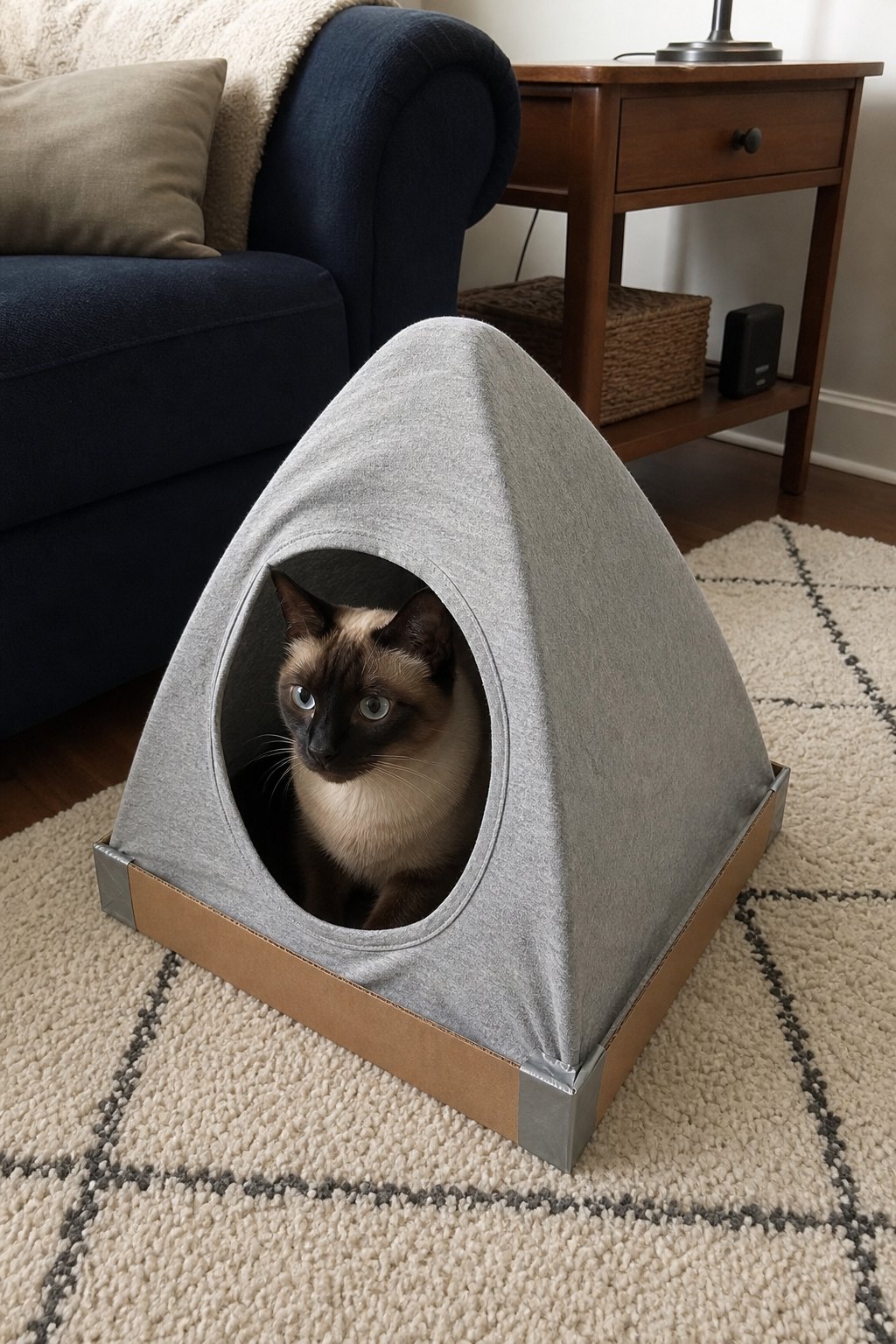
Label: Leave out. Prey type: none, it’s a hideout.
You need: an old T-shirt, two wire hangers, a box base and tape.
- Cross the two hangers into an X and set the hooks and ends down inside the box.
- Tape every hanger end so no bare wire shows.
- Drape the T-shirt over the frame.
How to play: Check that the frame is steady before your cat goes in. Cornell advises against anything heavy that could fall on a cat during play.
11. Fleece Strip Wand
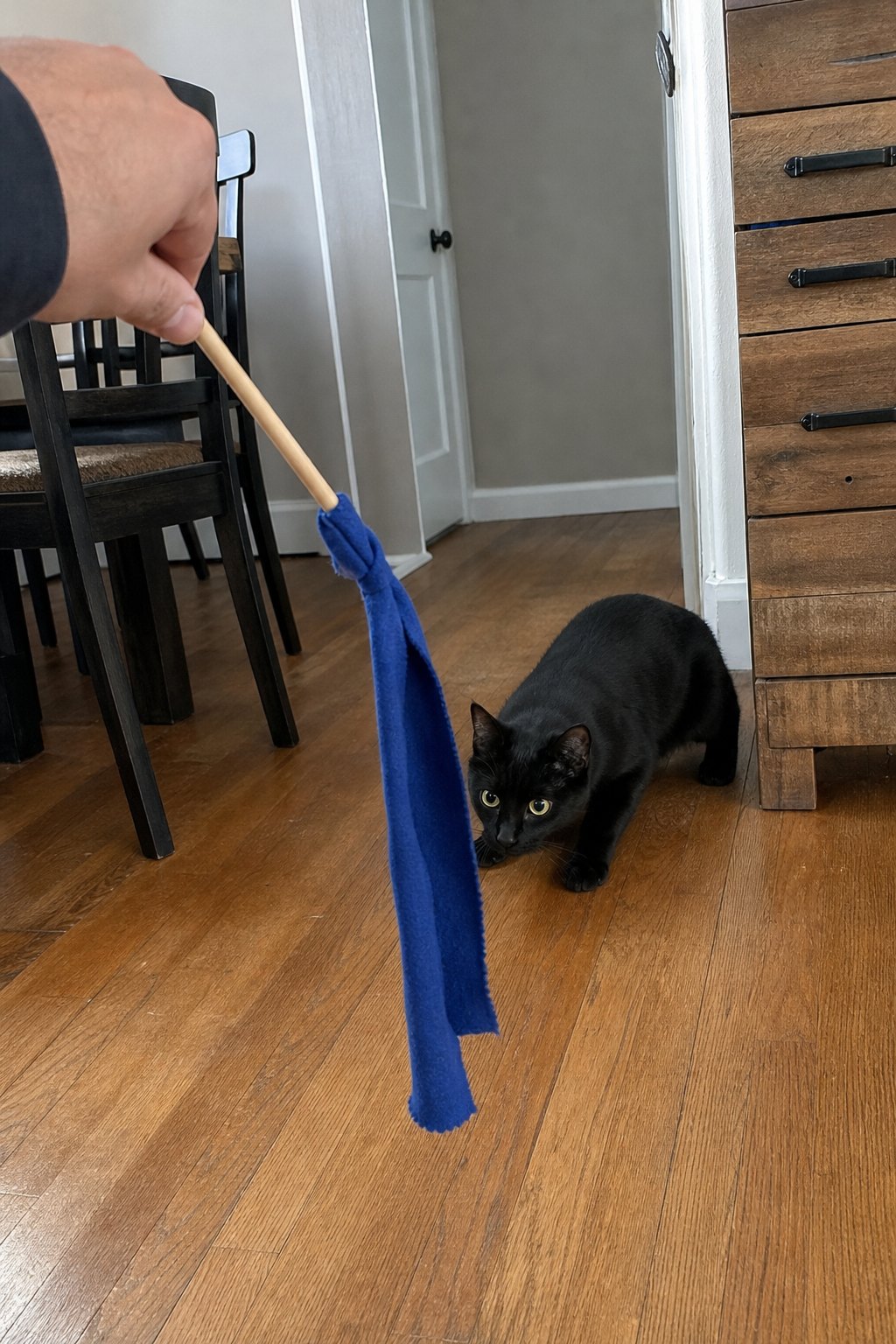
Label: Play together, then put away. Prey type: bird-type, since it moves through the air.
Cornell’s advice on safe toys is to avoid string-like parts that can separate when chewed and get swallowed. OSU says to make sure a cat can’t bite or chew off a piece they could choke on. That’s why this wand uses one thick strip of fleece, not thin string.
You need: a dowel or wooden spoon and one thick strip of fleece.
- Tie the fleece strip tightly to the end of the dowel.
- Tug it to be sure the knot holds.
How to play: Let it dangle, then slowly drag it away, as OSU suggests. Put it out of reach when you’re done.
12. Shoelace Drag Toy
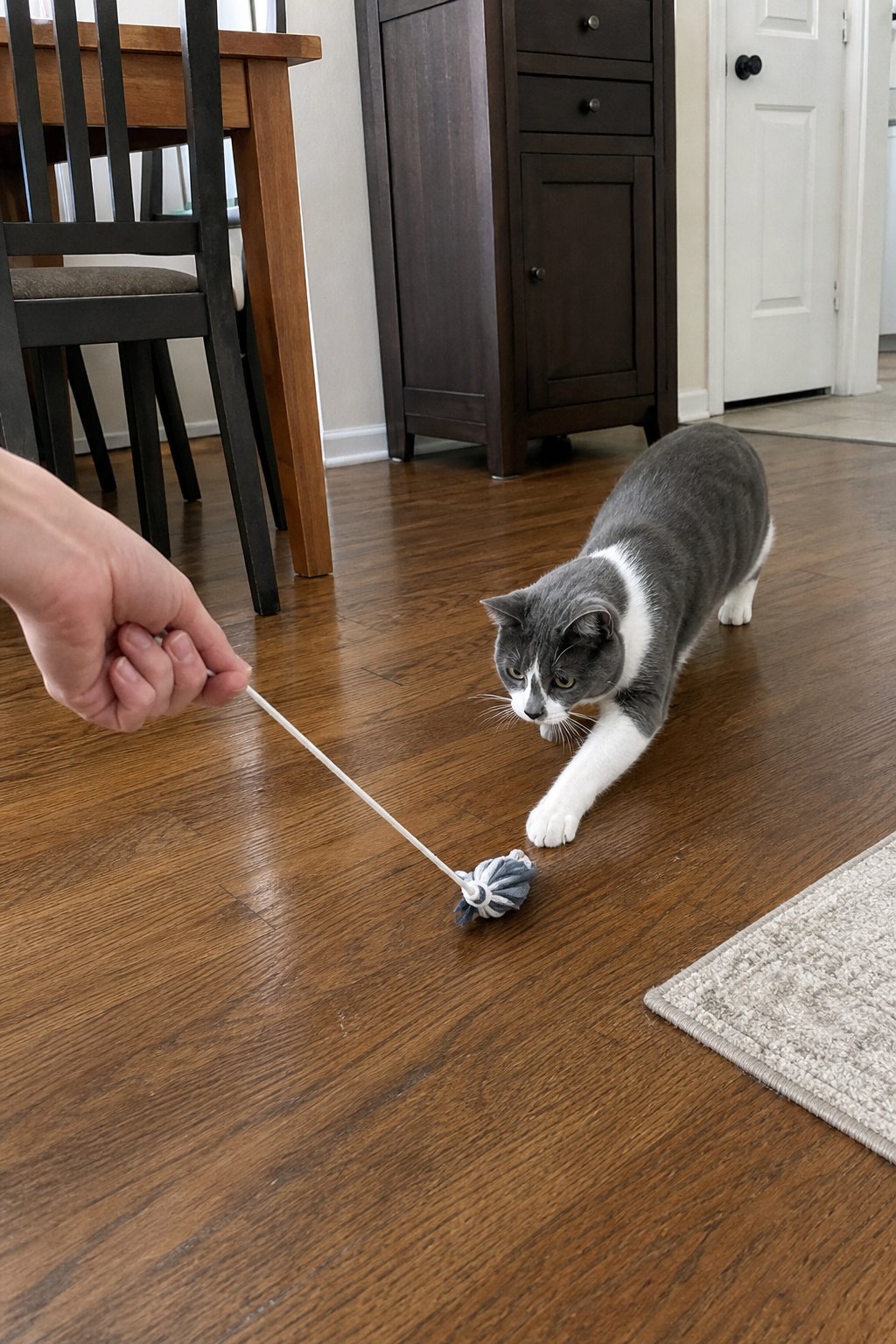
Label: Play together, then put away. Prey type: bug-type, a knotted string is the classic version.
You need: a shoelace and a small, soft toy, such as one of your rolled-sock or paper kickers.
- Tie the toy to one end of the lace with a tight knot.
- Check that it won’t pull loose.
How to play: Drag it around the room, as OSU suggests, and let your cat chase it. Keep the lace in your hand, and put it away when you finish.
How do you keep homemade toys safe?
Homemade toys are safe when they have no small parts that can come off, no loose strings left out and no places for a cat to fall from. Run through this list every time you make or reuse a toy:
- Use strings and wands only while you’re playing, and store them afterward.
- Look for loose pieces, frayed edges and stuffing before every session.
- Skip small parts a cat could chew off and swallow.
- Throw out any toy that’s torn, soggy or damaged.
- Keep anything heavy from falling on your cat, and don’t set up play where a distracted cat could fall.
Cornell’s Feline Health Center covers all of these points, and also says to avoid anything with an electrical cord a cat can chew. For more on strings and other hazards, see the kitten-proofing guide.
How do you get the most out of them?
Rotate the toys. OSU suggests rotating a batch a few at a time so old toys seem new, and Cornell notes that rotating prevents boredom. Pull out two or three, then swap them next week.
Pick a set time for play each day. OSU also says to bring out favorites only once a day or once a week, not leave them out all day.
Watch which toys your cat goes for. Most cats prefer to hunt certain creatures: bird-type toys fly through the air, mouse-type toys have fur or roll, and bug-type toys are string with a knot. If your cat ignores the wand but loves the sock, you’ve learned something useful.
Never use your hands or fingers as toys, and stop the game if it gets too rough. End with calm interaction, such as a slow pet or a quiet minute together.
Where should you start?
Make three tonight: the paper ball, the sock kicker and the pounce box. Rotate them over the week and see which one your cat picks. When you want another build, try the DIY scratching post, and find more play and routine tips in the Behavior hub.
1 thought on “12 DIY Cat Toys You Can Make With Things You Already Have”