
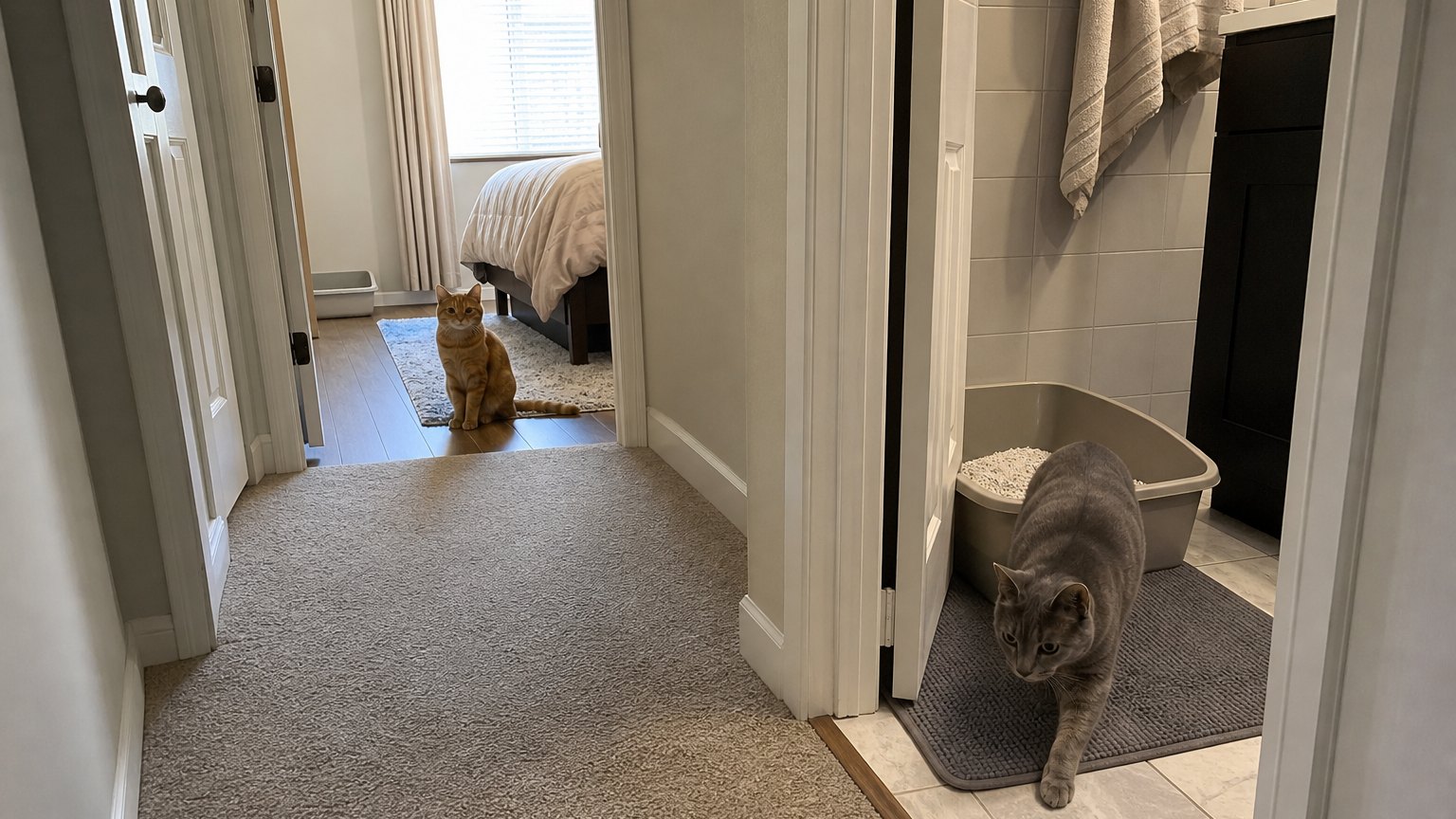
One cat waits outside the bathroom door while the other settles into the only litter box in the house. If that sounds familiar, the fix is simple. For a good litter box setup for multiple cats, give every cat one box plus a spare, and spread the boxes across different rooms and floors instead of lining them up. Put each one in a quiet spot where a cat can see who’s coming and leave another way. Two cats means three boxes in at least two or three places.
How many litter boxes do multiple cats need?
The standard rule is one box per cat, plus one extra. The ASPCA gives this rule, and Texas A&M’s veterinary college and Humane World for Animals say the same.
The locations column below is our own practical suggestion, not a number from those sources.
| Cats | Boxes | Minimum locations |
|---|---|---|
| 2 | 3 | 2 to 3 |
| 3 | 4 | 3 or more |
| 4 | 5 | 3 or more |
For box size, litter type and cleaning, see the litter station checklist. This page is about where the boxes go.
Why do boxes in one row count as one?
Three boxes side by side work like one big box. Humane World for Animals says to place them in different areas, and the AAFP/ISFM environmental guidelines, as summarized by VCA, say cats should have at least two options for each resource.
There’s a practical reason too. A cat who wants to guard one spot can often guard the whole row from a single seat. With boxes in separate rooms, no one cat can watch them all.
Where should each litter box go?
Pick spots that are quiet but not cornered. Use these as your criteria:
- A view of the approach. The ASPCA notes that cats like to see anyone coming and want an escape route. A box tucked into a dead-end corner with a cat sitting in the way is a trap.
- Away from noise and traffic. Texas A&M recommends quiet areas away from foot traffic and machinery. The ASPCA also names loud spots like the washer and dryer.
- Away from food. The VCA guidelines keep food and litter in separate locations, so skip the spot next to the bowls.
- One on every floor. The ASPCA and Humane World both say a multi-story home may need a box on each level.
- Open boxes, if your cats allow it. Texas A&M notes some cats dislike covered boxes because they can’t survey their surroundings, which can feel unsafe in a multi-cat home.
Closets and bathrooms can work, as long as every cat can get in and out easily.
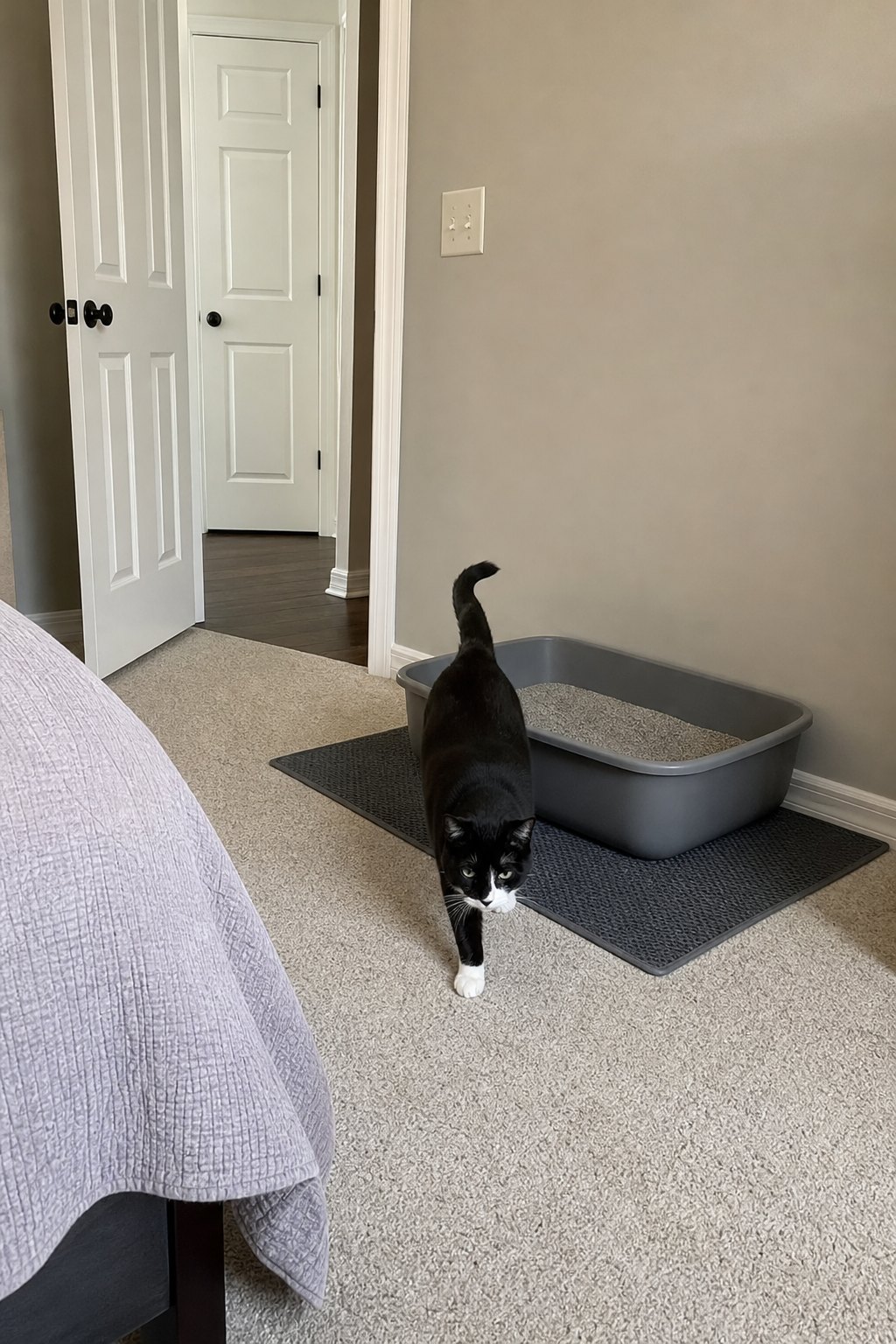
What do example layouts look like?
These are starting points. Adjust them to where your cats already like to spend time.
Two cats in a one-bedroom
You need three boxes. Try one in the bathroom, one in a bedroom corner with open space on two sides, and one in a living room corner away from the food bowls. That puts a box in every main area, so each cat has one nearby wherever it spends time.
Two cats in a studio
You still want three boxes, but now you’re creating zones with furniture. Place one near the entry, one behind a bookcase or sofa end, and one in the far corner by the window side. Each should have a clear approach from at least two directions.
Our guide to litter box spots for a small apartment has more studio ideas. If the boxes look messy, litter box hiding ideas can tidy them up. Just check that nothing you add blocks a route.
Three cats on two floors
Plan for four boxes, with at least one per floor. A common split is two downstairs in different rooms and two upstairs, such as one in a bathroom and one in a spare room or bedroom. Avoid stacking two boxes in the same hallway.
Adding a new cat
A new cat starts in their own room, and that room gets its own box. Once the cats are sharing the home, add the extra box and spread them out. Our guide to introducing cats covers the steps for that first meeting.
How do you check every route?
A box in the right room can still fail if the path to it is wrong. Stand at each box and ask three questions:
- Can a cat see who’s coming? If the view is blocked on every side, a cat walking up can’t tell who’s already there.
- Is there a second way out? A cat who uses the box should never have to leave through the one spot another cat is sitting.
- Can one cat block the path? Look for narrow hallways, a doorway beside a favorite perch, or a pinch point where one cat can park.
Also check for dead ends behind doors that might close. A box in a bathroom is fine until someone shuts the door. Prop the door open, or ask whether a cat flap fits your layout, so a closed door doesn’t cut a cat off from the only nearby box.
Keep retreats close to the boxes but not right at them. A shy cat who has a safe retreat nearby can reach the box quickly without feeling exposed.
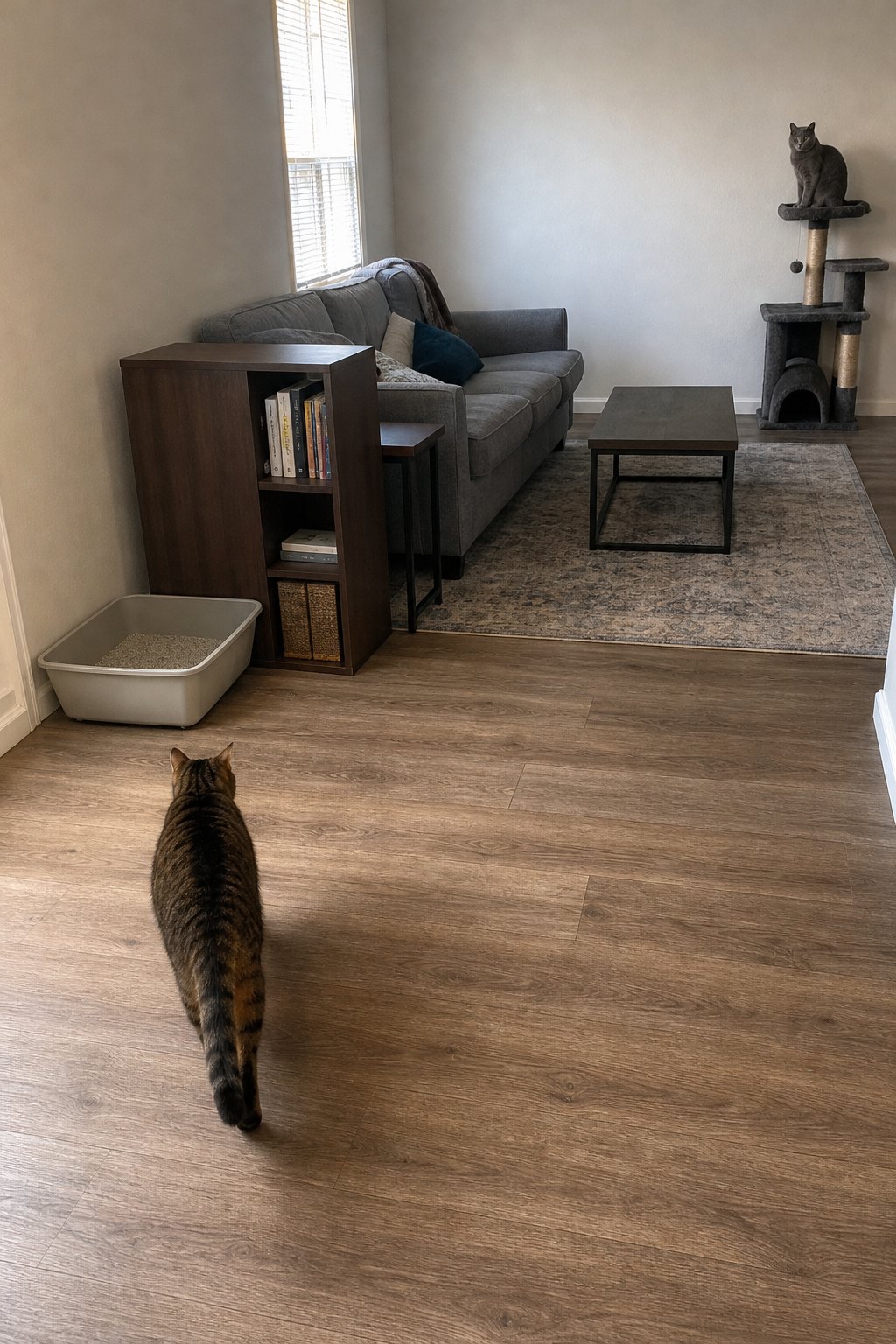
Want a layout for the whole room, not just the boxes? Cat room ideas for small homes can help.
What are the signs the setup isn’t working?
Watch for these:
- One cat waits, hovers or guards while another uses a box.
- A cat goes just outside the box, or in a spot away from all of them.
- A cat hides most of the time, or avoids rooms where a box sits.
Fix the layout first, but don’t assume it’s the only cause. The ASPCA says a cat who won’t use the litter box can have a medical problem, so talk to your vet if the change is sudden or doesn’t improve. These questions to ask your vet can help you prepare for the visit.
Multi-cat litter setup checklist
- One box per cat, plus one extra.
- Boxes in different rooms, not side by side.
- At least one box on every floor.
- Quiet spots, away from machines, foot traffic and food.
- A clear view of the approach at each box.
- A second way out at each box.
- No spot where one cat can block the path.
- Doors propped open for any box behind one.
- Retreats near the boxes, not at them.
Your next step
Tonight, walk through your home and mark where each box sits on a quick sketch. Then run the three-question route test at every one. Move whichever box fails and see whether the waiting and guarding settle down.
For more setup guides, head to the Home & Litter hub.
1 thought on “Litter Box Setup for Multiple Cats: Where Each Box Should Go”