
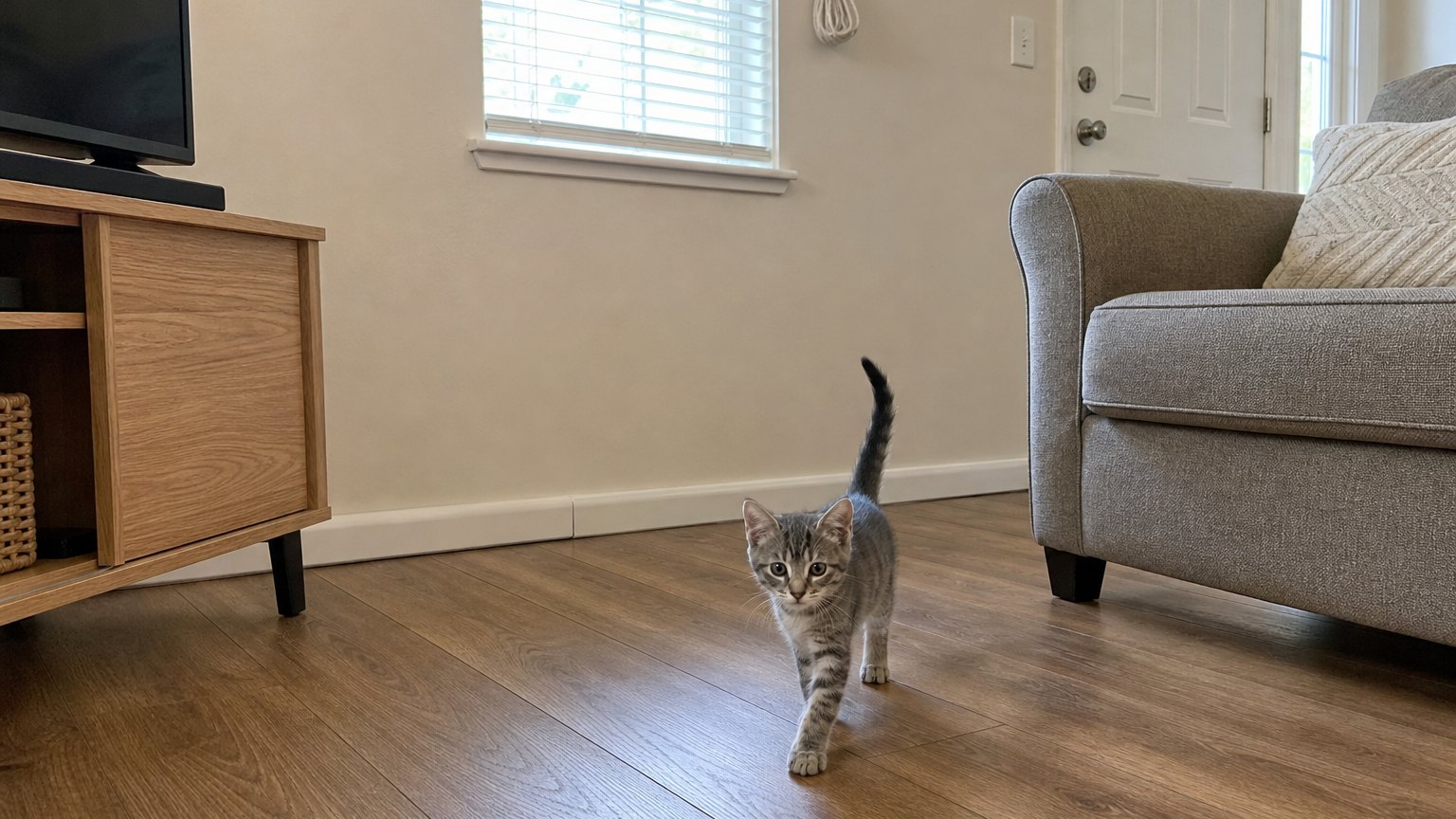
One minute your kitten is chasing a hair tie, and the next she’s gone, and you find her inside the open dryer. Here’s how to kitten-proof your home: walk through it room by room at kitten height, and put away anything she can swallow or chew (string, hair ties, cords, small objects). Lock up medications and cleaners, remove lilies and other toxic plants, keep washer, dryer and toilet lids closed, and check that windows and doors latch.
You can do all of it in an afternoon. Start with one safe room, like the one in our guide to setting up a quiet first room, then work outward.
What are the five hazards to handle first?
These five cause the most serious trouble, so do them before anything else.
- Lilies. The FDA warns that the entire plant is toxic, and that licking a few pollen grains or drinking vase water can poison a cat. It can cause fatal kidney failure in less than 3 days. Fix: no true lilies in the house, including in bouquets.
- Human medications. Cornell’s Feline Health Center lists aspirin, acetaminophen, ibuprofen and vitamins as acutely toxic to cats. Fix: keep every pill bottle in a closed cabinet.
- String and thread. VCA Hospitals says threads, rubber bands and yarn can be life-threatening if swallowed. Fix: store them in a closed drawer or bin.
- Electrical cords. Chewing a cord risks electric shock. Fix: unplug cords you’re not using, or tuck them out of reach.
- Antifreeze, rodenticides and dog flea products. Cornell and VCA both flag these. Fix: store them where a kitten can’t get in (see the garage section).
How to kitten-proof, room by room
Get down on your hands and knees first. Look at each room from about six inches off the floor, because that’s where a kitten lives. Anything that dangles, rolls, crinkles or smells interesting is a target.
Kitchen
Start with the trash. VCA notes that trash entices kittens, so use a can with a lid that closes firmly.
Next, check food. Cornell and VCA name chocolate, onions, garlic, chives, leeks, scallions, shallots and caffeine as foods to keep away from cats. Cornell adds grapes, raisins, avocados and xylitol (a sweetener found in some gum). Keep these on counters and in cabinets, not in open bowls.
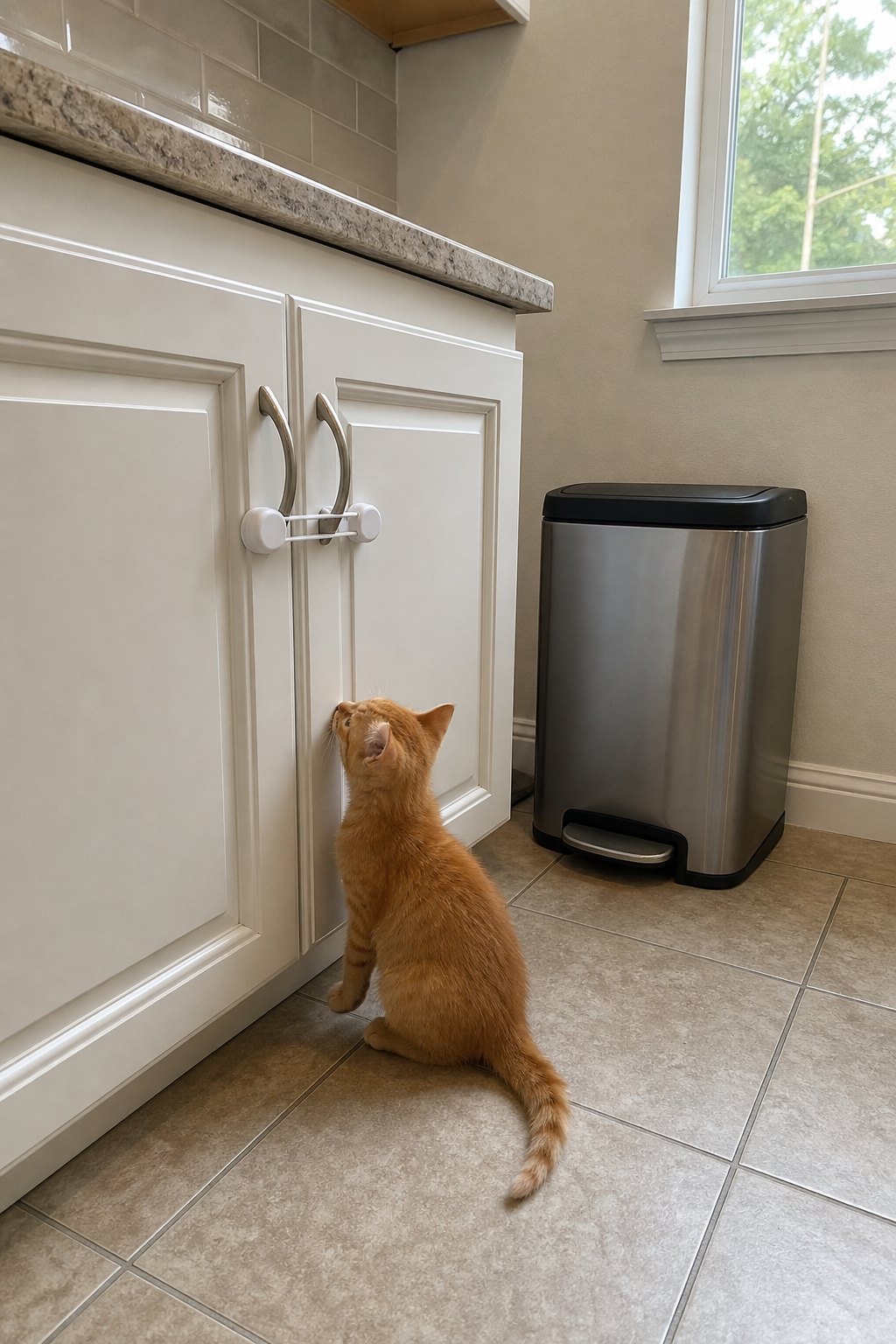
Cleaners go in latched cabinets. My cat Biscuit can open cabinets, so I don’t trust a plain door. Child-safety latches on the cabinets holding cleaners and meds keep a clever cat out.
Keep the kitten out of the kitchen while you cook. A closed door or baby gate means you never have to watch a hot stove and a curious kitten at the same time.
Bathroom
Medications and vitamins belong in closed cabinets. VCA specifically mentions multivitamins among the human products that can be toxic to cats. Never give a kitten medication your vet didn’t prescribe, which is the ASPCA’s advice in its general cat care guidance.
Keep the toilet lid down. A small kitten can tumble in, and a closed lid takes that risk away.
Hair ties and dental floss count as string, so keep them in a drawer or a lidded container. If your kitten’s litter box lives in the bathroom, pick one with low sides. Our litter station checklist covers what to look for.
Living room
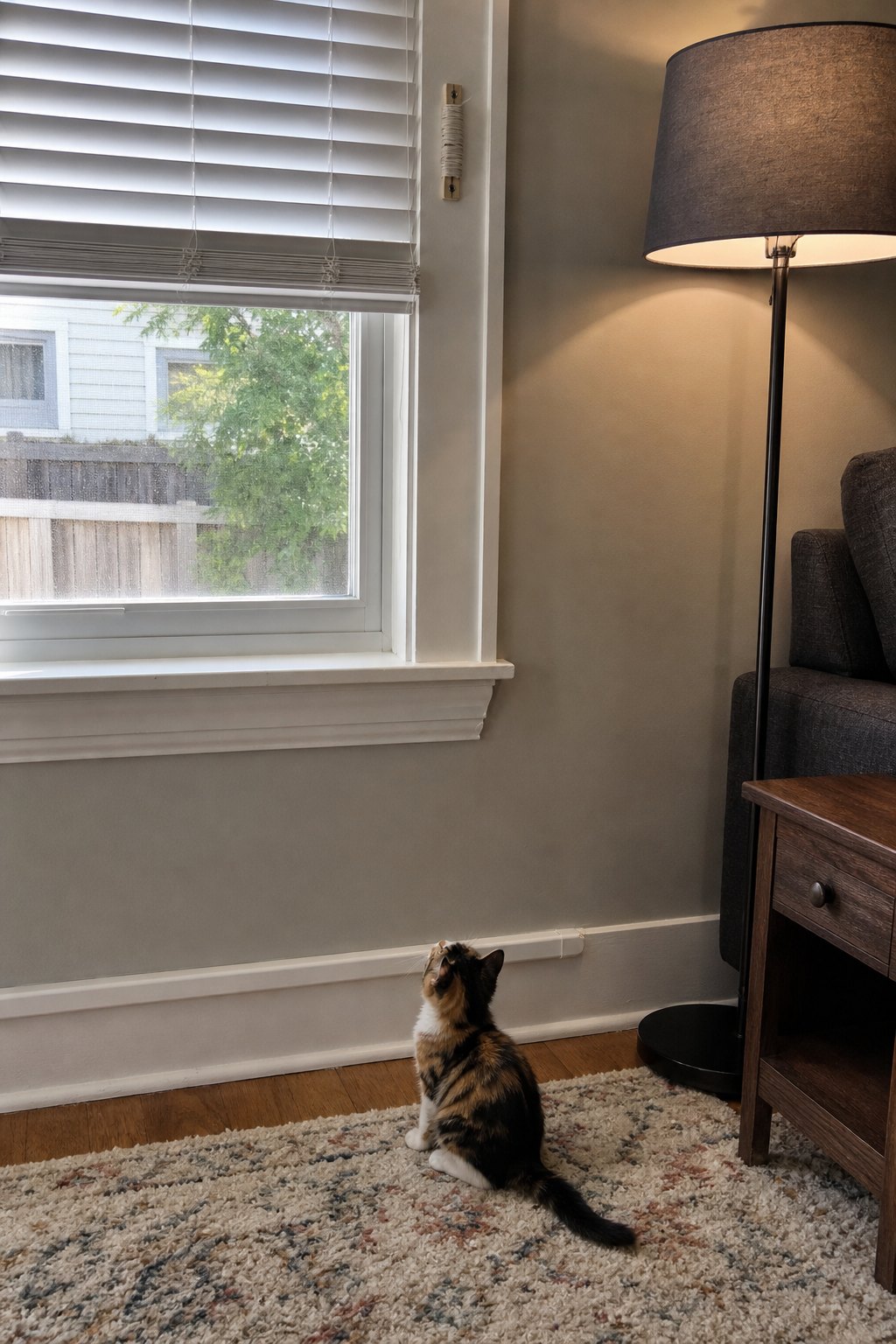
Cords come first. VCA recommends unplugging or tucking cords, and securing window blind cords, which are a strangling hazard. Tie blind cords up high, and run lamp and TV cords through a cord cover or behind furniture.
Then check the furniture. Recliners and sofa bases have gaps a kitten can squeeze into, including some you didn’t know existed. Check a recliner before you close it, and block the gaps underneath. Our page on risky hiding spots shows how.
Look at your plants. Remove lilies. Cornell also lists poinsettias, mistletoe, holly, tulips, foxglove, philodendron, amaryllis, baby’s breath, sweet William and hydrangeas. VCA adds that the potting soil or mulch of toxic plants may be dangerous too.
Finally, skip the essential oils and liquid potpourri. VCA flags cinnamon, peppermint, wintergreen and ylang-ylang as problems.
Bedroom and home office
Phone chargers, earbuds and USB cables look like toys. Unplug them when you leave, or keep them in a drawer.
Rubber bands, hair ties, sewing thread and yarn all fall into the string category, which VCA says can be life-threatening if swallowed. Put them in closed bins.
Close closet doors. A kitten can get stuck behind shoes or knock down a shelf, and she’s easy to shut in by accident. Do a head count before you leave the room.
Once the strings are gone, she’ll still want to play. These safe play ideas give her something better to chew. Or make a few with these 12 DIY cat toys.
Laundry
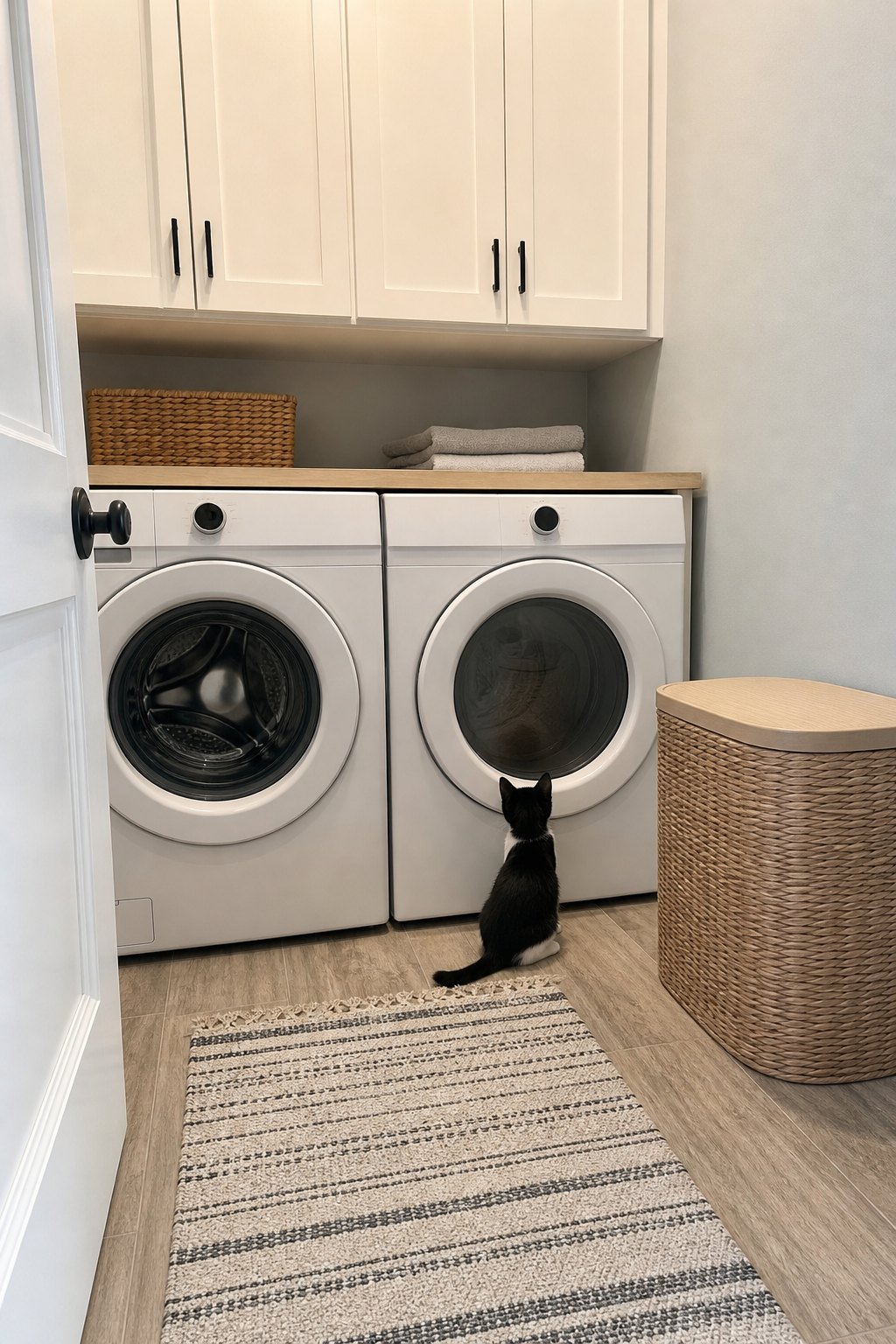
Keep the washer and dryer doors closed. VCA warns that kittens crawl inside, which could be life-threatening. Look inside before every load, every time, even if you think you know where she is.
Store dryer sheets out of reach. The ASPCA’s household products list says they pose a risk of foreign body obstruction, which means something stuck in the digestive tract. Detergents and bleach belong on a high shelf or in a latched cabinet. The ASPCA says most cleaners are safe when used according to their labels, so the goal is storage and following directions, not panic.
Doors, windows and balcony
VCA recommends checking that doors and windows latch properly. Test each one by pushing. A screen that pops out under a kitten’s weight isn’t a barrier, so press on every screen too.
If you have a balcony, keep the door closed until your kitten is older and you’ve decided how to handle it. Don’t leave her out there alone.
Give her a better view than the window ledge. A sturdy window perch lets her watch birds from a safe spot.
Garage and storage
Antifreeze, rodenticides and insecticides all need a locked cabinet or a high shelf. Cornell also lists household cleaners, bleach and disinfectants as hazards. Paint thinner and similar solvents belong in this group too.
Dog flea products need extra care. VCA warns about dog insecticides containing pyrethroids, such as permethrin. Cornell says to keep cats away from a treated dog for 24 hours.
If you already have a cat at home, plan the first meeting once the house is safe. Our guide to introducing a kitten to your cat walks through it.
Kitten-proofing checklist
| Room | Check | Fix |
|---|---|---|
| Kitchen | Trash, foods, cleaners, stove | Lidded trash, foods put away, latched cabinets, kitten out while cooking |
| Bathroom | Meds, toilet, hair ties, floss | Closed cabinet, lid down, drawer storage |
| Living room | Cords, blind cords, recliner, plants, oils | Tuck or unplug, tie up high, check before closing, remove lilies, skip oils |
| Bedroom and office | Chargers, rubber bands, yarn, closets | Unplug, closed bins, closets shut |
| Laundry | Washer, dryer, dryer sheets | Doors closed, look inside before each load, store sheets high |
| Doors and windows | Latches, screens, balcony | Test each, press screens, keep balcony closed |
| Garage and storage | Antifreeze, rodenticides, insecticides, solvents | Locked or high storage |
What should you do if your kitten gets into something?
Stay calm and move fast. Take the kitten away from the source, then call your vet or the ASPCA Animal Poison Control Center at (888) 426-4435. It’s available 24/7, and a consultation fee may apply.
Don’t try to make her vomit unless a vet or poison control tells you to. Cornell is clear on this point.
Have the product container or a photo of the plant ready when you call. The FDA gives the same advice for lily exposure.
Our cat symptoms checker lists emergency signs, though it can’t diagnose anything. If you’re unsure, call.
Your next step
Pick one room tonight and do it at kitten height. Then tackle the next one tomorrow. Check again as she grows, since a kitten who can’t reach the counter today will tomorrow.
Once the house is ready, book her checkup. Our first vet visit questions help you plan it, and the Start Here hub points to what comes next.
1 thought on “How to Kitten-Proof Your Home, Room by Room”